

Anthony Bourdain Had No Patience For This Popular Meat
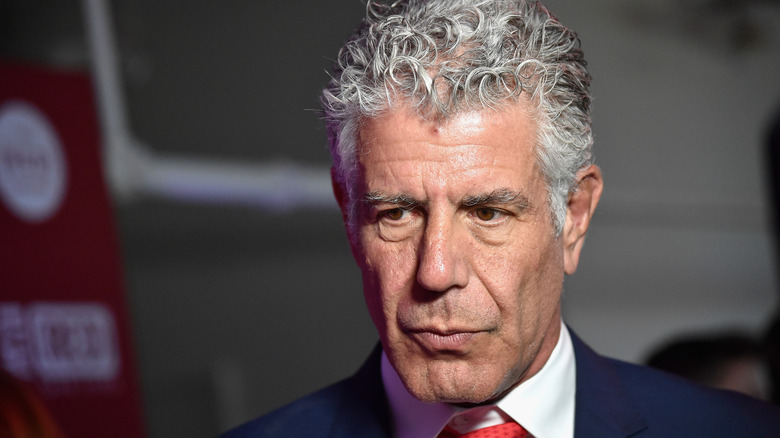
The late, great chef and food writer Anthony Bourdain was never shy about sharing his opinions, including calling American food "outrageous" and "appalling." In a 1999 piece in The New Yorker entitled "Don't Eat Before Reading This", Bourdain held nothing back about exposing some insider secrets about the workings of restaurants, kitchens, and chefs. While many early Bourdain fans will remember this piece for his advice about never ordering fish on a Monday, he also expounded on his distaste for one of America's most popular meats, chicken.
Chicken has become as American as apple pie, with per capita consumption growing steadily each year from 28 pounds per person in 1960 to a whopping 102.1 pounds of chicken consumed yearly in 2024, far surpassing beef, pork, and fish. Chicken, Bourdain said, "goes bad quickly," and leaves much to be desired. In the United States, the poultry is often "handled carelessly," and "it infects other foods with salmonella," Bourdain declared. The Center for Disease Control and Prevention notes that salmonella is the main cause of bacterial foodborne illness in the country, with chicken being one of the biggest culprits of spreading the bacteria. Shockingly, nearly 1 out of every 25 pre-packaged chicken items sold at supermarkets contains salmonella. While the bacteria is usually killed through proper cooking, it seems like Bourdain's instincts were right when it came to factory-farmed chicken in the United States.
Last but not least, Bourdain said that chicken "bores the hell out of chefs" as the meat is often difficult to transform past its basic flavor profile. "It occupies its ubiquitous place on menus as an option for customers who can't decide what they want to eat."
Anthony Bourdain preferred pork over chicken
Granted, Anthony Bourdain wasn't always against chicken. As noted in a 2007 Outside profile, while dining at Manhattan's Sake Bar Hagi, Bourdain ordered chicken skin, and after the skewers were brought out, he "pick[ed] his clean almost instantly." Similarly, during an episode of "No Reservations," Bourdain visited the Kyoto restaurant of Toriki, where he marveled over the chef's preparation of yakitori and again revealed his preference for chicken skin, describing it as "the best thing ever."
However, generally, Bourdain preferred pork over chicken. "Pork, on the other hand, is cool," commented the chef in the aforementioned New Yorker article. Bourdain explained that while pigs have been notoriously maligned for being dirty animals, it's actually chicken that are raised in less than optimal conditions, which is especially relevant over 25 years later as the factory farming and the poultry industry have only grown larger and more industrial. "Farmers stopped feeding garbage to pigs decades ago," said Bourdain, noting that you're highly unlikely to contract a foodborne illness from pork. Not only did he believe it was safer to eat but that it was more versatile and delicious. "Pork tastes different, depending on what you do with it," Bourdain explained, "but chicken always tastes like chicken."
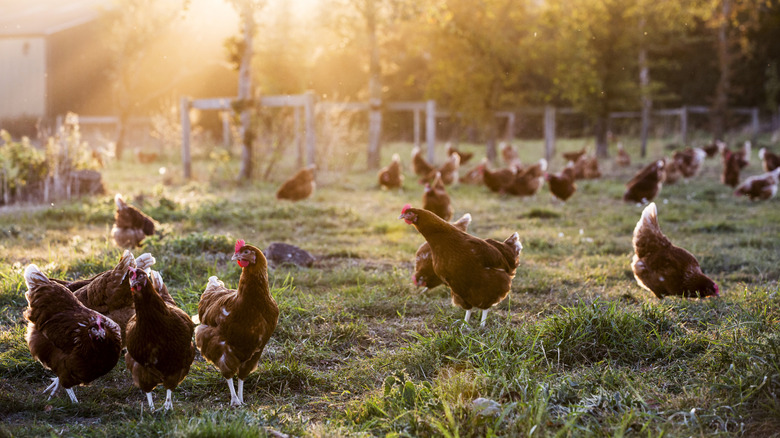
Fear not, chicken lovers, as not all chickens are bred, raised, and processed equally. Bourdain noted that "most chefs believe that supermarket chickens in this country are slimy and tasteless compared with European varieties." Thankfully, these days, American consumers have more options than strictly the slimy, factory-farmed chicken Bourdain referenced, albeit usually at a higher price. A whole roasted chicken can be incredibly tasty, especially when the chicken is sourced from smaller, more conscientious poultry farmers who eschew typical gargantuan factory farming methods for organic, pasture-raised chickens that live better lives and produce a superior product.