

The Retro Trick That Makes Pumpkin Pie Unbelievably Creamy
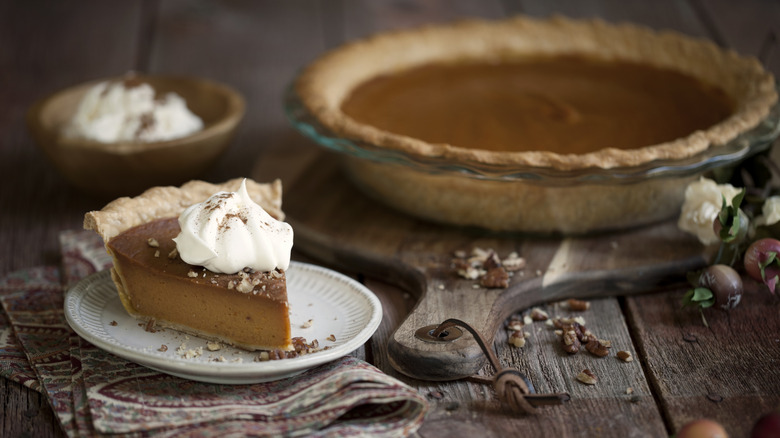
Holiday baking has always been a mix of tradition and resourcefulness, with families passing down pie recipes like heirlooms, every generation developing their own shortcut, tweak, or secret sauce. For pumpkin pie, a classic trick is pulling a can of sweetened condensed milk from the pantry. It's not fancy, but it turns the filling into something silkier and creamier than cream or evaporated milk alone can achieve.
Sweetened condensed milk is made by heating regular milk until more than half of the water evaporates, then adding sugar. That concentrated base changes how custard sets in the oven. With less water and more milk solids, proteins are better supported as they cook, and sugar helps keep those proteins from tightening too much. The result is a custard with fewer cracks, a smooth, dense texture, and a bite that holds together neatly but still melts on the tongue.
It's no accident that condensed milk became a holiday staple in the mid-20th century. Introduced in the 19th century as a shelf-stable source of nutrition, it gained popularity during wartime and Depression-era cooking when fresh dairy wasn't always available. By the time pumpkin pie became a fixture on holiday tables, condensed milk was already in the cupboards of nearly every American household. Its reliability made it a natural choice for bakers aiming for consistency. The can of condensed milk hasn't changed much over time, and it can take a pie from good to luxurious.
How to bolster the flavor of your pie
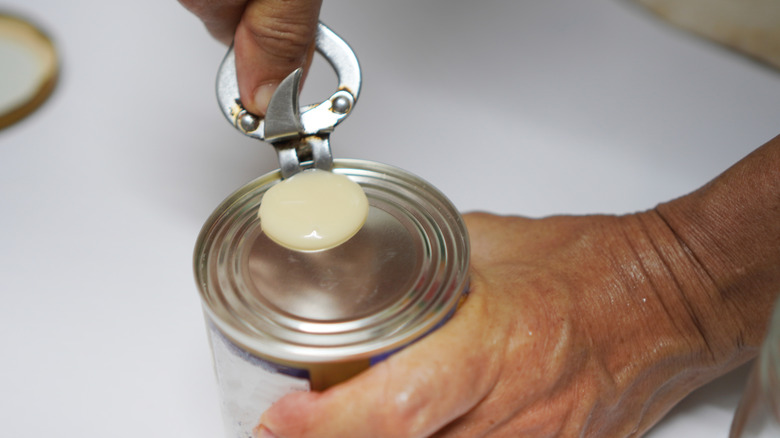
Since the milk is already sweetened, bakers can reduce or eliminate added sugar when using this method. Sweetened condensed milk's caramel notes pair naturally with pumpkin and warm spices like cinnamon, nutmeg, and clove. The filling bakes into a custard that slices cleanly and keeps for days in the refrigerator without weeping or separating, another benefit of condensed milk's low water content.
Modern variations can elaborate on the retro trick. Sweetened condensed coconut milk gives a similar texture with a hint of nuttiness, so it's a nice option for dairy-free bakers. Some cooks blend condensed milk with cream cheese for a cheesecake-like hybrid, while others layer pumpkin filling over condensed-milk-based fudge or pour it into a gingersnap crust for extra spice. Each tweak keeps the spirit of the old trick while opening the door to new traditions.
Other little ideas can help pumpkin pie shine. Adding an extra egg yolk enriches the custard, while roasting fresh pumpkin and zapping it into a purée instead of using canned can deepen flavor. A splash of bourbon or dark rum brings subtle complexity without overwhelming the pumpkin. And some vintage recipes call for brushing the crust with beaten egg white before filling, which helps keep the bottom crisp. These ideas may be as old-fashioned as condensed milk or as modern as a coconut-based swap, but they share the same goal: to make a pumpkin pie that is flavorful and texturally perfect.