

This Popular Veggie Was Created In Japan Just A Few Decades Ago

We like to think of our vegetables as a gift from Mother Nature, as they surely are. But what if those earth-offerings had a little help along the way? That's exactly what happens when food scientists fiddle around with all the good bits of a beloved veggie, making it even better. Case in point is a now-popular, relatively new green cruciferous, cutely named Broccolini. Rather than letting nature have its way unassisted, this offspring from mama broccoli got a nudge from a group of curious and enterprising food breeders.
The Broccolini story begins in Japan, but not from a centuries-old, deep-rooted tradition. It was the early 1980s when breeders at the Sakata Seed Company in Yokohama first decided to cross standard broccoli with Chinese kale (gai lan), hoping to make super-babies using the best traits of each plant. The goal was to create a milder-flavored, more heat-tolerant vegetable that would thrive in areas where conventional broccoli struggled. Once the laborious process began, it took years of experimentation and selective breeding — but they did indeed produce a brand-new hybrid vegetable in the Brassicaceae family.
Its initial name in Japan was "Aspirations," converting to "Broccolini" after the long-stemmed beauties journeyed to America. Sakata partnered with Mann Packing of California to trademark the new American-style name in 1998. It's important to note that this tasty, highly nutritious vegetable was not "genetically modified," but naturally cross-bred and hand-pollinated from existing foods. Going through similar processes are ones on our somewhat surprising list of common man-made fruits and vegetables.
Broccolini flavor and cooking ideas
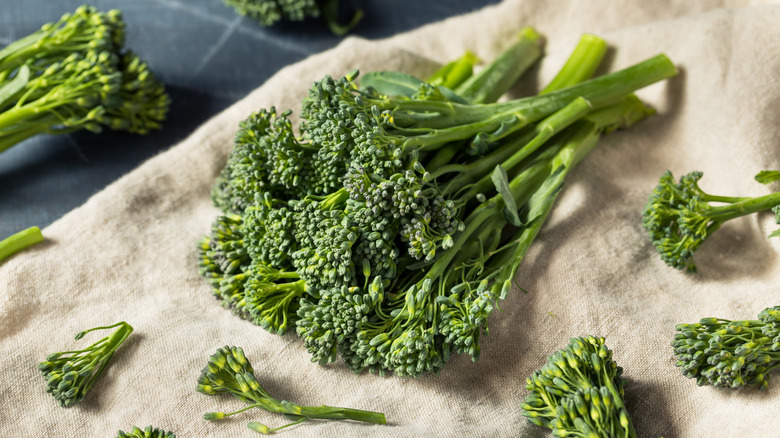
If you've yet to venture into baby-broccoli territory, it's easy to imagine it as just a longer, skinnier, and more delicate version of traditional broccoli. In some ways, that's true — but other characteristics definitely make it stand apart. That includes the flavor difference between broccoli and broccolini. Many describe Broccolini as sweeter and more delicate than its sturdier broccoli counterpart, bearing mild peppery notes and none of the slight bitterness of broccoli.
Broccolini stems are also more tender, and the slender florets are smaller, making it suitable for a wide range of preparations. It stands up well to steaming, requiring only four or five minutes before plunging into ice water, which halts the cooking and locks in that vivid green color. Eat on its own, or do a brief sauté in olive oil, garlic, and a pinch of red pepper flakes. It's also an excellent way to incorporate healthy nutrition into pasta dishes; just fold steamed Broccolini into warm pasta with lemon, olive oil, and shaved Parmesan. Dice raw Broccolini into salsa and spoon over baked fish, or incorporate it into fried rice.
Since the whole vegetable is edible, including stems, florets, and even small leaves, the possibilities are endless. Broccolini can handle grill heat, as long as you do a quick sizzle, so it works wonderfully in our recipe for charred broccolini with yogurt sauce. It also sits easily on our list of best vegetables to roast in the oven.