

7 Nepali Dishes You Need To Try At Least Once
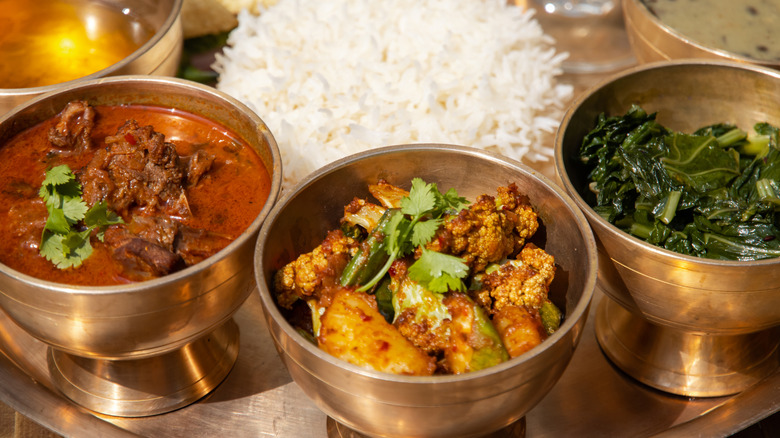
In the Western world, we regularly enjoy food with Thai, Indian, or Japanese influence. But there's another country with an equally vibrant and flavorful food scene that's often overlooked. Nestled between China and India, Nepal is perhaps best known for its awe-inspiring, mountainous landscapes, but it's a place that also deserves recognition for its unique cuisine. Nepali food is the unsung hero of the Asian culinary landscape, offering bold flavors and an array of hearty dishes with a delightfully nourishing quality.
To gain some expert knowledge on the wonders of traditional Nepali food, we interviewed Mr. Anish Waiba, Head Chef at Shinta Mani Mustang — a luxury resort in the town of Jomsom, Nepal. Waiba's passion for his country's cuisine is clear, and he describes how the food "reflects the country's rich cultural and geographical diversity". Providing us with valuable insights into the diverse array of dishes he prepares, the chef tells us that many recipes are underpinned by a delicate balance of spicy, sour, and savory flavors. "A hallmark of Nepali cooking is the use of fresh, seasonal, and locally grown ingredients", adds Waiba, whilst also highlighting that "every community — from the Newars of the Kathmandu Valley to the Sherpas of the Himalayas and the people of the southern lowlands — contributes its own ingredients, flavors, and cooking methods."
With Waiba's help, we've selected seven signature dishes that are a must-try if you're sampling Nepali cuisine for the first time. Whether you're visiting a Nepali restaurant or recreating the magic at home, these wholesome picks are sure to impress.
Mo:Mo
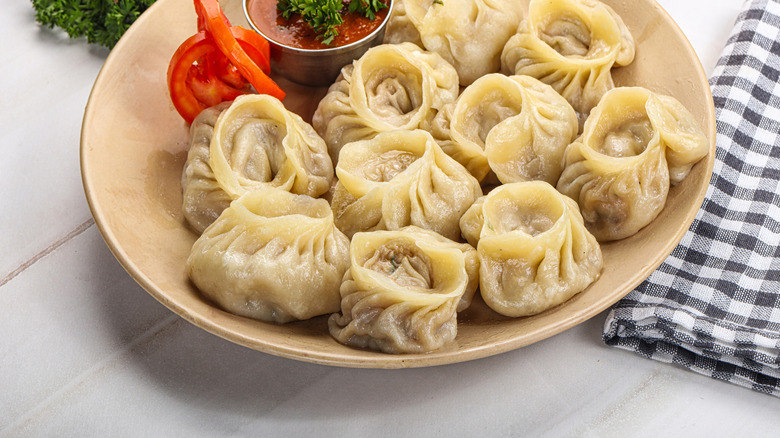
These spicy dumplings are bursting with bold, aromatic flavor, and they're fantastically versatile too. Mo:Mo consist of a wheat flour-based dough, that's filled with meat or vegetables, but it's the selection of spices and aromatics that set these hearty bites apart from the Chinese-style steamed dumplings you're perhaps more familiar with. Anish Waiba explains how the Mo:Mo filling ingredients are marinated with momo masala — a Nepali-style spice blend that typically includes cumin, coriander seeds, turmeric, cinnamon, and mustard seeds. Onion, ginger, garlic paste, salt, and extra Nepali spices also add heaps of flavor to the filling.
For the meat element, ground chicken is a popular choice, but you'll also see versions made with beef or pork. Common vegetable add-ins include green onions, celery, cabbage, and mushrooms. Once the filling ingredients have been mixed up, the dough is prepped by simply combining flour and water, and kneading everything into a smooth ball. Rolled out and cut into circles, each piece is then filled and sealed up. According to Waiba, Mo:Mo can come in various different shapes, but you'll often see them finished with a pleasing pleated effect. The dumplings can then either be steamed, to keep things tender and chewy, or fried, which yields a crispier result.
The chef describes Mo:Mo as "a popular everyday snack and a favorite at gatherings" in Nepal. The dumplings are typically paired with a spicy tomato chutney called achar, and often served floating in a bowlful of ginger- and garlic-infused tomato soup called jhol.
Dal bhat
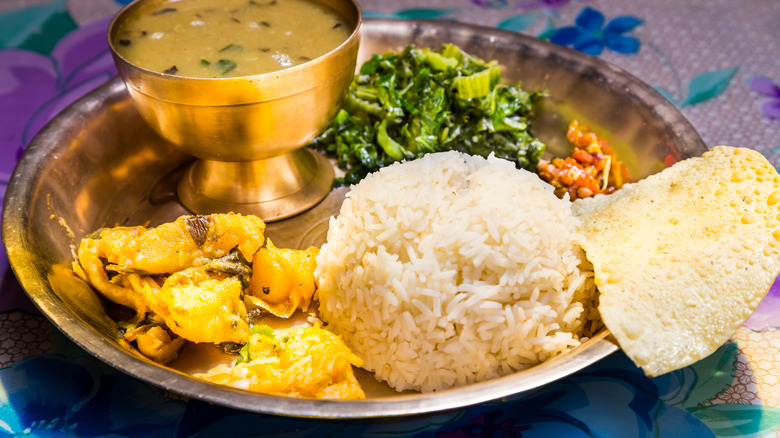
An everyday staple for the majority of households in Nepal, dal bhat consists of rice (bhat) served with lentil (dal) soup. To make the soup, red lentils are first boiled, then tempered with garlic and spices like turmeric, cardamom, and cumin, as well as jimbu — a leafy herb belonging to the onion family. The platter is then assembled with a mound of steamed white rice, a bowlful of the lentil soup, and some equally nourishing extras, such as homemade pickles, or other seasonal curries. Tarkari, a curry made with an array of veggies like cabbage, cauliflower, and green beans, is a particularly popular accompaniment. The resulting medley of foods on the dal bhat platter is wonderfully well-rounded, providing an excellent source of sustenance and plenty of vital nutrients.
Anish Waiba explains how the exact components and flavors of dal bhat can vary in different regions of Nepal. He says, for example, that the dish "has a distinct taste in Mustang compared to the Terai regions. The Thakali set is milder, while the Terai style leans closer to Indian curries as the region is closer to India." There's also the option to transform the soup into a thicker, dip-like dal, garnishing it with fresh cilantro, lime wedges, and fresh chili pepper slices.
Sel roti
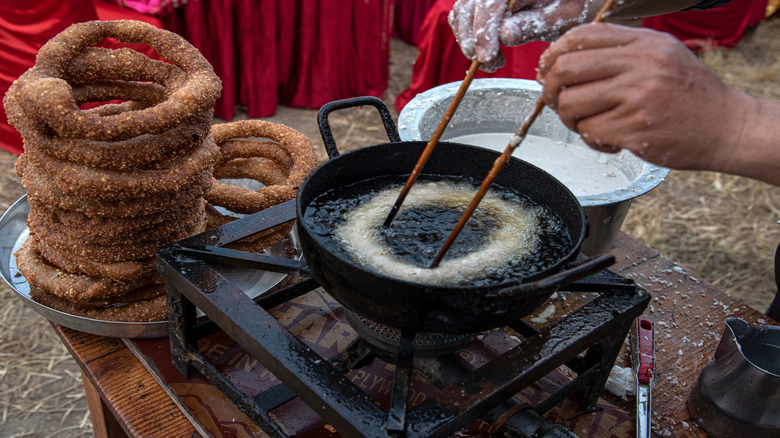
Sel roti is Nepal's take on fried bread. These ring-shaped treats are made with a fermented rice flour batter, and deep-fried for an indulgent finish, being delightfully crispy on the outside yet soft and chewy in the middle. Anish Waiba shares that sel roti is traditionally prepared during Tihar, a Nepali festival that celebrates light and love, as well as being served at weddings and other religious ceremonies.
To make sel roti, uncooked rice (typically short to medium grain) is first washed, then soaked in water overnight to soften. Once rinsed, half of the rice is then ground down to a sand-like consistency, with the other half blended into a milky liquid. These two portions are then combined and mixed with ghee, sugar, and rice flour to create a smooth batter. Next comes the fermentation stage: the batter is left to sit at room temperature for at least eight hours. The finished batter should be thick enough to hold its shape. To create those signature rings, you can either use your hands to shape the batter pre-frying or transfer it to a squeeze bottle and add it to hot oil in a swift circular motion. The sel roti should take around one to two minutes to reach crispy, golden perfection. After a quick drain on some kitchen paper, the breads can be enjoyed warm with sides such as yogurt, pickle, or a mug of hot tea.
Yomari
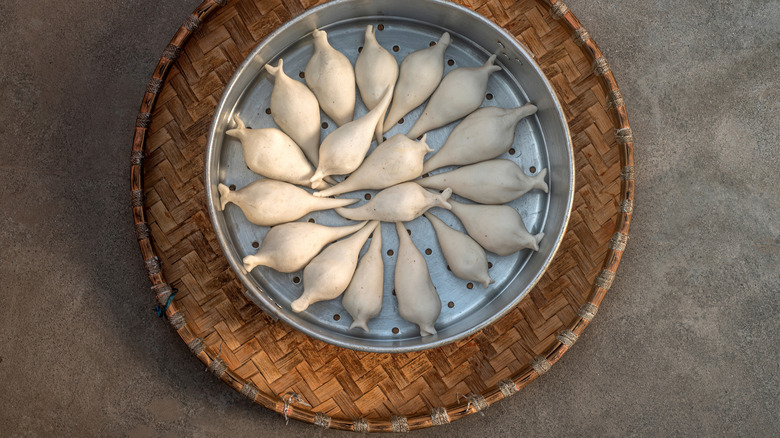
Dumplings don't necessarily have to be savory, and these moreish bites are a favorite on the Nepali dessert scene. Yomari consist of a rice flour dough, filled with a sweet chaku (also known as jaggery) mixture, or a type of reduced milk called khuwa. Anish Waiba tells us that yomari are a delicacy in Newari culture, and "specially made during Yomari Punhi, a Newari festival celebrating the end of the rice harvest on the full moon". The Newar people make up approximately 50% of the population of the Kāthmāndu Valley in Nepal, and their culture has strong Indian influences.
With the addition of hot water and salt, the rice flour comes together in a smooth dough, which can be left to rest while the filling is prepared. Chaku, which is similar to palm sugar, is heated with ghee, and sometimes sesame seeds, coconut pieces, nuts, or dates, to form a thick, sticky filling. For the khuwa option, the milk solids are combined with sugar and perhaps a sprinkling of ground cardamom, for a creamier and more fragrant approach.
To create the distinctive yomari shape, portions of the dough are molded into cone-like pieces, with an opening made in the base. Spoon the filling in, then pinch and twist the dough to seal the mixture inside, creating an almost fish-shaped dumpling. The final step is steaming the yomari until lovely and glossy on the outside, and piping hot in the middle.
Dhido
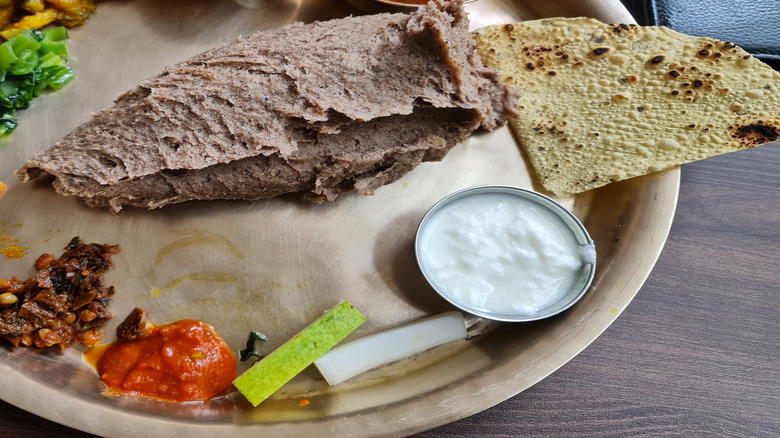
It might not have the most appetizing appearance, but dhido is a brilliantly versatile staple that fits in beautifully alongside a whole host of other Nepali foods. This porridge-like creation sees buckwheat, millet, or corn flour mixed with boiling water until thickened. It's high in fiber, naturally gluten-free, and serves as a satisfying base for building a complete meal. Dhido is eaten daily in many parts of Nepal, being especially popular in rural and high-altitude regions.
Typically eaten with the hands, dhido is thick enough in consistency to break apart and roll into balls, making it ideal for dipping into curries, soups, yogurt, and various condiments. Dishes frequently served alongside dhido include masu ko jhol (a curry often made with chicken or mutton), and saag (spiced leafy greens such as spinach or radish leaves). And, pickles are great for providing a fresh, tangy contrast to the flour mixture. You can also stir ghee into the dhido itself for a richer finish.
Gundruk
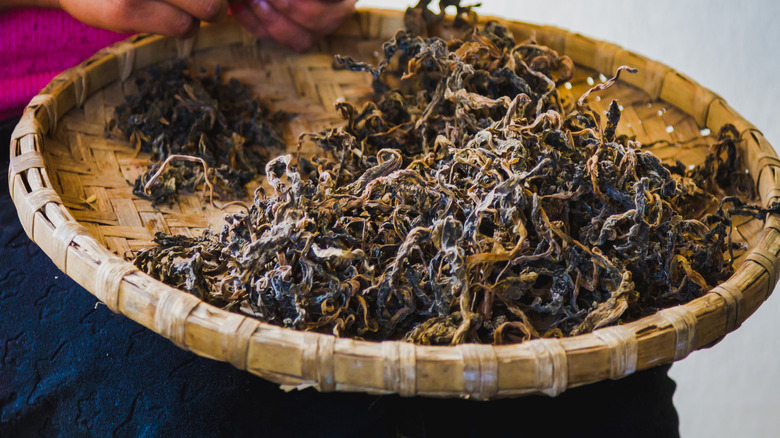
Packed with punchy, umami-rich flavor, gundruk is a unique Nepali dish that exemplifies resourcefulness. It consists of fermented and dried leafy greens, such as mustard greens, radish leaves, cauliflower leaves, or spinach. According to chef Waiba, the greens are "packed and left to ferment for about a week, resulting in a tangy, earthy flavor". Originating from the remote mountainous regions of Nepal, gundruk was developed as a traditional way to preserve the fresh leafy ingredients for long periods, locking in their nutrients while minimizing waste.
The gundruk preparation process involves first washing the greens, letting them dry out, then slicing them up. Next, the leaves are crushed in a mortar and pestle, before being firmly squeezed to remove any excess water. Packed into a lidded jar or clay pot, the greens are then left to ferment for around 10 to 15 days, which gives them their sour taste. The final step is drying the fermented greens, either in the sun or using a dehydrator. Then, they can be stored in an airtight container in the pantry for up to a year.
Gundruk also forms the base of gundruk ko jhol, a warming vegetable soup with a spicy, turmeric-infused broth. The gundruk is soaked and cooked with the other aromatics and veggies like onion, garlic, ginger, potato, and tomato. The mixture is seasoned with spices and topped up with water, creating a vibrant broth that's full of tangy, savory flavor. It's fantastic served with rice and a sunny-side up egg.
Thukpa
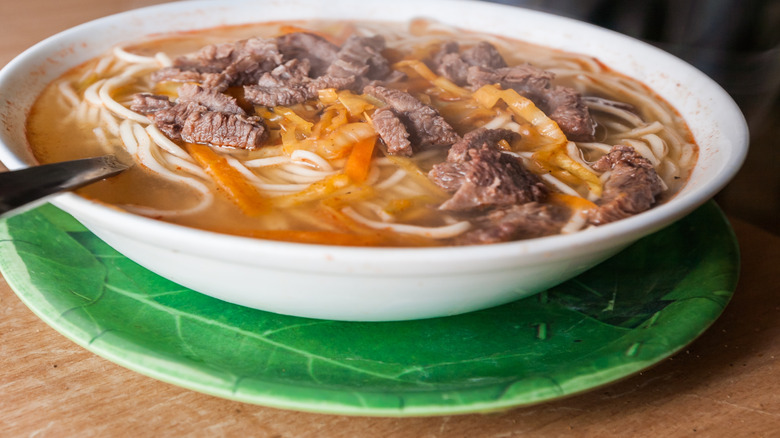
Thukpa is the ultimate Nepali comfort food, perfect for keeping warm during the harsh Himalayan winter nights. This dish has its roots in Tibet, a high-altitude autonomous region of China that borders Nepal. Though thukpa is widely consumed in Nepal today, it remains popular amongst Tibetan sherpa communities, as well as in Bhutan and India. In fact, this warming soup is allegedly one of the Dalai Lama's favorite dishes.
A standout component of a classic thukpa is the chewy wheat or rice noodles, which make it ultra-satisfying. The soup also contains a medley of vegetables and aromatics, and sometimes meat, which might be in the form of chicken, pork, or even mutton. Garlic, ginger, onion, and chili are popular add-ins to the broth, with veggies like carrots, cabbage, and bell peppers fitting in beautifully too. A squeeze of lemon juice is great for adding a hint of brightness, and zesty cilantro leaves makes for a refreshing garnish.
Thukpa tastes amazing served alongside Mo:Mo dumplings and steamed vegetables. You can also top it with a dollop of spicy tomato chutney to turn up the heat, or pair it with roti, which is great for mopping up every last bit of that flavor-packed broth.