

Should You Use Oil Or Butter To Bake The Perfect Cookies?
We may receive a commission on purchases made from links.
If you're a fan of homemade cookies, here's one question for you: For the fat, do you use butter or oil? This is a longstanding debate among bakers; everyone's going to have a different answer accompanied by individual reasons and rationales for their pick. That's why we decided to ask an expert, Jerrelle Guy, author of "Black Girl Baking" and founder of Chocolate for Basil, to weigh in on this choice.
According to Guy, there isn't one single answer to the question, but a great deal of nuance. "It depends on the style of cookie you're making and the texture you're looking for," she explains. "Butter is usually the go-to choice (solid or melted) because it adds so much flavor." Outside of flavor, Guy revealed that butter can do one other thing: "Solid butter should be the go-to choice for structure." You see, when it's creamed, it adds air to the dough and forms a stabilizing network with the fats and sugar, giving your cookies their shape and texture.
Butter excels in recipes where its flavor shines — think shortbread or sugar cookies. But what about tenderer, cake-like cookies? "For tender, cakey cookies that you want to stay soft for days after they bake, like oatmeal cookies or whoopie pies," Guy explains, "you could use oil instead."
Flavor profiles that can make or break your cookies
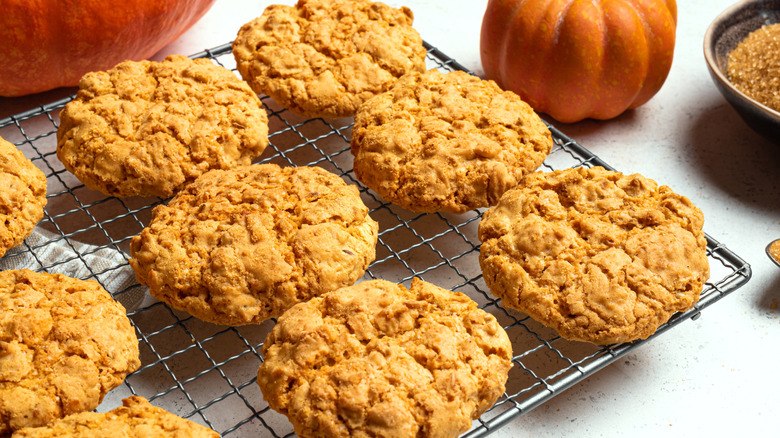
If you're making cookies with lots of extra flavoring ingredients like molasses gingersnaps, you've got to be very careful with the sort of fat you choose. Whatever you pick must play nice with all the other ingredients in the recipe. "The creamy, rich flavor of butter is a classic pairing for ingredients like brown sugar, chocolate and vanilla," Guy suggests. But if you're making nuttier recipes like those Copycat Levain Chocolate Chip Walnut Cookies (or if you simply want to give your classic butter cookies a twist), try browning the butter by simmering it on low heat until the milk solids turn golden brown. According to Guy, once browned, butter "takes on a toasty butterscotch-like flavor" and will be perfect for the job.
On the flip side, oil lets more delicate flavors take center stage. Just remember that not all oils work the same way. Canola oil stays truly neutral, but something more adventurous like olive oil needs thoughtful pairing. "Pair them with things that go with that fruity, grassy taste. I like earthy dark chocolates and fruity citrus," Guy advises.
The takeaway from all of this is simple: Choose butter for flavor and structure, and neutral oil when you want other ingredients to be the stars. Keep this in mind, and you'll always know which fat to reach for!