

This Is Why You Should Avoid Round Measuring Spoons
We may receive a commission on purchases made from links.
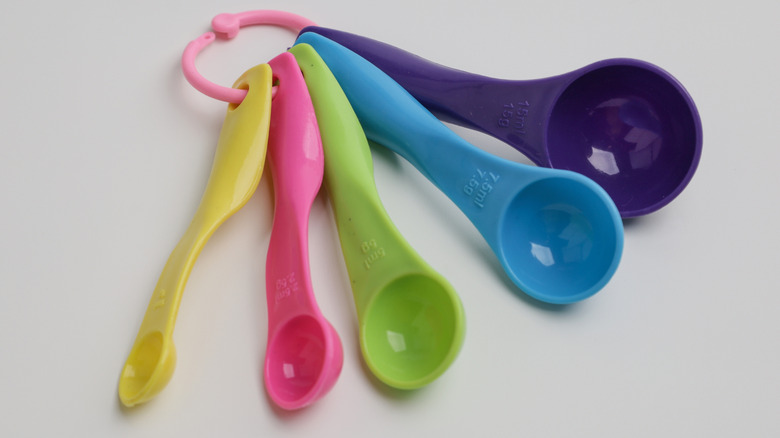
We've all seen cutesy, heart-shaped measuring spoons and other fun designs, but how practical are they really? The answer is not very much, since the unusual shape is difficult to fit inside almost every container. The same can be said about the traditionally round measuring spoon, which has been a staple of the modern kitchen since they were popularized by standard measurements in the early 1900s.
If only for the sake of cleanliness and convenience, you're better off staying away from standard round measuring spoons that won't fit inside most spice jars and small containers. Let's say you're making a recipe that calls for two tablespoons of paprika. If you grab a round measuring spoon and try to stick the utensil into the container for a perfect scoop (once you've thrown away the sifting cap on your spice shaker), you'll quickly realize that the diameter opening is often smaller or equal to the diameter of the measuring spoon. From there, you're left either shaking the spice into the measuring spoon, which will undoubtedly create a huge mess, or using a smaller spoon to scoop the contents into your larger measuring spoon. Both options are inconvenient, but luckily for us, measuring spoons come in all shapes and sizes.
It's time to turn to rectangular measuring spoons
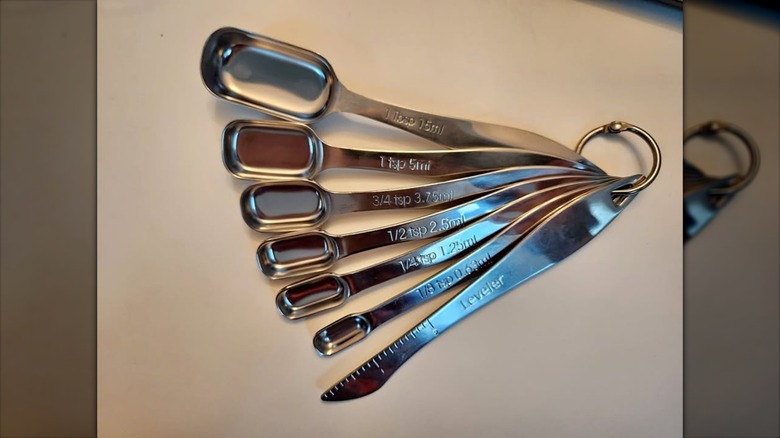
Rectangular measuring spoons (like these rectangular measuring spoons from Amazon) that are better suited for scooping directly out of spice containers and other pantry ingredients. The long, narrow shape allows these measuring spoons to easily fit into small or bottlenecked openings, meaning less time spent on cleanup and more time spent on mixing. Rectangular measuring spoons might require a little more work for leveling, since leveling is the best way to measure baking ingredients, but the ease and comfort of use far overshadow this minor inconvenience.
Measuring spoons are tricky in general, especially given that there are no regulated standards when it comes to the volume of measuring spoon sizes. The manufacturer with heart-shaped spoons might have a tablespoon that holds 12 milliliters, while a rectangular measuring spoon might hold the 15 milliliters of an actual tablespoon. The only completely accurate way to tell is by using a scale, or this other simple trick to approximate teaspoon measurements, but then we're back to square one of making a dusty, spice-filled mess on the counter. Yet another reason to stay away from round or oblong-shaped measuring spoons and stick with rectangular ones, instead.