

Here's How Long Spam Musubi Can Sit Out, And How To Store The Leftovers
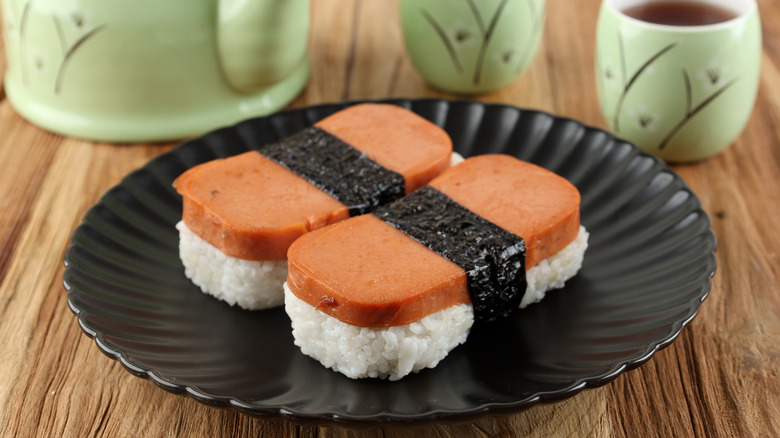
Spam and the dish Spam musubi were introduced to Hawaii during World War II as a part of the military food ration, but Spam quickly made its way into Hawaii's culinary landscape. Cut to the president day, and Spam is a crown jewel of Hawaiian cuisine, with Spam musubi serving as one of its central offerings.
Similar to onigiri, Hawaiian Spam musubi is made by assembling marinated and pan-fried slices of Spam on a rectangular bed of rice. Each parcel is then wrapped in a sheet of nori seaweed. Once you prepare this snack, however, you can't leave it sitting out for too long. Spam musubi left at room temperature must be consumed within four hours, after which it's prone to contamination from harmful bacteria and must be thrown away.
That being said, there is a way to store Spam musubi for longer than just a few hours. The trick is to store it at a temperature that's either below 45 degrees Fahrenheit or above 140 degrees Fahrenheit. Anything in between means the snack may become infested with bacteria and spoil after that four-hour window, so keep that in mind when leaving this dish at room temperature.
Tips to remember when storing Spam musubi
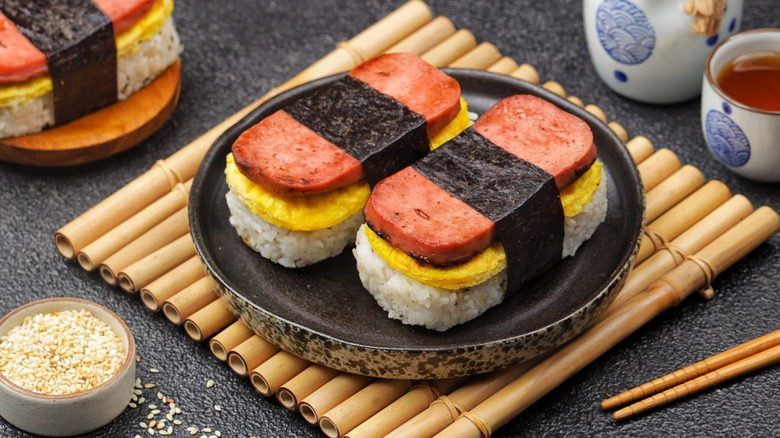
Ideally, you should eat Spam musubi fresh and within just a few hours of preparation, but sometimes you just can't finish it all and have leftovers that need to be stored. In such an event, your fridge is the best bet. Just cover your Spam musubi in cling wrap or pop it in a tightly sealed container and stick it in the refrigerator. It should last for up to three days.
However, while its flavor will likely remain the same, keep in mind that the texture of your Spam musubi may change after refrigeration — the tender and fluffy rice can become dry and hard from the cold. You can warm it up in the microwave for a few seconds to bring up its temperature and revive some of that texture, though doing so will also result in the crisp nori turning soft and gummy. But hey, at least it's still tasty and safe to eat!
Just make sure you stay on the lookout for hints that your Spam musubi has started to spoil. Watch out for any obvious mold or dark discoloration on the meat — these are clear signs that your Spam has gone bad. If you notice a slimy texture on the canned meat, or stickiness in the seaweed, it's time to toss the musubi out. Any pungent or rancid odors are also red flags. If your Spam musubi displays any of these traits, it's best to bin it and make a new batch.