

This Simple Brown Stem Rule Helps Find The Sweetest Apples
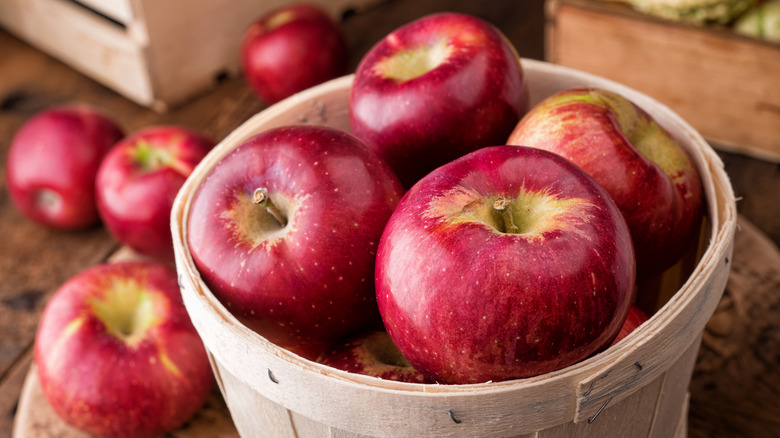
Few things are more disappointing than biting into a crisp, juicy apple, only to realize that it's bland and flavorless. Granted, you can still salvage these apples by turning them into preserves and chutneys or sweet and spiced applesauce. But you'll never quite get that same natural sweetness and underlying tartness that you would from a perfectly ripe apple, especially when you're eating the fruit on its own or making a favorite dessert. Besides, you don't always want all that hassle just to make a mediocre apple taste better.
So, that begs the question, how do you pick the sweetest apples from the lot? Enter: the brown stem rule. On your next quest for the sweetest apples to go in your simple apple strudels and classic apple cobblers, simply pick those with stems that are intact and brown in color. A brown stem means the apple is mature, hinting that the fruit is ripe — and, therefore, sweet — for munching.
On the flip side, avoid picking apples with green stems. These indicate that the apples haven't fully ripened, meaning they'll be less sweet and more tart or sour. Plus, picking apples with intact stems means that your sweet fruits will last longer. Stems act as a barrier, limiting the exposure of the juicy flesh inside to air and bacteria. Without this barrier, your apples are likely to spoil more quickly.
More tips and tricks for picking the best apples
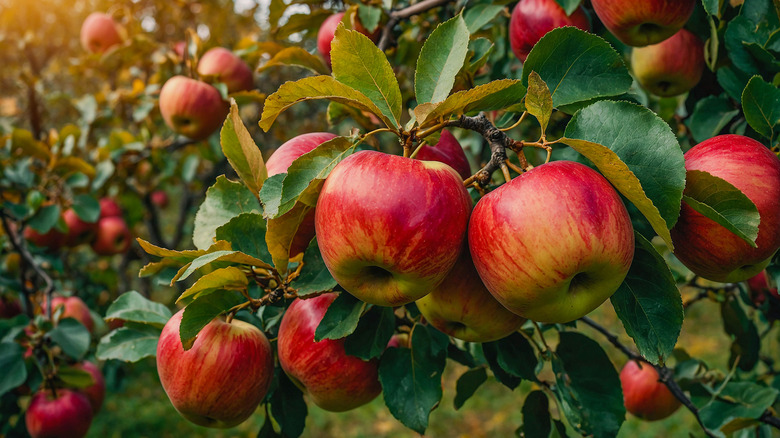
Now that you know the brown stem rule, you should know that there are several other ways to gauge apples' ripeness, ensuring that you get the sweetest fruit possible. Best of all, you can combine one or several of these tricks if you want to double-check. If you're out apple-picking in an orchard where checking the stem is bound to be difficult, judge each apple by how easily it comes off the tree. If you're able to pluck it with little more than a gentle tug — no wresting or twisting required — it's ripe for eating and likely to be sweet.
Also be on the lookout for any marks of visual discoloration, blemishes, or bruises. Ripe apples are smooth, shiny, and wrinkle-free. It's a good idea to feel the apple as well; if it feels firm to the touch, it's ripe. Conversely, if it has a soft, mushy texture, that's a sign that the apple is overripe. It will have none of that sweet juice and will taste more grainy and mealy instead. Finish off your DIY ripeness checklist by giving the apples a sniff test. If they give off a sweet and fruity aroma, they should be ripe, tasty, and good to go. Combining these tricks with the brown-stem hack can ensure that whatever apple you bite into will burst with delicious juice.