

Here's What Science Says About Double-Dipping And Germs
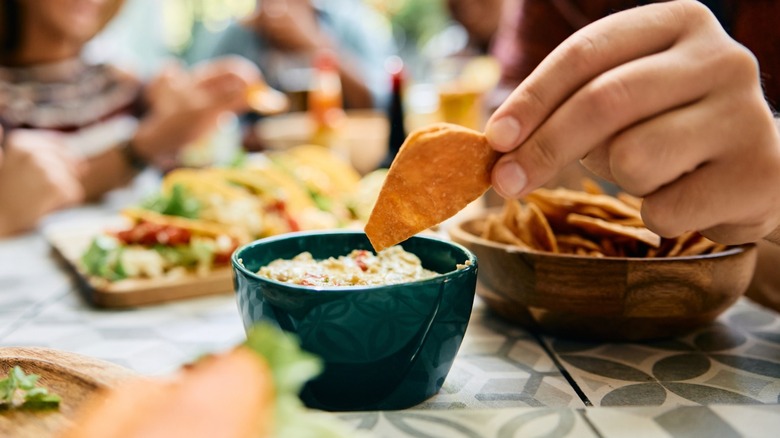
It's a Friday evening. You've decided to stay home and watch a movie with your family. You made some snacks, including a delicious platter of nachos with some queso dip. You're just getting to the good part of the movie when you and see the person next to you bite a nacho, and then dip the remaining half back into the queso — they double dipped. You stare at the bowl of queso and wonder if it's still safe to eat or already laden with bacteria. Lucky for you, science has an answer. Unlucky for your queso, it's probably not the one you want to hear. Double dipping is a one-way ticket to bacteria town.
For years now, the idea of double dipping — biting a chip or some veggies and then putting the bitten end back in the communal dip — has been a social taboo. That's why we came up with the term double dipping, to acknowledge that this is a thing and that most people are not in favor of it. On your own, who cares? If you're eating the chips and dip by yourself, then it doesn't matter. Amongst others, however, distaste for double dipping is not just for show. You could be spreading 100 to 1,000 times as much bacteria around that bowl of dip with one single double dip. Do you trust the mouth bacteria of everyone at your party?
Is any double dipping safe?
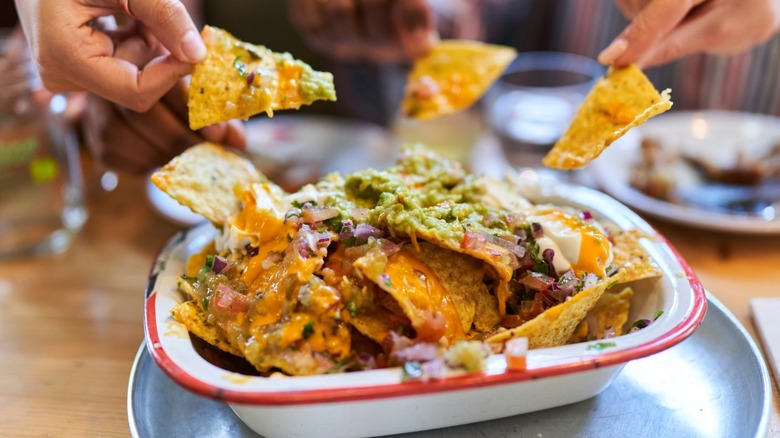
If you're worried about the bacteria from double dipping, there isn't a lot of comfort to be found in the practice. Your best hope lies in the dip itself. Some dips tend to harbor fewer bacteria than others. One study showed that salsa had more bacteria after a double dip than cheese or chocolate, according to Harvard Medical School. However, the fact remains all three were contaminated with more bacteria after the double dip than before. If a person double dips three to six times, there's a chance for transferring up to 10,000 bacteria.
If casual double dipping can transmit between 50 and 100 bacteria per bite, that's more than enough to spread an E. coli infection, which can take root with less than 100 bacteria. Shigella is even more infectious, and just 10 bacteria could cause illness. This means there are real potential consequences to double dipping beyond the ick factor.
The world is still dealing with the effects of the COVID-19 pandemic, and that's another infection that easily spreads through saliva, which could end up in your chip dip as a result of double dipping. Strep throat, influenza, pneumonia, and many others can be present in human mouths. Depending on the type of dip, you could be exposed to dangerous amounts of any of these bacteria or viruses. Next time you see someone double dipping, don't feel out of line speaking up about what they're doing. It's not just inconsiderate and a little gross — it can be dangerous, too.