

The Classic Mistake You Avoid When You Brine Beef Or Chicken
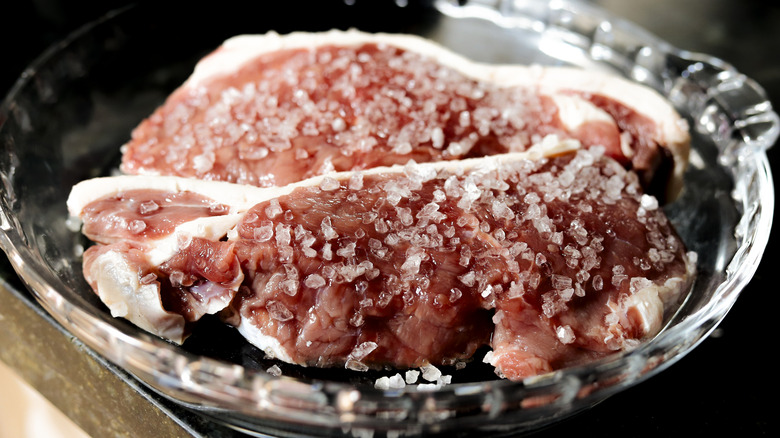
Brining may be the single best way to avoid all of the worst mistakes you can make when cooking meats like beef and chicken. Brining comes in two basic forms, wet brining and dry brining, and both of them can do wonders for your favorite cuts of meat. At its core, the process simply entails adding salt to meat, or other foods, before you cook them. It's a practice that dates back thousands of years, when it was primarily used to preserve food. Over time, people came to realize it also has huge benefits even when cooking fresh meat. The biggest one is that it helps to prevent you from overcooking your meal.
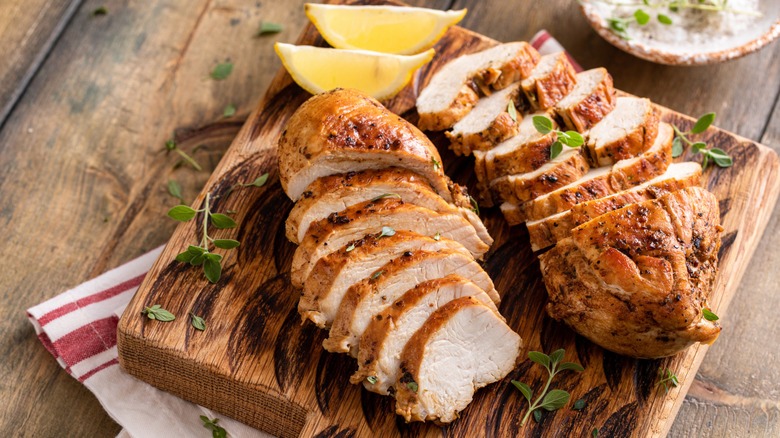
The downsides of overcooking are tied to one main thing: moisture. When you heat up beef, chicken, pork, or any other meat, the muscle fibers contract, which squeezes out moisture. This is why a burger you put on the grill ends up smaller after being cooked. And losing all that liquid is why well-done meats become tough and leathery. Brining helps meat retain moisture, even during cooking. This is partly due to the fact that salt attracts water, which in turn gets absorbed by the food. So while you can still overcook a steak that has been brined, you have a much larger margin for error that will make it tougher for you to mess up. And even perfectly cooked meats will be more juicy and tender if they've been brined.
Brining makes it much harder to overcook beef, chicken, and other meats
The reason brining helps retain moisture has to do with the salt, which diffuses through the meat by osmosis. This is because cells naturally want to balance the amount of sodium in them, so the more exposed cells on the outside will transfer salt to their neighbors on the cut of meat's interior until the process achieves a better distribution.
This has the benefit of evenly seasoning the meat, too, but as this process carries out the salt also has the effect of breaking down and dissolving muscle proteins. This limits muscle fibers ability to contract when heated, and that means less moisture gets squeezed out during cooking.
Wet brining can have the effect of adding additional moisture, which can be useful for some naturally dry and lean cuts of meat, but salt alone is enough to limit overcooking and keep your beef and chicken tender. Of course wet brining also opens up the possibility of adding extra flavors, like brining with pickle juice and buttermilk, so there is plenty to recommend either method. You don't want to brine meat for too long because that can result in mushiness rather than a desirable level of tenderness. That doesn't mean the process needs to be brief, however. Even smaller cuts should brine for at least an hour if you want to keep things juicy.