

Deep-Fry Shrimp Without A Huge Pot Of Oil With These 2 Kitchen Staples
We may receive a commission on purchases made from links.
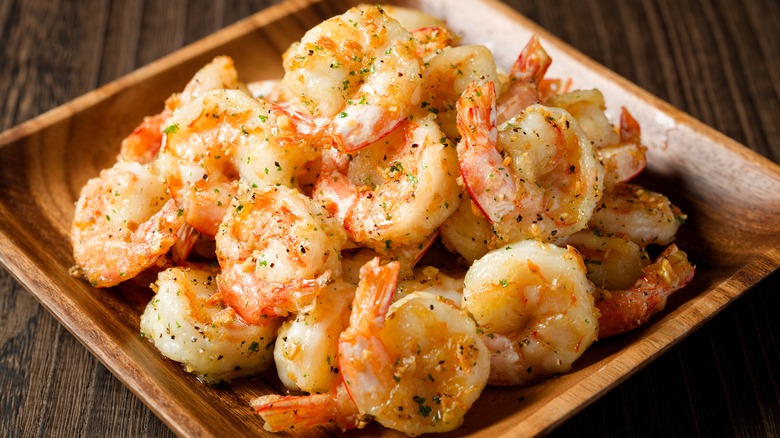
Deep-frying anything instills a moist, tender interior and a crispy, crunchy exterior that's hard to achieve with other cooking methods. Fried shrimp is no exception, with a light breading that provides a delicate crunch to contrast its bouncy, tender meat. While fried shrimps, such as panko fried shrimp, require a breading station and a deep vat of oil, you can achieve that deep-fried taste and texture with two kitchen staples.
All you need for restaurant-worthy fried shrimp is corn starch and a few tablespoons of oil. Starch is a magical ingredient that can be a thickening agent, a binding agent, and, in the case of fried shrimp, a crisping agent. The natural moisture in shrimp helps the corn starch adhere while also turning the powder into a pasty coating that delivers a bubbly, light, and airy crunch as it sizzles in oil.
Oil, of course, is the second staple. However, instead of wasting half the bottle, you only need to coat a saucepan in a thin layer. By swapping the deep fryer for a saucepan or even a flat-bottomed wok, you'll swap deep frying for shallow frying with mostly the same delectable results; no need for multiple-dredging bowls, oil thermometers, a large pot of oil, and the extensive clean-up that follows. Simply toss 2 pounds of shrimp with half a cup of corn or potato starch until fully coated before adding them to a preheated oiled saucepan to fry for a couple of minutes per side.
Tips for shallow-fried shrimp
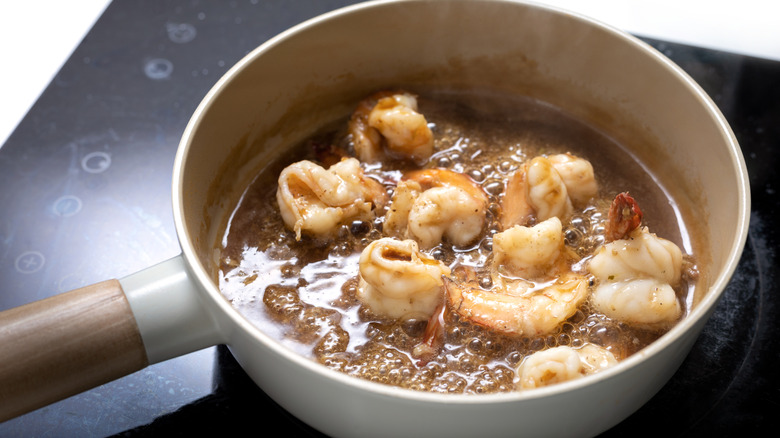
Corn starch and oil are all you need for shallow-fried shrimp, but you can always up your game with seasonings, sauces, and complementary vegetables. Before adding cornstarch to shrimp, consider adding salt and pepper for a simple seasoning that will help enhance the oceanic flavor of the shrimp. Salt and pepper are the most basic seasonings, however. You could stir paprika, red chili flakes, and garlic powder into the starch before coating the shrimp. Save yourself the cost of individual spices by using a spice blend like Old Bay seasoning or this Tony Chachere's Creole seasoning packet.
As for oil, the best type to use is a neutral oil with a high smoke point. You'll be preheating the oil for about 5 minutes, until it glistens, so that the shrimp will sizzle when they hit the pan. Canola oil or avocado oil are good choices to withstand high heat without imparting additional flavor to the shrimp. As the shrimp fry in the oil, the oil itself will become infused with umami, priming it for the addition of vegetables. A spongy vegetable like mushrooms will soak up that flavorful oil while also contributing an earthy, umami-richness of their own. You can also use the residual oil as the base for a stir fry sauce. Since cornstarch is already being used, you can add a few more tablespoons to thicken the sauce before tossing the fried shrimp back into it.