

The Number-One Reason Why You Should Use Edible Flowers Sparingly
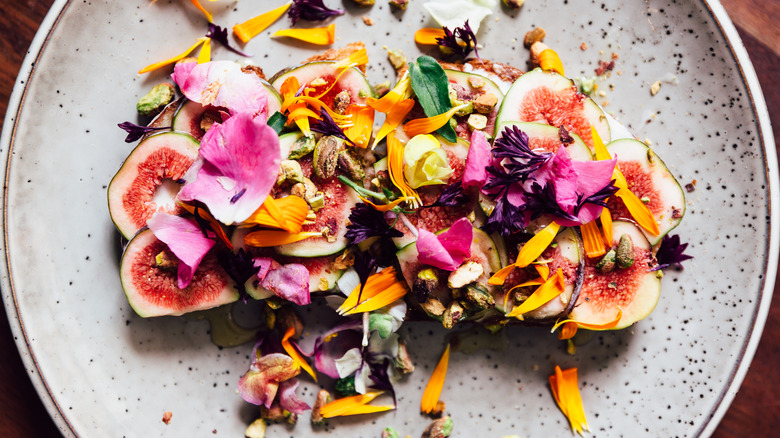
We eat with our eyes first. This is something every chef knows, and every diner instinctively responds to. Few ingredients play into that idea more directly than edible flowers, the culinary equivalent of haute couture on a plate. Yet while their mere presence can elevate simple salads and cakes into visual masterpieces, just like high fashion looks, they're best reserved for special occasions — they also don't suit everyone, either.
Edible flowers are generally non-toxic and safe to consume, often containing compounds that offer mild health benefits. Their use in food has deep historical roots, with records dating back to 140 B.C. Although we've mostly seen edible flowers fashioned as garnishes, the different ways in which they're used around the world is a reflection of how cultures make full use of what nature offers. In Italy, zucchini blossoms are stuffed and fried to perfection. In Mexico, marigold petals bring color and symbolism to traditional drinks and dishes. Closer home, you'll find recipes to create compound butters with edible flowers to enhance both aesthetics and flavor.
Just because people have eaten flowers for thousands of years, however, doesn't make them universally safe. Some contain phytotoxins that can cause mild to severe reactions. In fact, commonly used edible flowers can also carry residual pesticides or trigger allergic responses (related to pollen) for some individuals. That's why, even if you're sticking to safe, edible varieties, it's smart to introduce them slowly and in small amounts to be sure your body agrees with them.
Safe ways to source edible flowers
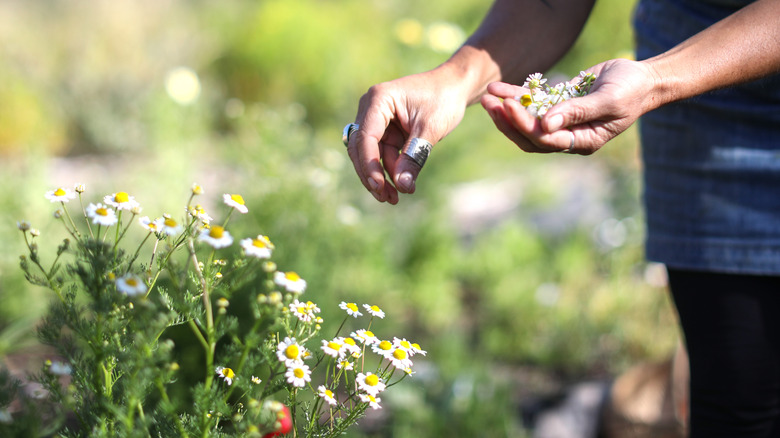
There are two ways to get your hands on edible flowers: forage them yourself, or buy them from a store. Foraging is best left to the experts, or done under expert guidance. If you do venture out, use a trusted plant-identification app like The Seek App or even Google Lens to confirm that what you're picking is both the right species and safe to eat. While you're at it, you might also want to investigate whether they're delicious to enjoy as some edible flowers don't taste nice at all.
The ideal time to harvest flowers is in the morning, once the dew has dried and before the sun starts shining down on the petals, causing them to wilt. Whatever you gather is best eaten the same day, when flowers are still fresh and fragrant. If you're storing them for later use, rinse the flowers gently under cold running water, pat them dry and place them between two sheets of paper towel, before refrigerating.
If you're buying edible flowers, we strongly recommend shopping in the produce section of a well-stocked supermarket or a trusted organic store, rather than picking them up at a local florist. While the flowers may look the same, only those labeled "safe for human consumption" have been grown, harvested, and transported under the ideal conditions that seek to minimize contamination and pesticide exposure.