

The Best Substitute For White Lily Flour (And Why All-Purpose Won't Cut It)

We may receive a commission on purchases made from links.
In kitchens across the American South, a certain type of flour gets lots of love for its gentle, pillowy texture. Countless home chefs refuse to cook without it — at least when making fluffy biscuits, delicate cookies, or melt-on-your-tongue crumbly cakes. That manna from the gods is White Lily flour, originally produced in Knoxville, Tennessee, by a flour-mill owner who developed the now-famous Southern-style soft-wheat flour. It's distinct fluffiness leaves few, if any, comparisons. But, if it's absolutely necessary, your best bets for substitutions would be cake flour or pastry flour.
White Lily flour is crucially produced from a 100% soft red winter wheat with uniquely fine texture and low-protein content. After entrepreneur J. Allen Smith purchased a Tennessee flour mill in 1883 and cultivated this flour, he reportedly named it for his wife, Lillie Powell Smith. Other myths or assumptions over the name still linger, but its lasting pantry-power is indisputable.
Before considering alternatives, it helps to know exactly what makes White Lily flour so special. It basically comes down to the lower amount of gluten formation compared to standard all-purpose flours. Proteins levels in White Lily clock in at 9%, while typical all-purpose flours hover between 11% and 12%. This means baked goods made with White Lily rise higher, feel more pillowy, and are less "chewy" compared to harder wheat varieties. That's why substitutions are tricky — but not impossible.
White Lily substitutes
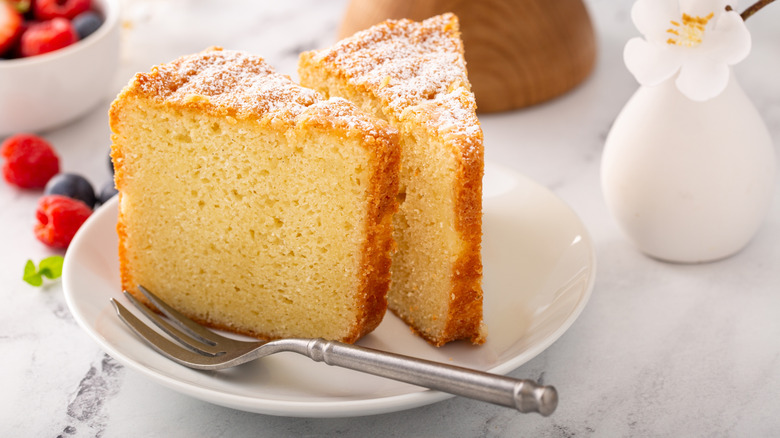
The primary White Lily product is still an all-purpose flour by the company's definition, but compared to standard all-purpose from other brands, it features a noticeably lighter structure you can actually feel when handling. Consequently, the batter is also smoother and less dense. When White Lily isn't available, look for a flour with similar protein content (and thus, less gluten). Cake flour is pretty much an even swap-in, with protein levels as low as 7-8%, comparable to White Lily at 9%.
Likewise, when strictly comparing protein, pastry flour comes in at 8% to 9%, depending on the brand. Same goes for simple self-rising flour, which commonly shows up in Southern biscuit recipes as well. If all you have is all-purpose flour to work with, then converting standard all-purpose flour to cake flour is likely the best route: Measure one cup of all-purpose flour, extract about two tablespoons, and replace with the same amount of cornstarch. This helps dilute the protein and heaviness of all-purpose flour, bringing it closer to cake flour. Thus, you have a viable substitute for White Lily.
However, it's not just the protein that matters. The milling method and super-fine grind of White Lily will be hard to fully replicate. Fortunately, online vendors can hook you up with White Lily, including this relatively economic 5-pound bag of White Lily All-purpose flour on Amazon. Unlike the early days, the flour is now available in a few enriched iterations, including the basic, bleached White Lily all-purpose, self-rising, unbleached self-rising, and a White Lily unbleached bread flour.