

Use This Simple Substitute When You've Run Out Of White Pepper
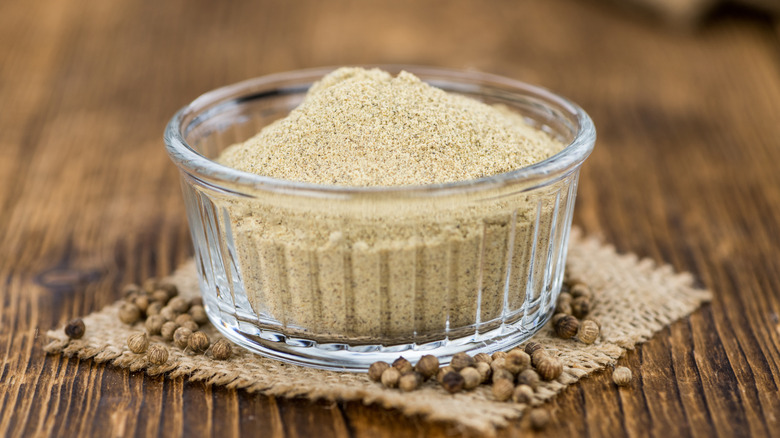
In many Southern homes, creamy white sauce drizzled over country sausage gravy is the perfect way to start the day. And few people anywhere would refuse a bowl of fluffy mashed potatoes as a side dish. But do you know which ingredient — the one spice that brings out the flavor in both these dishes — you can't leave out? If you say ground white pepper, ding-ding.
White pepper is many a chef's favorite spice for these white-colored dishes, despite being milder than the more popular black pepper. White pepper can blend right into the food without messing up the aesthetic with those telltale black flakes. But let's say you reach into your spice drawer today and discover that you have run out of white pepper... now what?
The good news is that black pepper works just as well in its place. Sure, it's a tad stronger than white pepper, but unless you're cooking for a secret Michelin inspector, no one's going to notice. The black flecks strewn all over your food are honestly the only drawback. Your food might not look picture-perfect in the end, but hey, if the food is good enough? We guarantee no one's going to complain. They'll be too busy tucking in!
Other substitutes for white pepper

Spice-savvy folks will know black and white aren't the end-all-be-all of pepper. If you've got green peppercorns in your spice collection, they work beautifully as a white pepper sub (though they might add a tang to your food — not a bad thing in certain dishes loaded in dairy like a simple spaghetti carbonara). But for those with well-stocked spice drawers, take a look to see if you have pink peppercorn stashed away– that would be one incredible find. They aren't very common, but if you can find some and grind them up, you're guaranteed to be in for a good time. Despite being dried berries from a rose plant (so not "real" peppercorns), they've nearly the same flavor and scent as white peppercorns.
Outside of the pepper family, other spices can stand in for white pepper, too. Ground mustard, for instance. It may seem like a strange choice, but ground mustard's spicy flavor and mild heat can be a great way to keep the flavors in a dish cohesive (just make sure to give it time to bloom and develop its full flavor!).
Turmeric powder is our last recommendation, and probably the most surprising of them all. Fresh turmeric powder has a slight spice to it, as well as earthiness and a slight bitterness. Try adding a little to your sausage gravy and adjust to taste. Gold-colored gravy might look a bit weird once plated, but who knows — you might turn out to like the flavor of your turmeric sausage gravy even more than the classic white-peppered version!