

The Mistake That Costing You A Successful Pot Of Beans
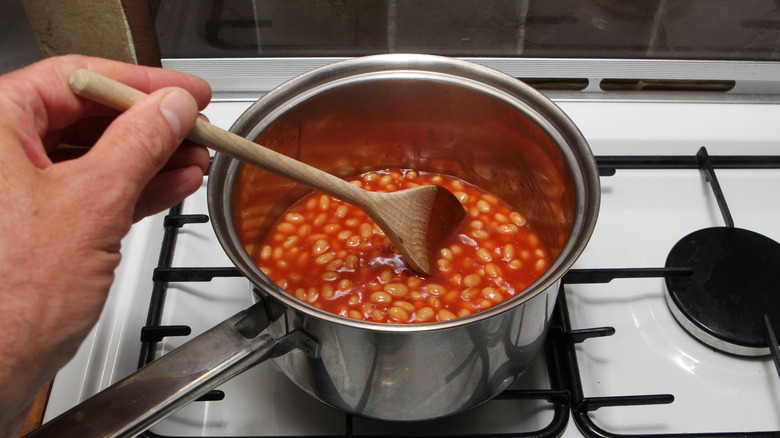
A pot of precisely cooked beans is the chef's equivalent of a pot of gold at the end of the rainbow. These little legumes are deceptively temperamental to boil, often cooking unevenly. If you haven't been taste-testing from different parts of the pot, now is the time to start as neglecting this step could be sabotaging otherwise perfect results.
There are two factors to blame for unevenly cooked beans: poor heat distribution in pots and inconsistencies in the beans themselves. For the latter, even the most popular types of beans are susceptible to hardening or compromised cooking based on their variety or freshness, leaving different results batch-to-batch or even rogue "slow cookers" in the mix. Because of this, it's important to taste-test multiple beans to avoid accidentally giving a pot the green flag based on an anomaly. Similarly, the effectiveness of the vessel's heat distribution can also create misleading discrepancies in cooking times, especially with culprits like poor-quality materials at play. Widening your sample of beans improves the accuracy of your judgment.
You might have to kiss a few frogs, or more aptly, taste a few beans — think: three or four, not one — before determining whether the legumes are done. Still, the extra effort is worthwhile as it's better to find undercooked beans while the pot's still bubbling as opposed to after you've switched off the hob.
How to achieve uniformly cooked beans every time
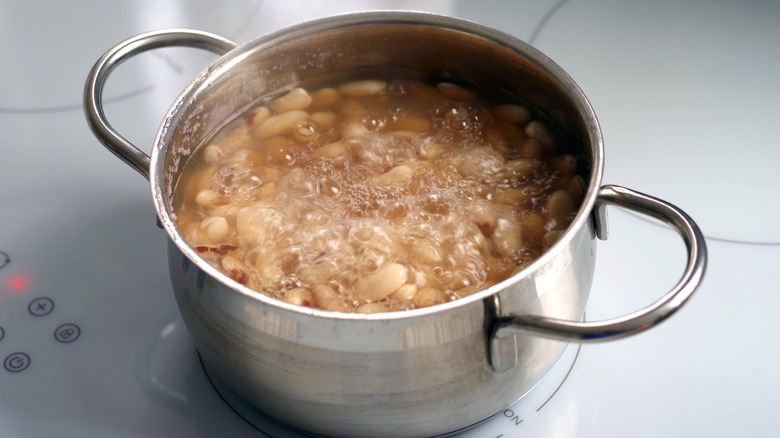
Chasing the perfect beans? Taste-testing from different areas of the pot is just part of the equation. To avoid committing the common mistakes everyone makes with beans, a medley of tried-and-true strategies is required.
The biggest culprit for unevenly cooked beans is the cooking vessel itself. Cast iron (and even non-stick) pots that are in good condition without degraded coatings are the best materials to ensure even heating. On the other hand, stainless steel can heat up rapidly, but users should remember that they are notorious for creating hot spots, which can trigger some beans to cook quicker than others. Additionally, the tiniest details also make a big difference. Did you know that round shapes transfer heat more evenly than angular designs?
From adequate soaking to gentle simmering and knowing when to add seasonings, there are endless other tips for how to cook beans properly. Keep it simple, though, and remember to avoid overcrowding your cooking vessel as beans can triple in size. Just like that, you'll have a recipe for success and an equally foolproof strategy for taste-tasting beans.