

If You Have This Rare Pyrex Dish From The Late '60s, It Could Be Worth A Small Fortune

Avid collectors of vintage cookware scour thrift stores and online "replacement parts" venues for that once-in-a-lifetime chance to find rare, collectable pieces. The thrill of the hunt, an affinity for 1960s style, or a major wash of nostalgia, inevitably leads to the world of Pyrex. Alternatively branded as Corning or Corelle, depending on the decade, these dishes indisputably reigned in American kitchens of yesteryear. One particular pattern, though once common, is now considered very collectible: the Pyrex Daisy collection, also known as Golden Sunflower Daisy. Some pieces could even be worth a small fortune.
The warm, whimsical daisy pattern epitomizes what vintage cookware collectors call the "golden era" of Pyrex. Designed by Cynthia S. Gerow and produced from 1968 through 1973, Daisy pieces feature bold shades of orange and yellow with oversized daisy motifs on either the lids or on the body, based on the type of piece and when it was produced. The Daisy line was released as part of the Pyrex promotional pattern series and some pieces included wicker baskets. Individual pieces retailed at the time for roughly $5 to $6.
Now, more than 50 years later, collectors have boosted that price tag considerably. Rare sets, including two lidded casserole dishes in the 471 and 473 line, reportedly sold on eBay for over $5,000. Granted, similar pieces list for far less — but often have imperfections or missing lids. Whether Pyrex is super valuable or in-demand depends on condition, rarity, and whether a specific collector just can't live without a certain piece.
How to identify collectible Pyrex Daisy dishes
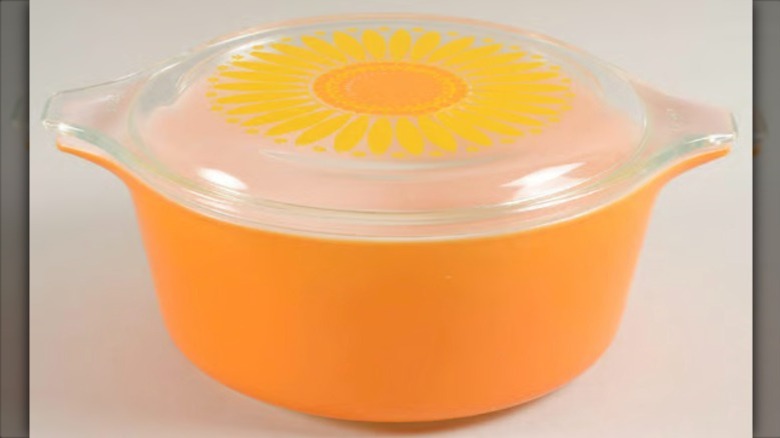
If vintage cookware is your thing, there are a few ways to identify the sassy Pyrex Daisy pieces. With Daisy pieces, you can generally date them by referencing the backstamps and pattern placements. When buying through online resellers, the listing may provide identifying information as well as photos that show the markings. Be aware that all vintage Pyrex pieces will show the logo in upper-case lettering.
The Corning Museum of Glass Pyrex Pattern Library confirms the Daisy line was discontinued in 1973, not only making it more valuable but also harder to stumble across on thrift-store ventures. But the iconic, bright orange and yellow daisy flowers are relatively easy to spot. Some pieces showcase the floral pattern only on clear or opal lids. Others, like the Cinderella mixing bowls, bear patterns on the bowls themselves and are identified with numbers like 442 through 444. Oval casserole gift sets, in sizes 043 and 045, came with the wicker baskets.
The Daisy pattern appeared on various other cookware. Valuable pieces may include the "pixie" casserole dish (700 to 739) or the three-piece baking set (330 to 339). Another quirky side collection is the Pyrex juice set released along with the Daisy collection — but it featured splashy orange and lemon slices in the same colors. Several of the Pyrex Daisy pieces could earn you a hefty chunk of change, or at least in the lower range of $100 or so. For more Pyrex intrigue, check out our coverage of all-things-Pyrex, including this article on freshening up vintage Pyrex.