

The Chipotle Bean Option You Should Try
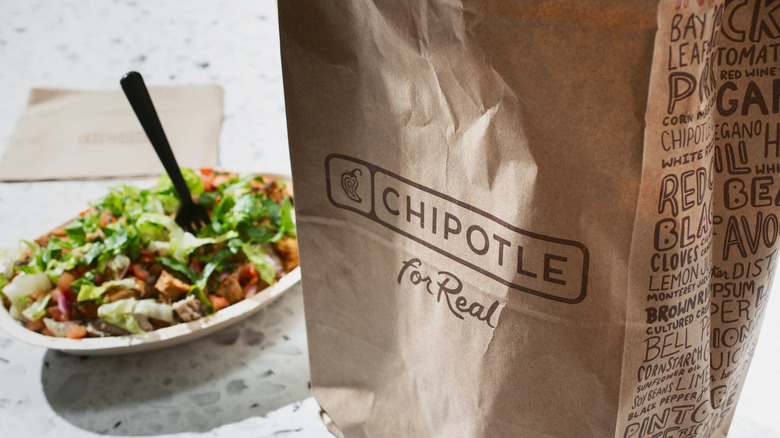
If black and pinto beans are both good — does combining them make them double good? Some Chipotle customers think so. A big part of Chipotle's appeal is the choreography of choice. The line moves quickly, but every stop is a decision: rice or no rice, mild salsa or hot, black beans or pinto. That sense of control is why so many hacks for ordering at Chipotle circulate online — most of which play with the spirit of stretching the rules, which is exactly why some Chipotle fans ask for both black and pinto beans.
"I ask for 'both beans' every time," wrote one Chipotle customer on Reddit. "Sometimes I get half scoop of each, sometimes I get a full scoop of each. I intentionally leave it a little bit vague so get some variety," they went on. Humans are famously bad at eyeballing volume, and when two different foods with different textures like black and pinto beans are involved, that error margin grows. A mound of pinto beans doesn't pack the same way as a scoop of black beans, and together they look more abundant. Whether or not you actually get more beans, the act of combining feels like a win for those in the know.
Apart from the possibility of getting extra beans in their San Francisco-style burritos and bowls, some Chipotle fan ask for both styles simply because they like the variation of flavor and texture. That could be reason enough for you try stretching the rules.
Bean there, tried both
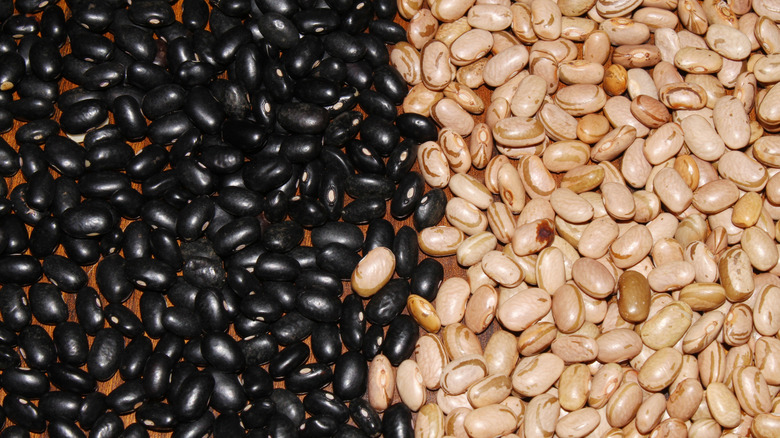
What's the difference between black and pinto beans? In the context of Chipotle, the main value of mixing beans is also about a contrast of texture and taste. A 2025 study found that people perceive meals as more enjoyable when there's a mix of textures and flavors — and these two beans provide exactly that. Black beans hold their shape, with a firm bite and a clean, earthy flavor while pinto beans collapse more easily, breaking down into a thicker gravy that coats rice and meat. Together, they cover both ends of the bean spectrum. That balance makes a Chipotle burrito or bowl feel more layered and less monotonous.
In Latin cooking, black beans are used as the base of Cuban frijoles negros, slow-cooked until glossy but still intact, while pintos often find their way into Tex-Mex classics like refried beans, where their creaminess is the point. But, at Chipotle, those kinds of rules get stretched. You don't have to choose between the two traditions or textures. Plus, because the beans are nutritionally similar but different, you also get the advantage of rounding out the health benefits. Black beans edge ahead on the magnesium and potassium, while pintos bring more fiber and antioxidants to your Chipotle burritos and bowls.