

Here's How Much Caffeine Is In Cascara Vs Coffee
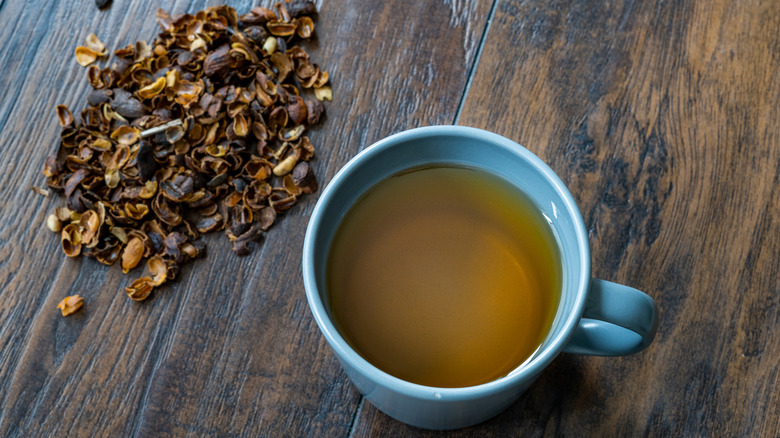
We know a lot about coffee and its caffeine content, but what about cascara, that rising-star drink made from once-discarded coffee-cherry husks? If cascara "tea" hasn't yet landed on your caffeinated-beverage radar, that's about to change. But despite originating from the same coffee plant, cascara is surprisingly low in caffeine — much lower than coffee, by a long shot.
In lab tests commissioned by Square Mile Coffee Roasters, even the strongest, steepest infusions of cascara peaked at an average of 111.4 milligrams per liter of caffeine. By comparison, the amount in brewed coffee often ranges from 400-800 milligrams per liter. That puts the caffeine content of cascara at roughly 25% of the amount in coffee, begging the obvious question: Should I switch to drinking cascara? The answer to that is a bit more nuanced.
If you thrive on that buzzy boost of caffeinated coffee, depending on it to jumpstart the day and re-energize the afternoon, cascara may not be a good replacement for coffee for you. But even so, it doesn't hurt to explore the gentler, calmer, cascara member of the coffee family tree — after all, you don't have to switch one for the other. Either way, if cascara is an unfamiliar drink to you, it may be hard to fathom brewing tea from coffee cherry husks. Here's a look at what may sway you toward the cascara column.
Preparing and drinking cascara
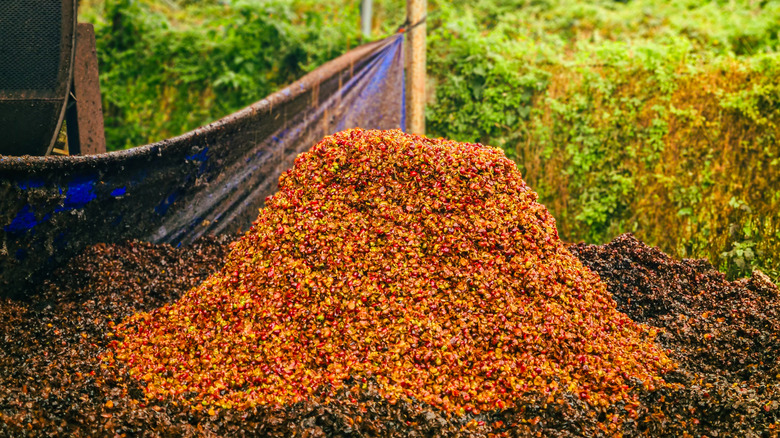
In reality, cascara, the Spanish word for husk or peel, is the outer fleshy skin and pulp of the coffee cherry, which is the fruit surrounding the coffee bean. It's typically discarded or composted, but these husks are now being repurposed into drinks. As such, cascara isn't actually tea, at least not in the sense of leaves harvested from genuine tea plants. Instead, it's a flavorful beverage with floral, berry, or hibiscus-like sweetness, sometimes with hints of mango or tobacco. Since cascara isn't brewed from coffee beans and doesn't taste like roasted coffee, its more akin to brewed herbal tea.
If caffeine is the determinant for you, whether from a positive or negative point of view, it helps to look at how brewing methods could affect the amount of caffeine in your cup of cascara. The considerably lower amount of caffeine compared to coffee can vary slightly based on how it's prepared. As with any brewed beverage, the ratio of water to dried cascara will largely determine the caffeine level. Longer or shorter steeping times don't necessarily impact the amount of caffeine, but the quantity of the husks used can affect the strength of the brew. The more the merrier, as the saying goes — the more dried cascara, the stronger the flavor and the caffeine.
Drinking cascara can be as multi-faceted as its coffee-bean compatriot. Sip it straight-up, mix into a smoothie, or stir into mocha brownie batter.