

The Vinegar Storage Mishap That Could Ruin Your Day, And Possibly Your Health
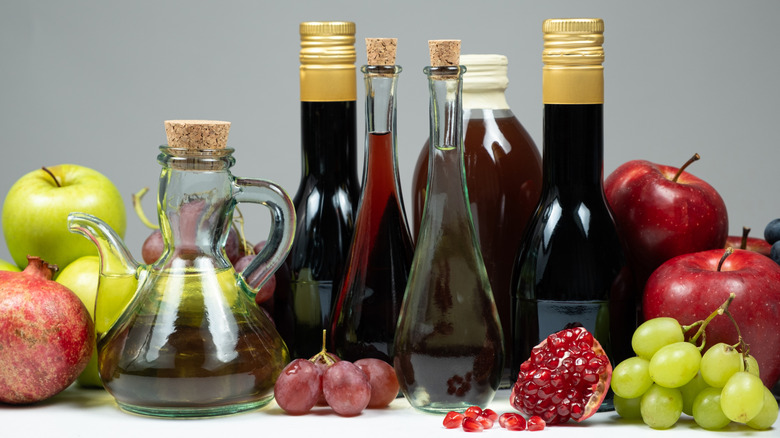
It's wise to be careful with your food storage plan, and with vinegar there is one particular mix-up to be wary of: confusing your culinary vinegar with your cleaning vinegar. While you aren't likely to make this mistake with most types of vinegars — it would be tough to confuse that aged balsamic for a bottle meant to be used to wipe down the counter – it can get particularly confusing with your culinary white vinegar and your cleaning vinegar. While there are many ways to cook with distilled white vinegar, cleaning white vinegar should never be used in food.
Both culinary white vinegar and cleaning vinegar are made by introducing bacteria to grain alcohol in order to produce acetic acid. The acetic acid solution is then diluted to a usable level — but that's where the differences begin to crop up. Culinary white vinegar is typically diluted to a 4-7% solution of acetic acid, whereas cleaning vinegar can contain as much as 20%. While it might not seem like a big difference, that increased acidity means that it can cause you some serious problems if you ever get the two confused.
Beyond the acidity, cleaning vinegar is not produced to food-safe standards and often contain additional chemicals that can result in esophageal and intestinal issues. For a safe kitchen, you want to keep these two vinegars in their own lanes and in their own storage areas.
Do you need cleaning vinegar?
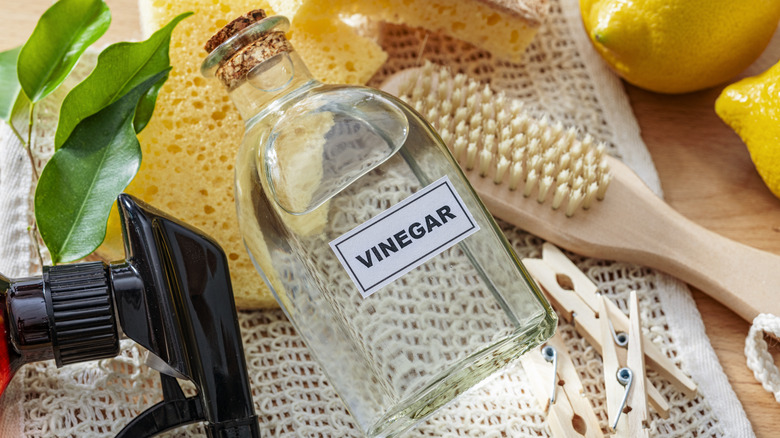
Culinary white vinegar is a versatile tool — not only are there many ways to cook with distilled white vinegar, but, when mixed with water at a 1:1 ratio, there are also many vinegar cleaning hacks. From removing calcium deposits on faucets to deodorizing your trash can or just disinfecting surfaces, you can get by just fine with the 5% solution culinary vinegar for basic household tasks. Given how handy plain, old culinary white vinegar is, the safest option is to just stick with it to reduce the chances of confusing it for cleaning vinegar.
If you do need a higher-potency cleaning vinegar to cut through particularly stubborn grime and grease, you will need to be careful. Each 1% increment of acetic acid is another 20% more potent than the culinary vinegar you might be used to cleaning with — and while it might seem like a small difference, a 2015 study found that acetic acid can cause chemical burns even at just a 4-8% solution. Apart from storing cleaning vinegar culinary vinegar separately, it's always a good idea to practice safety by wearing gloves when you're using it and to only do so in well ventilated areas.