

Why You Should Think Twice About Buying Canned Green Beans
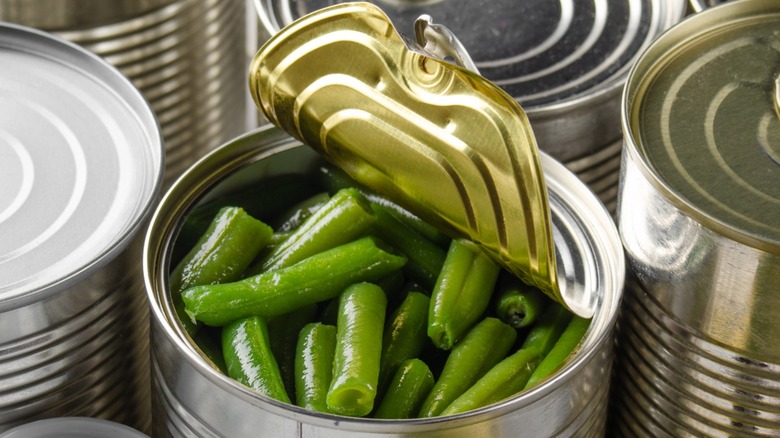
Canned green beans have been around for decades and are an affordable, shelf-stable option for a quick dinner side. But you may want to pause before tossing a can or two in your grocery cart. While you may think you're getting the same product as you would with frozen or fresh variants, the canned counterpart often comes with one major drawback — higher amounts of salt.
A single serving of green beans can sometimes contain over 460 milligrams of salt, just over 20% of the daily recommended sodium intake of 2,300 milligrams. A product with 20% or more of sodium per serving is considered high, as per the Food and Drug Administration (FDA). And according to the Centers for Disease Control and Prevention (CDC), the average American consumes 3,400 milligrams of sodium per day, well over the recommended limit.
There are other potential drawbacks to consuming canned green beans — the canning process often results in a softer, mushier bean, which lacks the crisp crunch of the fresh variant. The color is different as well, with canned green beans often having a duller tone. While these factors may not be as pressing as health-related ones, they can still affect the enjoyment and visual presentation of your meal.
How to avoid the excessive salt of canned green beans
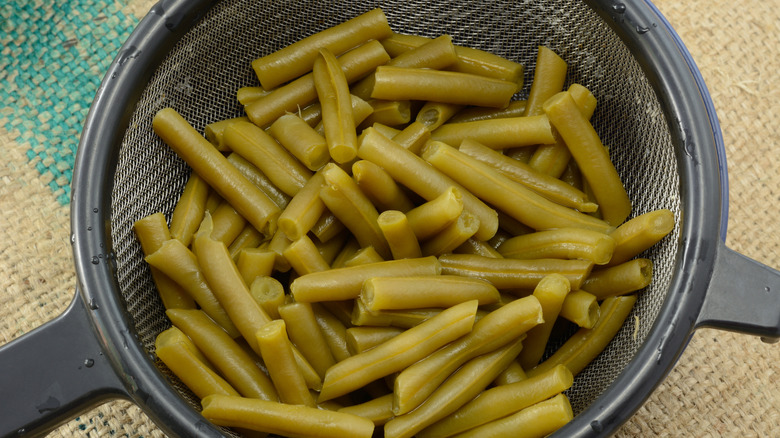
Luckily, there's a quick fix for removing extra salt from your canned green beans — simply rinse them. According to the USDA, draining canned vegetables can reduce the sodium content by 10%, and rinsing them can increase this number to 12%. This makes processed canned beans a tad more like their natural form without much effort.
You can also find canned green beans that are labeled as having low-sodium or no-added salt, which will reduce the overall amount, and then you can control salt levels by adding it yourself. Just remember that these labels don't necessarily mean they will be salt-free. Unsalted green beans typically contain about 6 milligrams of salt per 1-cup serving.
Want an entirely fresher option without needing to visit the produce section of the grocery store? Consider going with frozen green beans. While not shelf-stable, they are just as convenient as canned green beans. This frozen alternative may be more nutritious overall, since the canning process can also reduce water-soluble vitamins C and B. Frozen green beans also come with a crunchier texture than canned versions, and retain a brighter, fresher color. And if you read labels carefully, you can choose options that aren't packed with sodium.