

The Popular White Fish You Might Want To Avoid Buying
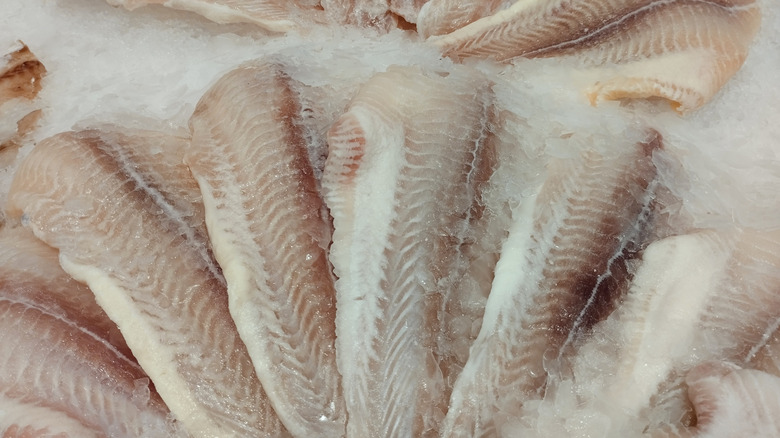
Walk through the seafood aisle of any mid-country supermarket and you'll find pale fillets sealed in plastic, resting snugly against styrofoam trays and labeled obliquely as "white fish." Tilapia often hides behind that name, a faceless filet with a mild flavor, marketed as universally palatable at a low price point, making it one of the most consumed fish in the United States. On the surface, it seems harmless, just an inert everyman's protein that could have come from anywhere, grown on a tree, or assembled in a factory, for all we know. And that is exactly the problem.
Seafood has been globalized to the point of anonymity. More than 70% of the fish Americans eat is imported, and studies show that a shocking one-third of it is mislabeled somewhere along the supply chain, according to the National Oceanic and Atmospheric Administration. The fillet on your tray might have traveled oceans, changed hands, and switched names multiple times before landing on the ice at your grocery store. Tilapia is the biblical "St. Peter's fish" of the Sea of Galilee, but the version we encounter now is a commodity of the industrial food system, raised in dense, often toxic waters half a world away.
Consumers don't shoulder all the blame for getting the fishing line tangled; generations of trade policy and lax regulation have made it nearly impossible to know what's safe, sustainable, or ethical without research, which can feel overwhelming, tedious, and confusing. But once you understand how different production systems operate, you realize there is a choice to make at the fish counter. And in the case of tilapia — one of 13 types of fish you think twice about before buying — that choice depends heavily on identifying where it was farmed.
Issues with farm-raised tilapia from China
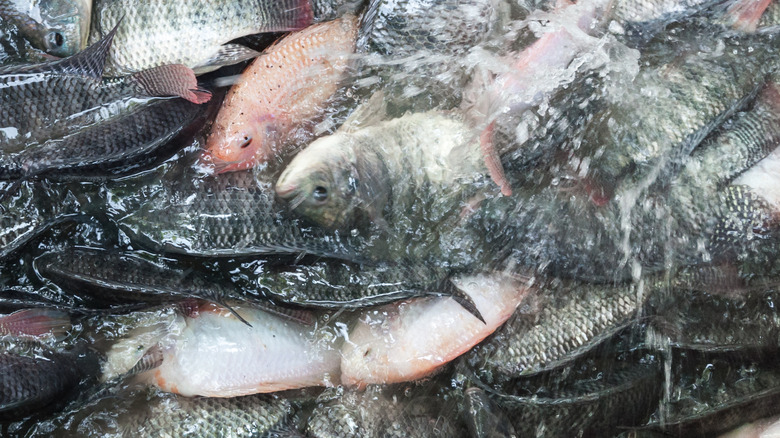
Most imported tilapia from China is raised in shallow outdoor ponds, with fish packed tightly, their waste and uneaten feed accumulating in warm, still water. In some regions, those ponds draw from water sources already tainted by untreated sewage, factory discharge, or pesticide-heavy farm runoff. And when they're drained, the same water flows back out, carrying contaminants downstream. Those ponds can overflow, flushing fish and effluent into rivers. Tilapia are fast-breeding omnivores, and once loose, they push native species out and shorten local food chains, a pattern documented downstream of China's Pearl River.
In high-intensity tilapia aquaculture, the murky water is also a nursery for infectious diseases. Crowding and poor water quality drive outbreaks of bacterial infections like streptococcosis and motile aeromonas septicemia, causing symptoms like bulging "pop-eye," ulcers, hemorrhages along fins and body, distended abdomens, lethargy, and erratic swimming. Then, producers reach for antibiotics. Assessments of Chinese tilapia aquaculture cite evidence of illegal chemicals and antibiotics important to human health, plus limited transparency on what's actually used and what's left in the wastewater (via FDA). U.S. regulators have even detained Chinese tilapia shipments for chloramphenicol, a broad-spectrum drug banned in food animals in the U.S., because even tiny exposures have been linked to rare but often-fatal aplastic anemia.
Why do public-health folks care about "antibiotics important to human health" in fish farms? These are the same drugs we depend on in hospitals when nothing else works. Overuse in aquaculture fuels antimicrobial resistance, environmental reservoirs of resistant bacteria, and resistance genes that don't respect farm fences. Non-human antibiotic use is a cross-sector threat, which is why Seafood Watch rates pond-farmed tilapia from China as "Avoid", and why it's essential to choose origins and systems that don't need a black-market pharmacy to keep fish alive.
Shop for tilapia without sinking
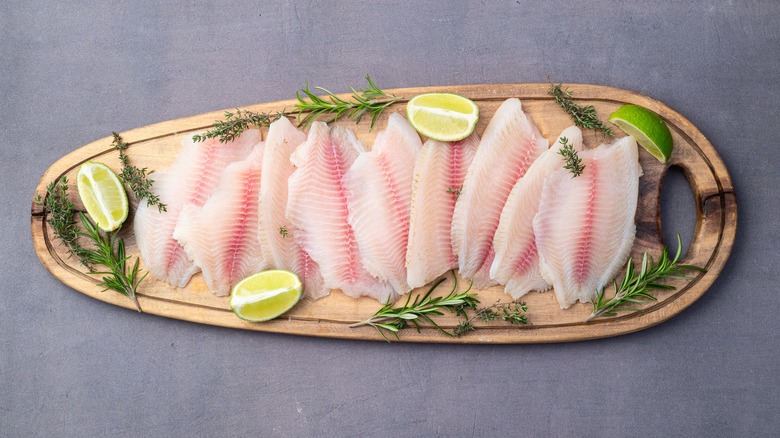
The good news is that tilapia doesn't have to be off the table entirely. Country of origin labeling at U.S. retailers gives consumers a way in, even if restaurants remain exempt. According to Monterey Bay Aquarium's Seafood Watch, tilapia from Canada, Ecuador, Peru, and the U.S. is among the "Best Choices," with Honduras, Mexico, Indonesia, Taiwan, and Colombia listed as "Good Alternatives." These producers try to limit environmental impact, and often rely on indoor recirculating aquaculture systems (RAS) that recycle water and capture waste rather than releasing it downstream. RAS facilities may not sound romantic, but they represent a farming model where fish health and water quality are tightly managed. For consumers, that translates to cleaner fillets and fewer ecological compromises. Labels from the Aquaculture Stewardship Council or Best Aquaculture Practices can also help identify more responsibly farmed tilapia.
If label-reading feels tedious, remember the stakes: every purchase supports either extractive shortcuts or more careful systems. Shopping habits won't single-handedly reverse centuries of environmental degradation, but they do create pressure points in the supply chain. Opting for tilapia from vetted sources or choosing other domestically raised mild white fish like U.S. farmed catfish aligns your dinner plate with stewardship. Each choice at the fish counter is a strand in a vast net, binding together the rivers and ponds, the farms that raise fish, the kitchens that cook them, and the bodies that are nourished by them. That net can either hold ecosystems, workers, and eaters in balance, or tear under the weight of shortcuts, neglect, and exploitation. Choosing countries with the safest fishing practices helps keep it intact, so the food on our plates is connected to waters that remain healthy enough to feed us tomorrow.