

The Key Difference Between Growing Potatoes And Sweet Potatoes
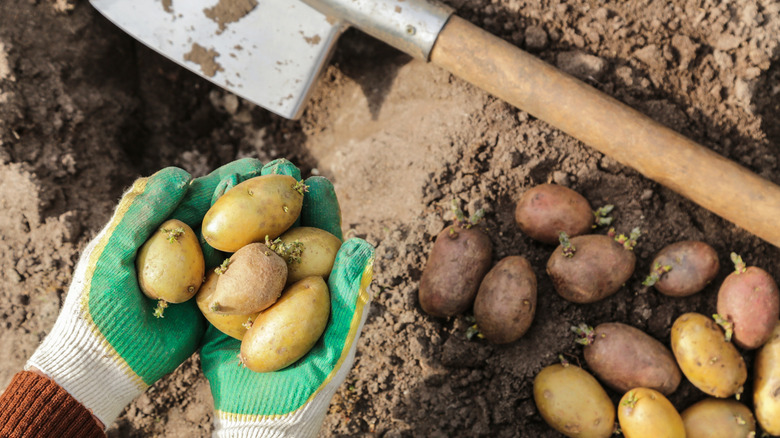
Growing potatoes or sweet potatoes comes with many specific, different variables — many of which may surprise you. Potatoes and sweet potatoes may seem like they'd be siblings, but they're actually more like distant cousins, twice removed, that live three states over. Plopping a cutting from a sweet potato into some soil alongside a cutting from a regular potato will yield vastly different results between the two plants. In order to cultivate a lush and fruitful home garden, you'll want to be mindful of the proper growing conditions and best practices for each variety of potato you're growing.
The root of all the differences between potatoes and sweet potatoes can be chalked up to them being from two entirely different plant families. Potatoes are considered a nightshade, which is the same family as eggplants, tomatillos, chili peppers, tobacco, and more. Sweet potatoes, on the other hand, are part of the Convolvulaceae family alongside morning glories and a variety of other species of herbs, vines, and trees.
What growing conditions do potatoes require?
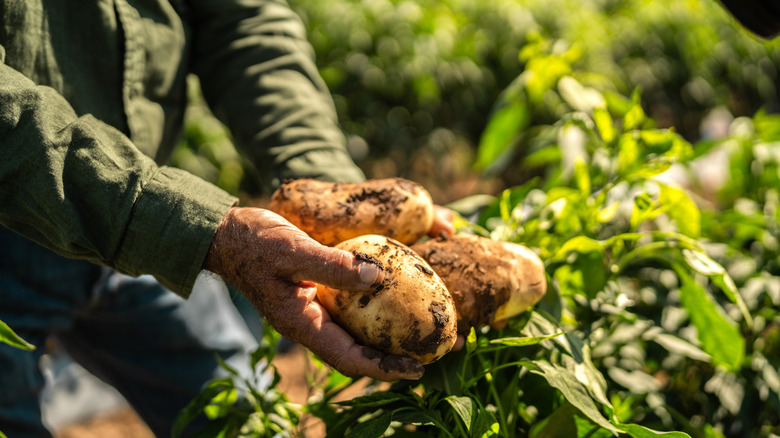
Before planting any garden, you'll want to do some planning. Research which garden vegetables do best in your local climate. Everything you really need to know about potatoes is that they do best in cooler, drier climates, and should be planted around early to mid-April, or when the soil temperatures are around 45 degrees Fahrenheit at night and 55 degrees Fahrenheit during the day, according to Almanac. You'll also need to consider which plants may be good companion plants for your potatoes and which could hinder their growth. Anything from that same nightshade family is likely to spread shared diseases and pests, so eggplants and peppers are a no. Sunflowers, other root vegetables, and fennel are more examples of plants to avoid planting alongside potatoes.
There are several different types of potatoes, but they all require generally the same growing conditions. Potatoes are hardy, forgiving, and plentiful, which makes them one of the easiest veggies for a beginning gardener to grow. They don't grow from seeds but can instead be grown from a piece of an old potato with an "eye," which are the tough, root-textured nubs that slowly sprout from a potato. You can also buy seed potatoes that are meant specifically for planting. Once planted, potatoes are relatively low-maintenance. They need at least six hours of sunlight and just a few inches of water each week, and they'll be ready to harvest in about 90-120 days after planting.
What about sweet potatoes is so different?
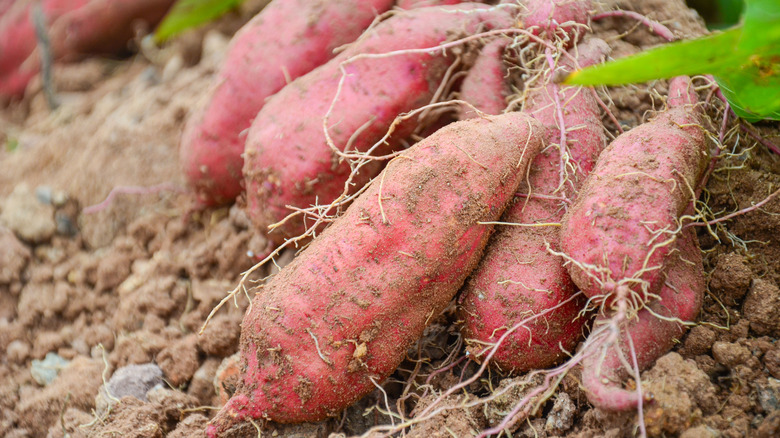
Beyond the obvious differences in taste and appearance, one of the biggest differences between sweet potatoes and regular potatoes is that sweet potatoes greatly prefer a warm, humid climate, but are slightly more flexible in terms of what climates they grow in. Another thing that sets sweet potatoes apart from their plain counterparts is that they're planted from something called a "slip," which is a sprout from the plant and not a cutting from the sweet potato itself. Rather than burying the entire thing like you would with a seed potato, slips are planted with just the roots in the soil and the foliage remaining above.
Similar to regular potatoes, sweet potatoes do best in a dryer, more sandy soil. This gives the roots space to move and the potatoes themselves enough leeway to spread out and grow. Because sweet potatoes are more inclined to thrive in warmer environments, Almanac recommends transplanting your sweet potato slips about three to four weeks after the last spring frost. The weather in the Southern United States perfectly suits the needs of sweet potatoes, and North Carolina is the state that produces the most sweet potatoes in the entire country. Another significant difference between growing sweet potatoes and regular potatoes is that sweet potatoes take a little bit longer to grow, between 90 and 150 days. They also need to cure in a moist and warm environment for one to two weeks after harvest to develop those natural sugars that make them so special and delicious.