

Don't Throw Out Your Lemon Pith — Do This Instead
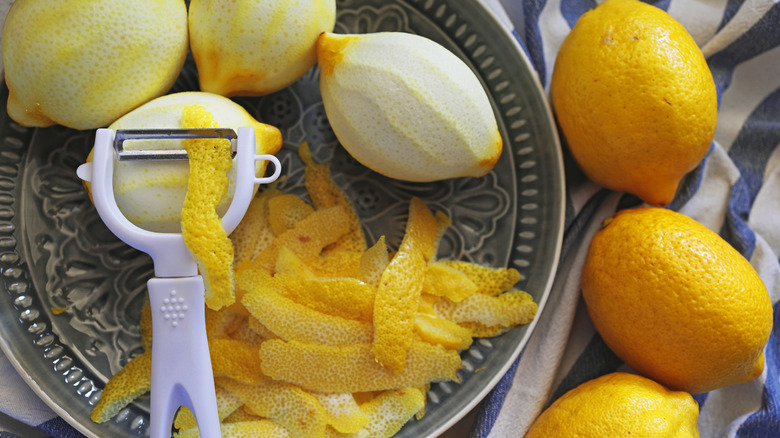
If you're a citrus fan, you likely often end up with peels on your hands. Between the usefulness of citrus peels as garnishes or seasonings and the tastiness of the fruit inside, though, remains one substance we typically throw away: pith. Citrus pith is the white stuff inside the peel, which is safe to eat, but you wouldn't want to, as it's quite bitter. But there is something you can do with it rather than tossing it.
Pith is a great source of pectin, which is what gives fruit preserves, jams, and jellies their texture. Pectin is a soluble fiber that fruits naturally have to support their cell walls, but some fruits have more than others. Citrus fruits are among these pectin-packed fruits, and are easier fruits to separate the pectin out because it's concentrated in that removable pith. If you're making a classic Concord grape jam or, say, apricot-cardamom preserves, you may need to add pectin to supplement however much your fruit has. You can buy pectin, but commercial versions often have preservatives and additives. To avoid this and also use every last bit of your fruit, make your own pectin with pith.
How to make pectin from pith
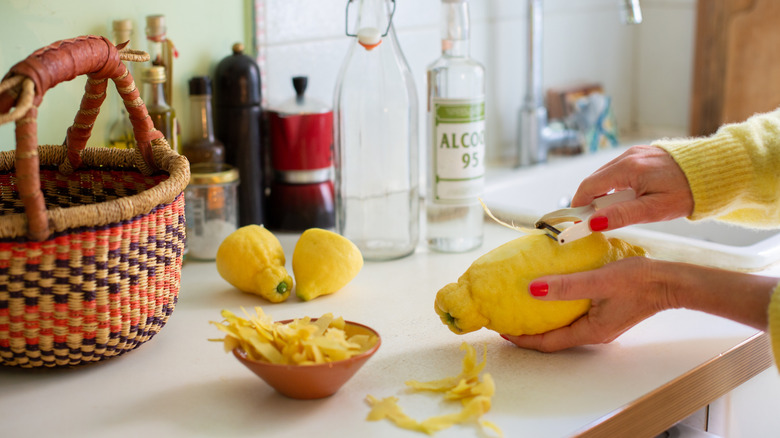
You'll need quite a bit of pith to make pectin — about half a pound. Or, depending on the batch size you want, 9 to 18 lemons. You can build up to this by freezing peels as you use the fruit, or wait until you're doing a project that requires a lot of peels, like making your own limoncello. You can also throw lemon seeds into this mix because they also have pectin. Roughly chop your pith pieces to easily combine them into a mixture of 1½ to 2 cups of water and a ¼ cup of lemon juice.
Let the pith and lemon juice sit in a pot for two hours so the pith gets soft before adding the water and letting it sit for an additional hour. Next, bring it all to a boil, and then turn the heat down so it simmers for about 15 minutes. After the mixture cools, strain it into a bowl using cheesecloth. Because the pectin must reach a certain strength to successfully bind your jams and jellies, it's a good idea to test your DIY creation. Plop a spoonful of the homemade pectin into a bowl with a touch of rubbing alcohol. If you can pick it back up as one solid blob, it's ready; if not, reduce it further over heat. To use it, use about a ¼ cup of pectin for every cup of jam.