

What Is Unaged Steak, And What Makes It Different From Aged Steak?
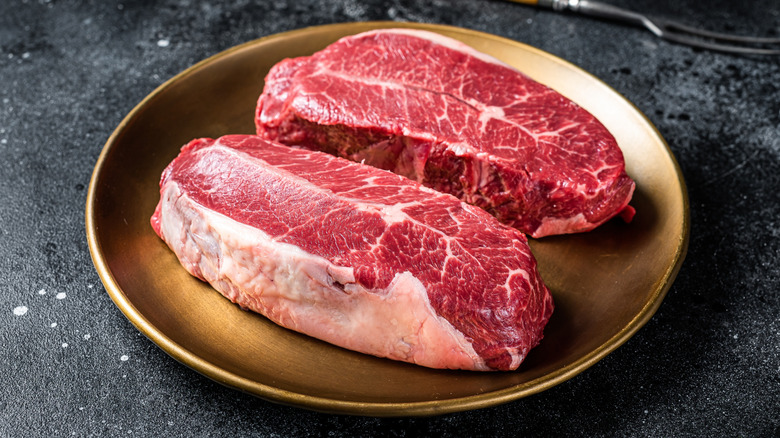
Steak connoisseurs want to make the most out of every cut, whether it's a budget-friendly top sirloin or a luxuriously marbled ribeye. And one mark of quality is whether or not your savory cut of beef is aged or not. But what's the real difference? In short, an "unaged" steak is the epitome of freshnessm and is sent straight from the processor to the grocer for immediate sale. An aged steak takes more time to prepare. The beef is placed in an environment controlled for airflow, temperature, and humidity, which results in changes to the meat's texture and flavor.
An unaged steak is likely to have the most pronounced "fresh beef" flavor, with a hint of minerality, which can be a plus for those seeking milder, less gamey meats. These cuts are prized for economical reasons, too, as unaged steak is 40% to 100% less expensive than its aged counterpart. But fresher steak has had less time to break down enzymatically, and is therefore more fibrous with a tougher bite.
Aged steaks are the result of culinary patience and alchemy, and they take several weeks or months to reach an optimal level of intensity. The aging process concentrates a steak's flavors and breaks down the muscle fibers, acting as a natural tenderizer. Aged steaks also develop nutty, cheesy, and savory notes, imparted by the beneficial bacterium that transforms the meat. The lengthy process keeps prices high, but it offers a complexity and tenderness that fresh steaks can't achieve.
How to prepare an aged steak vs an unaged steak
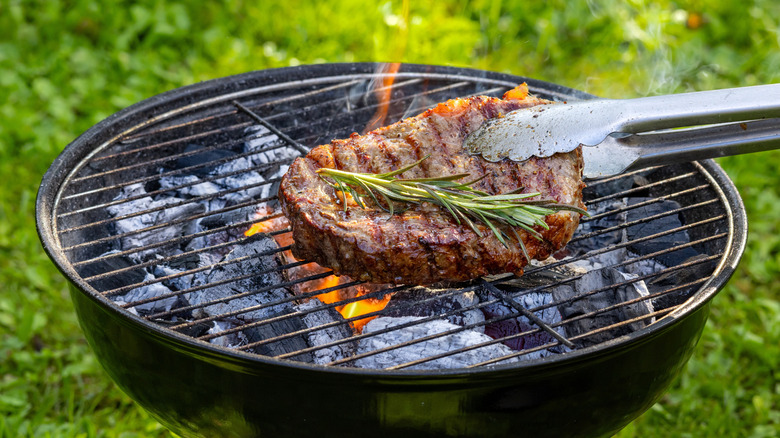
We often decide how to cook our steak based on the type of cut we're working with, but the aging process also affects how we should prepare our beef. Since unaged cuts are freshly processed and quickly packaged, they don't have much time to tenderize or deepen in flavor naturally. A marinade can help on both of these fronts, because they usually contain an acid, such as vinegar, wine, or lemon juice (which helps break down tissues).
Aged meat has already undergone the process of tenderizing, so the focus is less on a melt-in-your-mouth bite and more on creating a flavor-filled crust. You can grill or pan-sear your aged cut for a golden brown exterior, which will also help maintain the tender juiciness inside. The flavors that develop over time, along with a caramelized surface, will be intense, so it's best to go easy on the seasoning, sticking to salt and pepper.
Regardless of the type of steak you use, it's important to let the protein rest once you remove it from the heat. This allows the beef to reabsorb its liquids into its center, which means that you get to enjoy a pop of moisture and intense flavor, without the juices leaking onto your dinner plate.
The plot thickens: dry-aging vs wet aging techniques
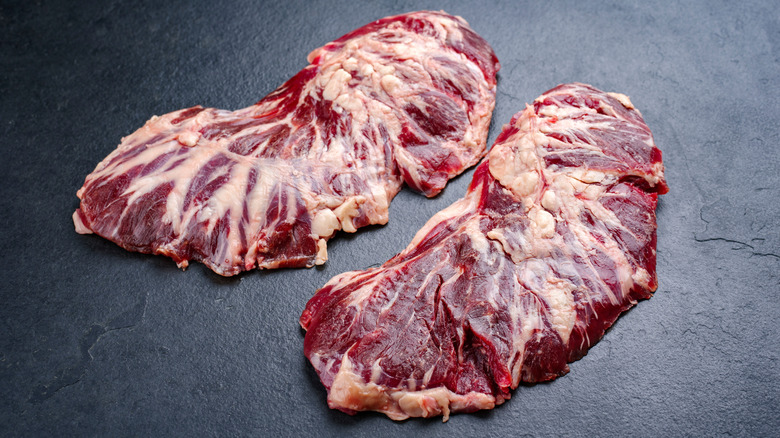
True steak connoisseurs not only look for unaged vs aged steaks, but when it comes to aging, there are preferences between wet and dry aging. Dry aging is best suited for fattier cuts, as the process encourages the fat to penetrate deeper into the meat, bringing its flavor along with it. Wet aging is best suited for lean cuts, such as filets and flat-irons, which have less marbling and therefore less moisture content. Both aging processes are carried out with a special focus on temperature, keeping the meat just above freezing.
To wet-age steak, a cut is stored in a vacuum-sealed bag, which traps its natural flavors and juices inside. The meat's enzymes break down the cut over time, without the moisture loss common in dry-aging methods. It's the perfect happy medium for those who want the freshness of an unaged cut, but with a touch of complexity, since the finished flavor profile sits somewhere in the middle.
Dry-aged beef is produced in a carefully controlled, open-air environment, such as an aging box or walk-in refrigerator. With time, the steak will develop a firm, dry surface that won't look edible, with discoloration, microbes, and flaky bits forming on the edges. Not unlike blue cheese, enzymes penetrate deeply into the meat, transforming the muscle fibers. The meat is also dehydrated since it's not vacuum-sealed, which leads to the highest concentration of nutty, umami flavors, perfect for those who love a bold bite.