

What To Consider Before Storing Bay Leaves In The Fridge
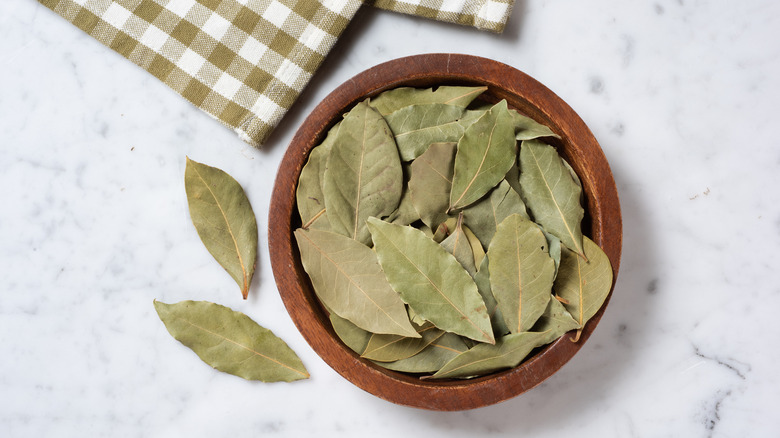
Storing bay leaves often begins with the same few questions: Where should you put them? How long do they last? What can you do to preserve the flavor and aroma? The answers, first and foremost, come down to one important factor — the bay leaves' own condition. Are they dried or are they fresh? This single distinction will determine the rest of the storage process, and if you do it right, cooking with bay leaves will be much more efficient.
Fresh bay leaves, as you may have guessed, tend to have a shorter shelf life than the dried variety. Wrapped in a damp paper towel and stored in an airtight container or a sealed bag in the fridge, they will last for up to three weeks. That said, the fresh leaves will lose some of their original menthol, piney taste as the days go by, so use them as soon as possible.
Dried bay leaves, however, don't need to be refrigerated. Stored in a tightly sealed container and placed in a cool, dark place, such as the pantry or spice drawer, their earthy aroma will remain for several months — depending on the specific storage and initial drying conditions. After that, while still edible, the potency will slowly dwindle. If you want to keep it longer (for up to a year), consider freezing the bay leaves in small-portioned packagings, which works for both dried and fresh varieties.
How to know when your bay leaves are no longer good
We have become so familiarized with dried bay leaves, stocked into a bag and left on the shelf for months on end, that it's easy to forget bay leaves don't actually last forever. Granted, they don't actually spoil like regular food does, but with the aroma fading almost completely and the flavors practically non-existent, they are merely dead leaves in the kitchen. The tricky thing is knowing exactly when this happens, and it can't be done simply by sniffing them.
Luckily, there is a very easy way to check if bay leaves are fresh enough to bother using. Rub or crush them into small pieces, then smell the aroma's potency. If the scent still faintly lingers, just add a few more than usual. If you cannot detect anything, it's time to throw them out. This is also true if your bay leaves turn gray or show signs of mold (often a result of excess moisture in the storage packaging).
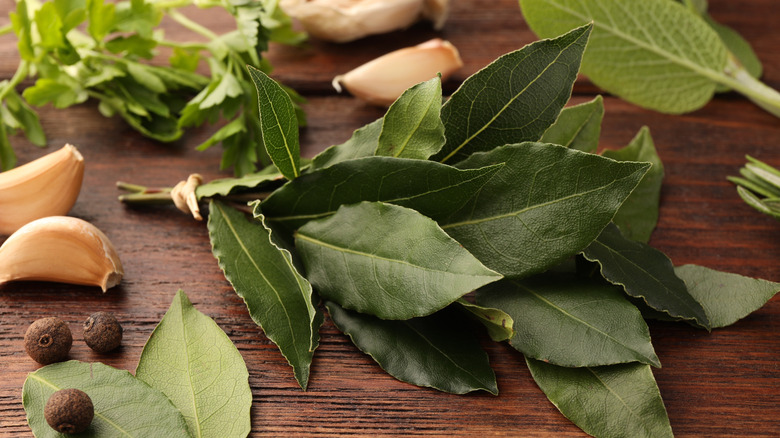
In the case of fresh bay leaves, it's much easier to evaluate freshness and aroma intensity when going by appearance. Always be on the lookout for obvious signs such as wilting, discoloration, and a musty or rotten odor. Generally speaking, they should be dark green and waxy, with little to no blemishes. Moreover, they should also be pliable enough to bend when twisted without breaking apart. In this state, they are good to either go straight into the pot or be dried for long-term storage.