

The Vintage Canned Pork Product That Shoppers Don't Really Buy Nowadays

We may receive a commission on purchases made from links.
The most commonly used parts of a pig in the United States include the loin, shoulder, belly, and legs, but just because Americans don't typically use other parts of the animal doesn't mean they're not viable for consumption. In Thailand, you'll find pig ears in the popular pig ear salad known as "yam hu mu," while in the Philippines, you might be served "sisig" as an appetizer, which is made from the pig's snout. There was a time when Americans loved eating pork brains, when it was easily accessible as a canned food, but it's fallen out of popularity and is now near-impossible to find.
Canned pork brains were a staple in the American South, especially for breakfast. It was quite common to serve with scrambled eggs, since the texture of the two blended nicely once combined. There were multiple canned brands of pork brains, including one manufactured by Kelly Brand that was popular at grocery stores in the South, but today, the only remaining canned pork brains are by Rose Brand, which you'll occasionally spot at stores or on Amazon.
Recipes for pork brains appeared in several cookbooks, including "The Dictionary of Dainty Breakfasts" by Phyllis Browne and several iterations of "The Joy of Cooking," but midway through the century, when people began to alter their food choices based on health reasons, canned pork brains lost their appeal.
Canned pork brains were harder to find after health studies emerged
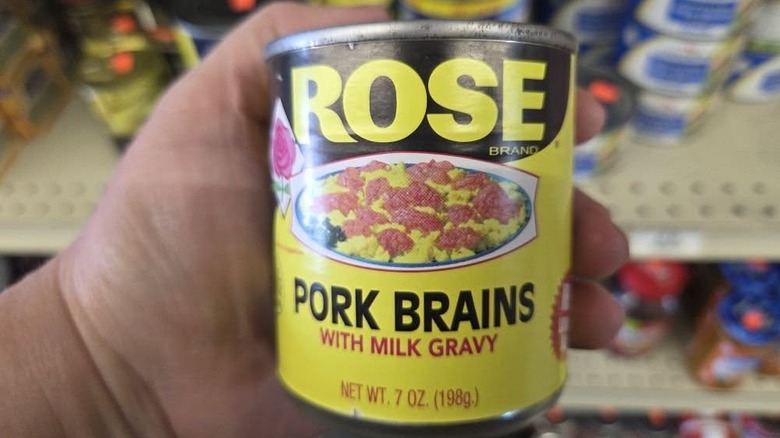
In the 1950s, scientists released information connecting high cholesterol to heart disease, further solidifying findings by championing a low-fat diet in the 1977 "Dietary Goals for the United States" report. A single can of Rose Brand canned pork brains contained 3,190 milligrams of cholesterol, over 1000% more than the daily recommended intake, which turned people away. Then there was the whole Mad Cow Disease scare of the 1990s, which affected the animals' brains and ended up killing at least 200 people. Plus, in 2008, a pork brain processing facility in Minnesota experienced an outbreak of workers with strange health symptoms, which further scared customers away from consuming the canned product.
Though there are several other potential reasons why eating brains is less popular than it once was. The workers weren't getting sick from eating or handling pork brains, but from the aerosolized brain particles unintentionally floating in the air that came from liquifying the meat. Pork brains were deemed safe for human consumption, undergoing rigorous inspection from the USDA, but it's always wise to treat them with the same caution you'd treat any raw item.
These days, you'll still find pockets of Southerners eating scrambled eggs and canned pork brains, Californians and Texans preparing platters of traditional tacos de sesos (made from pork brains) and workers in the Ohio River Valley digging into fried pork brain sandwiches. The vintage product may not fly off shelves the way it used to, but it doesn't mean the tradition has disappeared entirely.