

Where Most Of The World's Mustard Seeds Come From
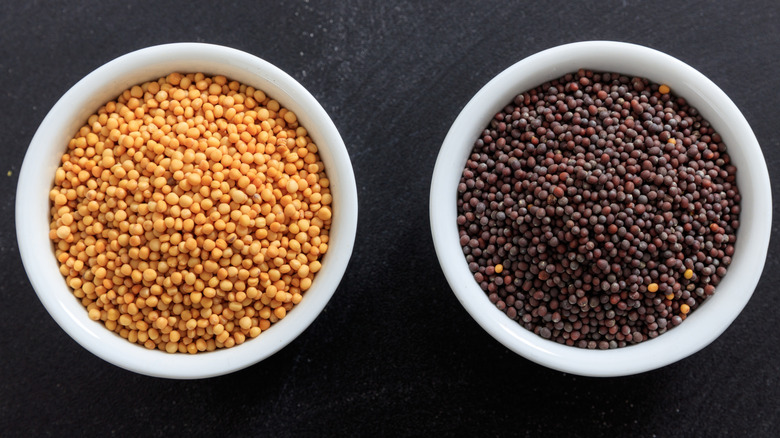
Mustard seeds and its variant paste and oil are the cornerstones of many cuisines across the world. In fact, mustard enjoyed such importance among Ancient Egyptians that they even put some of it in the Pharaoh's tombs. While mustard seeds are central in Asian, Middle Eastern, African, and North American cuisines, they can also be found in some European countries like France and Germany. The usage of mustard seeds depends on the cuisine, but generally, they go well in different types of pickles, stews, stir-fries, and vinaigrettes. Some countries like India, Pakistan, and Nepal temper mustard seeds in oil before adding them to dals and curries for a sharp, flavorful kick.
Despite its popularity across the globe, most of the world's mustard seeds are produced by one tiny country bordering India — Nepal. Based on statistics gathered by Faostat, Nepal produced 230,050 tonnes of mustard seeds in 2022, making it the highest mustard seed-producing country in the world. Moreover, 2022 also marked Nepal's highest mustard seed output through history, which was 4.45% greater than the previous year when it produced 220,250 tonnes of seeds, per Faostat. In 2021, Nepal alone contributed to a total of 41.3% of the world's mustard seeds production, with Russia and Canada coming in at second and third place, respectively. Together, the three countries were responsible for nearly 80% of all mustard seeds grown across the globe.
Why Nepal produces so much mustard
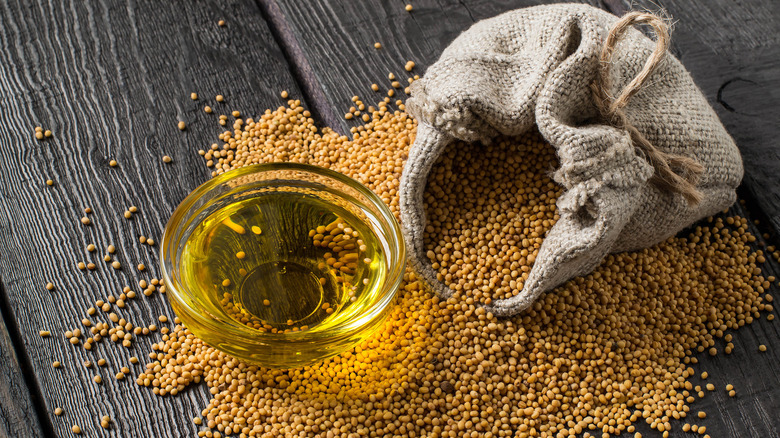
Nepalese farmers are drawn to mustard farming for a few reasons. For starters, it's easier to grow mustard compared to other conventional crops, such as wheat, in Nepal — it needs less water, grows faster, and is less susceptible to damage by animals. Additionally, the government also provides a subsidy for mustard farming, aiding with agricultural tools, such as fertilizers and irrigation systems. Nepal's moderately cool climate and fertile soil also play a huge role in farming the spice, making the location conducive to the growth of the mustard plant.
After all, mustard is a staple in Nepalese cuisine. Mustard seeds are often used in pickles, such as the khalpi achaar, made from cucumber. The mustard plant itself is judiciously utilized across many dishes, like rayo ko saag (leafy greens cooked in mustard oil). Even more popular is the mustard oil derived from mustard seeds, which is used to temper spices and add flavor to everything from chukauni, a potato salad tossed in a spiced yogurt sauce, to choyela, a popular street food predominantly made with shredded meat. Not only that, but mustard seeds and oil are also used in alternative medicine due to their antibiotic properties, providing relief from common cough and cold symptoms. Mustard oil combined with other herbs and spices are even applied to joints and muscles to help with inflammation and aches.