

The Absolutely Vile Lemonade Recipe Found In The World's First Cocktail Book
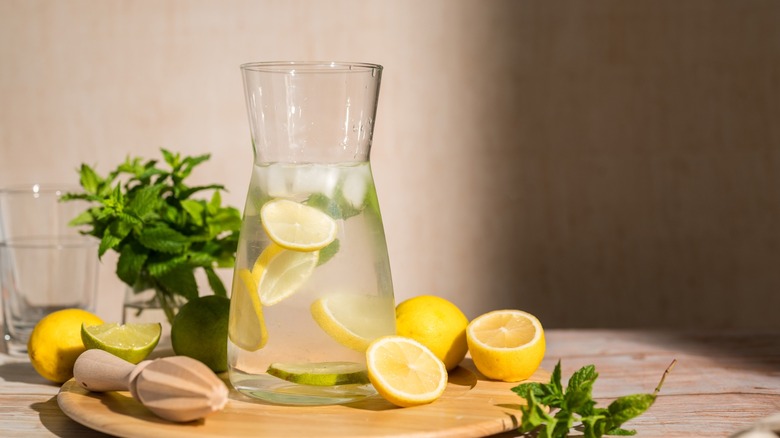
You can find countless blogs and videos on YouTube or TikTok of people trying Depression-era recipes, or even much older recipes for bizarre and unique foods by modern standards. There are even food archaeologists recreating Roman and Ancient Greek recipes for things like bread. But for all the unusual and sometimes unappealing recipes you can find online, few can top the lemonade recipe found in Oxford Night Caps, published in 1827. The book has a vaunted place in history and is widely considered the first cocktail book ever published. It contains what may be the meatiest lemonade recipe you'll ever hear.
The recipe is based on an earlier one in the book for Egg Punch. The ingredients in this include water, the juice of lemons and oranges, a bottle of capillaire (syrup made from maidenhair fern), sherry, brandy, sugar, and an orange syrup called shrub. So far, so good. But then the recipe requires four glasses of liquefied calves' feet jelly and 10 eggs. It's to be whipped until frothy, and then it's ready to serve. At this point, you may be ready to throw your hands up and back away, but remember, this is just the Egg Punch recipe. And from this we make the lemonade.
The lemonade recipe is on the page after the Egg Punch recipe in Oxford Night Caps. You might think there's at least a tolerable base for the lemonade with all the sherry and brandy that was in the egg punch, but the lemonade is a non-alcoholic drink. It's not quite ready yet.
Making lemonade out of lemons (and eggs)
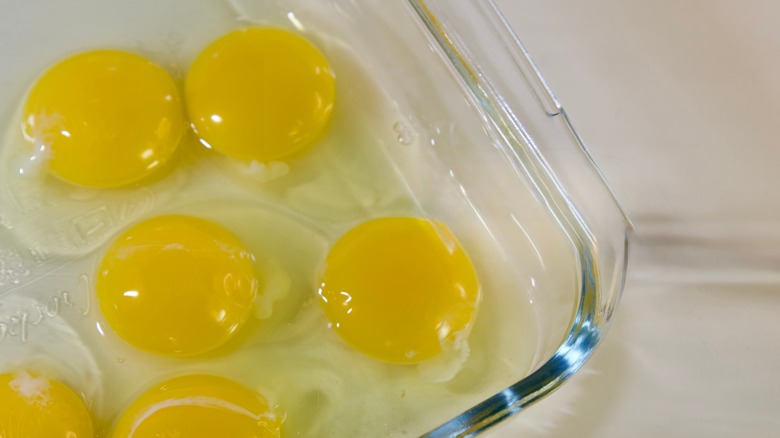
To make the lemonade, you have to go back and make the Egg Punch without any orange or alcohol. In other words, you need to whip eggs and calves' feet jelly with water, lemon juice, and sugar. Then add the juice of four more lemons and a proportionate amount of sugar. Presumably, this would have a consistency like a thin mousse or creamless syllabub that you're meant to drink.
With the addition of calves' feet jelly, refrigeration would cause the lemonade to solidify into a fairly gelatinous state. At that point, a spoon might be better for consuming this than trying to drink it. Unfortunately, it is hard to find anyone online who has tried to make this recipe before, so it's not an easy one to review.
The jelly is basically pure gelatin, which itself is extremely high in protein. Combined with the eggs, this recipe is for the thickest, highest-protein lemonade you'll probably ever find. And it's certainly not vegan, by any means. Obviously, there are easier ways to get gelatin these days. A simple package from the store will do. But the final texture, with eggs, would be so much thicker than anything you're likely to associate with lemonade. And there are potential safety concerns with raw eggs to factor in as well. Given that the earliest recipe for a lemonade-like drink dates back to 10th-century Egypt, this egg-and-gelatin concoction is really lemonade in name only.