

Stop Destroying Your Pie Weights With This Common Cleaning Mistake
We may receive a commission on purchases made from links.
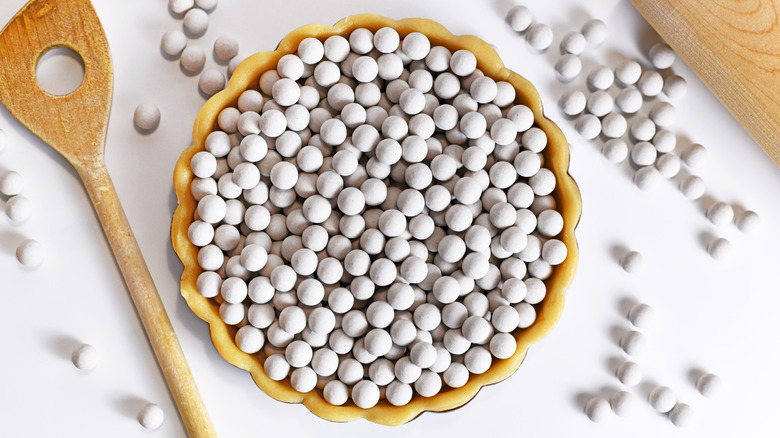
Pre-baking, par-baking, or blind baking pie crust are key techniques bakers use to ensure their pies end up flaky and crisp instead of soggy or undercooked. However, before lining the crust with parchment paper and filling it with pie weights, aka baking beads, you should know that you could easily destroy the weighted balls with one common cleaning mishap: Transferring them directly to water from the heat of the oven.
The great thing about pie weights is that they're an easy, durable, and reusable alternative to DIY baking weights like baking beans, rice, or sugar. While it might be tempting to wash the beads right out of the tin after your crust has pre-baked so the pastry can begin cooling, it's best to wait until they cool a bit. Otherwise your pie weights could undergo thermal shock by exposing them to a rapid temperature change — causing them to crack and break. This is particularly true of ceramic pie weights with relatively low heat conduction.
How to properly clean your pie weights
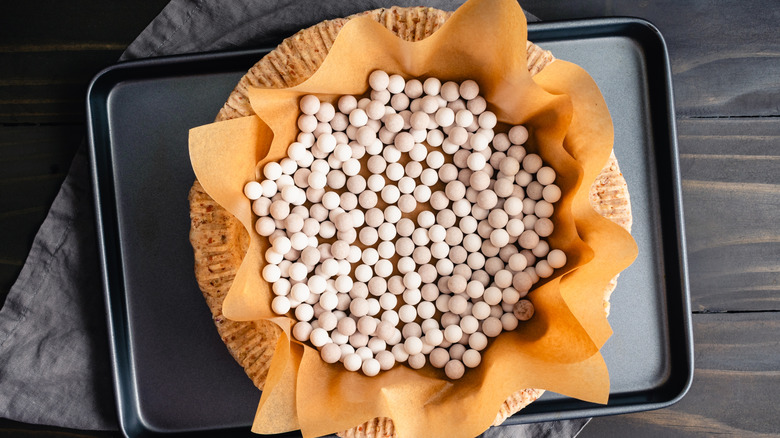
Par-baking or blind baking crust with pie weights is especially useful when making high-moisture custard-filled pies like classic pumpkin or lemon meringue; or for fillings which don't require baking such as peanut butter creme or butterscotch. Pie weights are commonly made from materials like ceramic or glass, which are designed to withstand high oven temperatures up to 450 to 500 degrees Fahrenheit or more. Besides heat resistance, though, these materials are susceptible to wear and tear if you handle them roughly, expose them to drastic temperature changes, or don't dry them thoroughly after cleaning. So, to clean your baking weights and keep them in optimal shape, let them cool for five to 10 minutes after you remove your pie from the oven. Lift them into a separate heat-proof dish or container so your crust can breathe as it cools, too.
Once your pie weights have dropped in temperature, you can safely handle them and wash them gently in soap and water, then dry them well by hand before transferring them to their storage bag or container. If you have metal pie weights, you probably don't need to worry as much about fracturing the material via thermal shock conditions, since materials like steel have a higher heat conduction. Silicone pie weights are also a durable alternative if you find that your ceramic beads are chipping, even with the proper cooling and washing techniques.