

Send Your Restaurant Dish Back Immediately If Your Plate Has This Problem

You're sitting in a cozy, candle-lit restaurant, and the culinary scene is set. Maybe you're on a date, celebrating a birthday, or trying out a seasonal menu at your favorite locale. Everything is going great, and as you polish off an appetizer, your server arrives with your entrée in hand. You pick up your cutlery, preparing to dig in. But, as you're about to take your first bite, something catches your attention — dried, crusted food remnants on the edges of your plate, that clearly isn't a part of your scrumptious meal.
You quickly scan the rest of your plate, the rim of your class, and your fork in hand, and wonder, "Is my dinnerware dirty?" Suddenly, the whole meal isn't as appetizing as it was just a few seconds ago. While restaurant-goers are often shy to send a dish back, in this case, you certainly should.
The simple truth is that, if you see food remnants, finger prints, or oily smudges on your plate, it's not fit to serve — and may not even be safe. Since your request for a new plate has nothing to do with personal preference, but rather general cleanliness, it's a fairly neutral ask that shouldn't offend the staff. In fact, they may even appreciate you bringing the issue to their attention.
Why it's important to send a dirty dish back
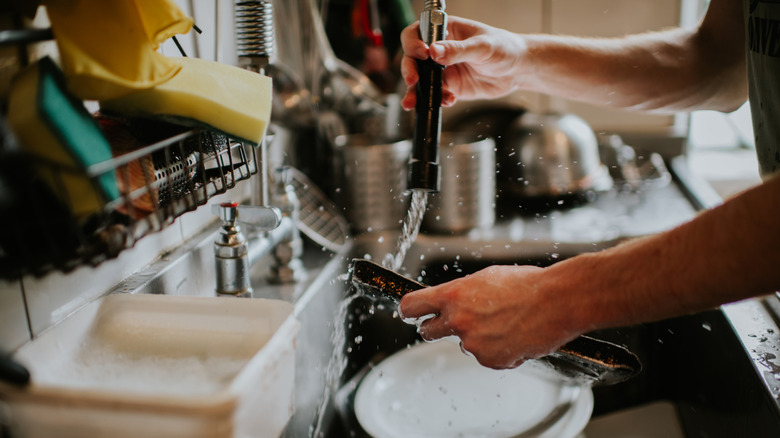
Even if your plate is noticeably filthy, you may still be tempted to avoid a confrontational moment and dig into your meal anyway, skirting the dirty bits on the dish. But there's a good reason for swapping your less-than-clean plate back for another one. Providing customers with clean dishes and utensils is not just a courtesy, but a standard implemented by the FDA Food Code, which determines the requirements for health inspection grades at restaurants. Spotless plates are a clear sign of a well-kept restaurant, and helps to keep doors open and customers happy.
Further, dirty dishware or reused plates can promote the spread of germs, even a small amount of dried sauce on the edge. Food bits on a plate could indicate that water wasn't hot enough to scrub it off, the cleaning detergent wasn't doing its job, or the dishwasher wasn't thorough. When these standards aren't met, there's a higher chance that pathogens like E. coli and listeria thrive and linger on dinnerware. It may also indicate that the restaurant has subpar sanitation practices in other parts of the eatery.
Thankfully, there are expert-approved etiquette tips for sending food back at a restaurant to improve your experience and provide staff with helpful feedback for future guests. Firstly, avoid blaming the server for the mistake — they likely had nothing to do with the dishes themselves, and it's not helpful to escalate conflict. Instead, calmly explain and show the dirty plate, and let them know you would like to send it back. A good restaurant will understand your concern and take care of the issue, so remember to thank them. You may even choose to leave a bigger tip if they work with you to make things right.