

How Did Hotel Minibars Become A Thing?
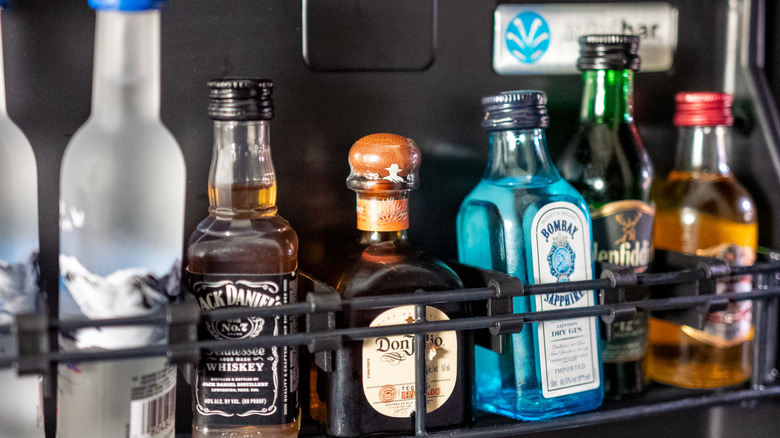
You don't know true fear until you've accidentally shifted items on a hotel minibar shelf and heard your travel buddy panic that you're about to be charged $18 for a tiny bottle of Tito's vodka, even if it is one of the most popular vodka brands to stock in your home bar. The dreaded minibar has been both a blessing and a curse to the tired traveler, providing a quick fix when needed but often charging an astronomical amount for otherwise inexpensive items. The tiny refrigerators with alcohol, beverages, and snacks have become less and less popular in recent years, but how did they begin?
Minibars were invented by a German company named Siegas in the 1960s, though they didn't pick up in popularity until the mid-1970s. The Madison Hotel in Washington, D.C., was the first to put minibars in hotel rooms in 1963, but the manager of a Hong Kong-based Hilton hotel put minibars in all 840 of his hotel rooms and fully stocked the tiny fridges with liquor (the Hilton also has some of the absolute best free hotel breakfasts ever). That leap of faith paid off and soon lots of hotel chains implemented minibars in its hotel rooms. The convenient and exciting minibar phase lasted quite a few years, but customers quickly caught on that paying $6 for a bottle of water or $8 for a measly pack of salted peanuts was no longer a novelty.
Why minibars existed and why you'll rarely see them now
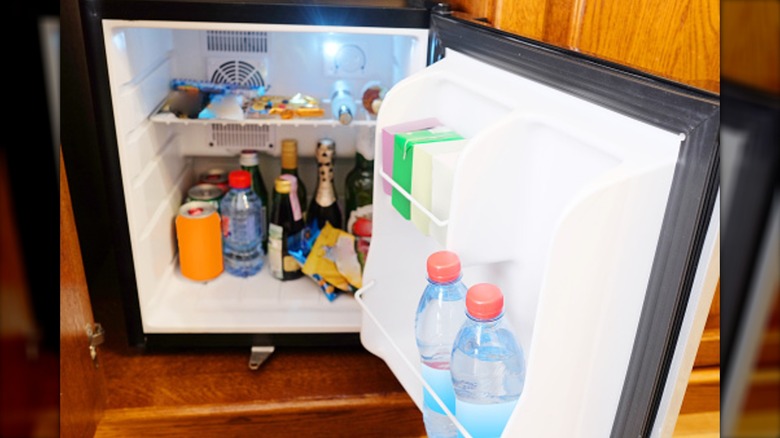
The idea behind a minibar was that it was meant to mimic the luxury of cocktail service on airplanes — and customers were obsessed. In 1974, when Hilton introduced minibars to its hotel rooms, alcohol sales increased by 500%. Every hotel chain wanted to get its hands on these easy, little moneymakers, but it wasn't all fun and games. Besides the upkeep of continuously purchasing replenishment items, hotel staff were responsible for going room by room to check the contents of the minibars. Eventually, advanced technology minimized this labor, with minibars containing sensors to detect which items had been removed, but the damage was already done.
By the mid-2000s, minibars were becoming obsolete. A study by PFK Hospitality Research published in HuffPost found that between 2007 and 2012, minibar sales dropped by a staggering 28%. Instead of literally and figuratively eating the cost of an overpriced bag of M&M's, guests opted to shop at local convenience stores for cheaper versions of the same products. Several hotel chains — such as Marriott, Hilton, Starwood, and Grand Hyatt — phased out minibars in favor of empty refrigerators, where guests could store their own food. The appeal of a swanky, full-service bar in the lobby began to outweigh the desire to drink lukewarm vodka out of a paper cup. In case you stumble upon one of these relics from the past, here are a few tips for making cocktails from a hotel minibar.