

The Cooking Mistake That Could Be Turning Your Baked Shrimp Into Steamed Shrimp
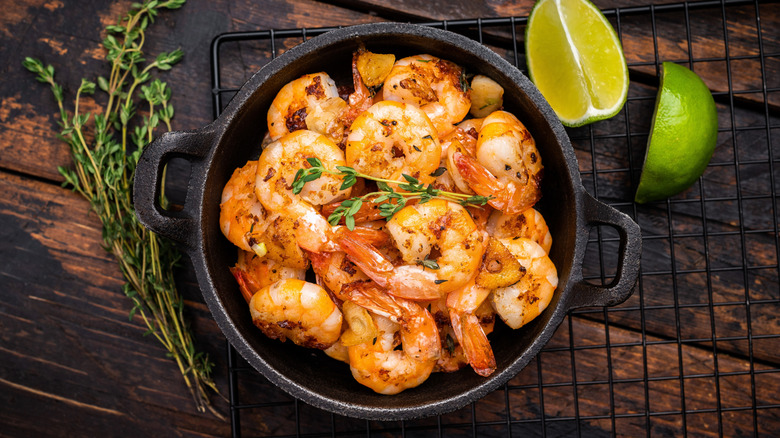
Shrimp is a delicious main course that takes mere minutes to prepare, and cooking your shrimp in the oven (rather than on the stove) gives you some distinct advantages. If you spread the shellfish out on a sheet pan, you have more room to cook a large number of them all at once. The oven's even heat also reduces the chance of your food overcooking because the shrimp aren't getting hit with the intense, direct heat of a pan. But baking your shrimp also opens you up to fresh mistakes, and one of the biggest is crowding your sheet pan by piling the shrimp on top of each other.
To make your shrimp nice and crispy, you need to maximize their exposure to the oven's dry heat. This means giving each one proper room to breathe. Lump them too close together, or even pile them in a smaller pan where they aren't laying flat in a single layer, and the shrimp will end up steaming each other as they release moisture during cooking. This not only inhibits browning (which requires a lack of moisture to create that tasty, charred flavor), but it makes the shrimp more likely to turn mushy. So, take a few extra seconds to spread out your shrimp, and don't make the mistake of denying them some personal space.
Spread your shrimp out on a sheet pan to prevent steaming
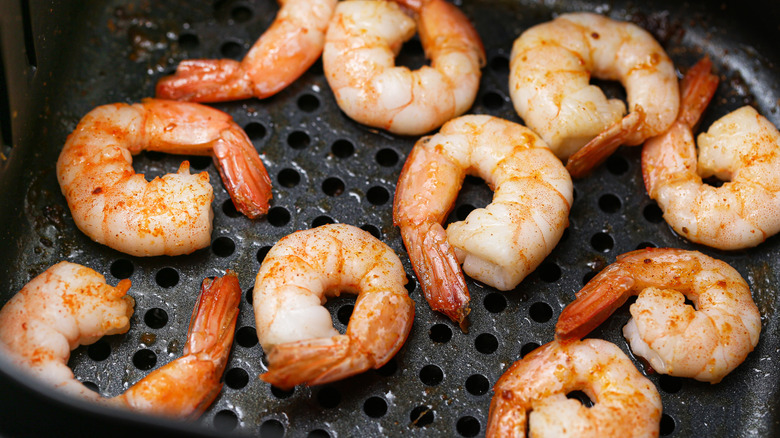
While the margin of error for cooking shrimp is greater in the oven than in a pan, you still need to be careful about overcooking these delicate shellfish. Cooked in a 400-degree-Fahrenheit oven, baked or roasted shrimp will be done in about eight minutes, or maybe a few more if they're covered in breading that will deflect some of the heat. That's not a lot of time for them to brown, and any amount of steam will slow down that process, increasing the likelihood of your shrimp turning mushy or rubbery.
Just like in a pan, the best way to judge when your baked shrimp are done is by using visual clues, and keeping your shrimp spread out will make them easier to see. The first thing to look for is color. Shrimp are usually done once they've turned fully pink and opaque. The second thing to keep an eye on is their shape. Your shrimp should curl slightly into a loose C shape, but if they start curling into circles, they've gone too far. It also helps to use larger shrimp in the oven to limit the chance of overcooking, so stick to baking shrimp with size labels in the 26/30 (extra large) range and lower. Learn those few precautions, and you'll be reaching for the sheet pan to try these versatile shrimp recipes from around the world.