

One Of Robert De Niro's Favorite Martini Variations Includes This Japanese Alcohol

Robert De Niro has played a variety of characters over the past few decades. It only makes sense that the actor's cocktail of choice would be a unique one as well. During an appearance on "The Late Show with Stephen Colbert" in 2015, Colbert brought out two glasses to pour out De Niro's favorite: a sake martini. This version of the classic cocktail is a featured drink at Nobu, a famed restaurant chain the actor co-owns. De Niro is so committed to this beverage that Grubstreet reported the actor once had his former assistant deliver a to-go sake martini to his home at 11 pm. According to the outlet, the Nobu version features Suntory Haku vodka and Hokusetsu Junmai sake, finished off with ginger and Japanese cucumber.
Using sake in your martini in place of the typical vermouth makes for a fresh and light twist on the original. Sake, an alcohol made from rice, water, and koji (a type of mold used for fermenting foods), originated in Japan in the 3rd Century. Sake is often compared to rice wine, but it is neither a wine nor a liquor — it's a unique alcohol all its own. Taking a page from De Niro and adding sake to your martini can help the drink taste slightly sweeter thanks to the spirit's fruit-like aroma. This swap could make a martini slightly more accessible to those newer to the beverager, and in any case, it's a great way to shake things up before you sip.
Making a sake martini only requires one easy swap
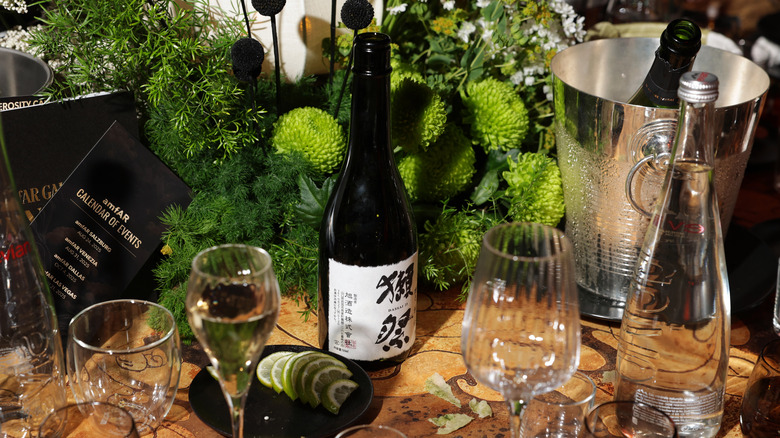
Although it may sound intimidating if you're new to sake or martinis in general, using the rice-based alcohol is a simple process. This is primarily because sake and vermouth typically have the same ABV (alcohol by volume) level: about 15–18%. When you use sake in a martini instead of vermouth, you can use the exact measurements you would with the original martini recipe.
Some cocktail purists may say that there are core ingredients that make the perfect martini, and they shouldn't be altered or substituted. But if you're anything like Robert De Niro, you'll enjoy the sake twist thanks to its lower acidity and bitterness levels compared to vermouth. There are also several different types of sake, each known as Ginjo sake or non-Ginjo sake. Ginjo sake is fragrant and often fruity in aroma or flavor, whereas non-Ginjo sake is more savory and earthy. Non-Ginjo style sake is typically enjoyed slightly warmed in ceramic cups, and Ginjo sake works well chilled on its own or in a cold cocktail, so you may find that a Ginjo variety suits your saketini best.