

Make Bucatini Taste Restaurant-Worthy With This Crucial Step
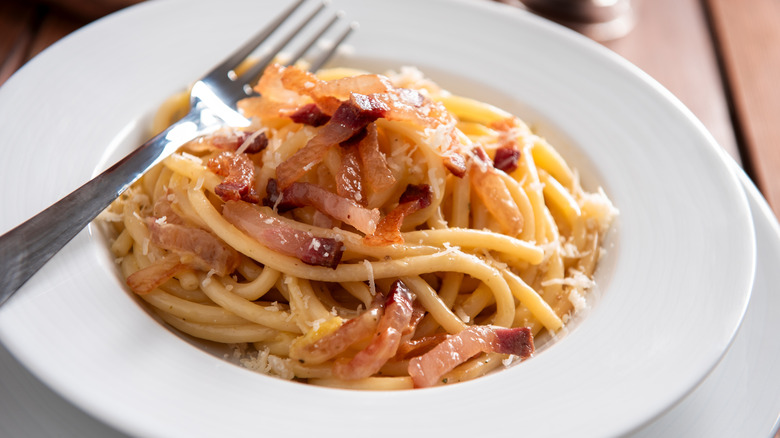
Bucatini pasta can be a delicious way to enjoy your next batch of noodles. Bucatini is somewhat similar to thick spaghetti, but each noodle has a little hole running through it. This is where the pasta gets its name, as "buco" is Italian for "hole." When prepared properly, such as in this Bucatini all'Amatriciana recipe, the sauce will fill the noodles and make the bite even more flavorful. If prepared incorrectly, though, the hole becomes a detriment to the entire dish.
This is because while the pasta is boiling, the water will naturally flood into each noodle. While this is a necessary part of the cooking process, if that water isn't properly removed, you'll get a bite of pasta water with each forkful rather than a flavorful sauce. This means you should take extra care when straining the pasta; don't simply give it a shake in the colander and pour it back into the bowl. Rather, you should strain thoroughly, making sure no more water comes out of the dish, no matter how much you shake it, before moving on to the next step of the process. This ensures your noodles are empty and ready to be filled with sauce. After all, no one wants to bite into a noodle and taste salty, starchy water instead of one of the best pasta sauce brands on the market.
How to properly and efficiently drain bucatini
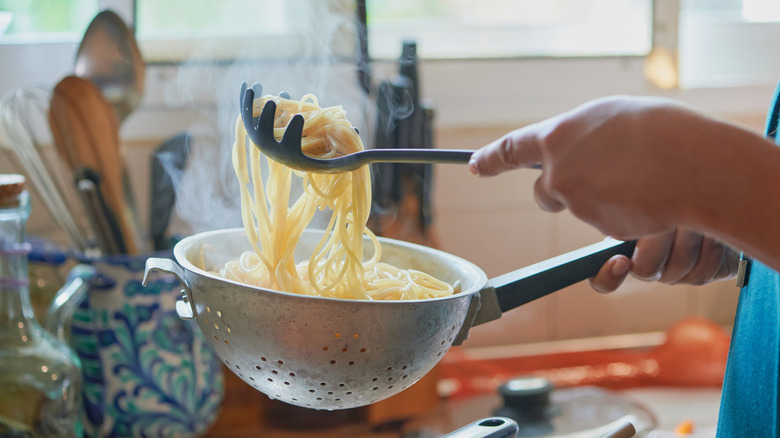
While draining bucatini isn't necessarily different from draining other kinds of pasta, there are a few tips to try in order to drain the pasta as efficiently as possible. For instance, instead of cooking the pasta in a pot and then transferring it to a colander, consider placing a metal colander in the pot from the start. Then, when it's time to drain the pasta, you can simply lift the colander out, letting the pasta water drip directly into the pot. This has the added benefit of neatly collecting the pasta water, which you can then carefully incorporate into the sauce, as the starch will help it stick to the noodles. While you don't want the starch water inside the noodles, it makes a great addition to the sauce itself as well as other dishes, such as beans. If you don't have a colander, rest assured, there are other ways to drain your pasta as well.
There are a few other tips to follow when it comes to draining pasta as well. For instance, Martha Stewart has a trick for reducing steam while draining pasta, as an abundance of steam hitting you in the face can make the whole process annoying. You should also be sure not to leave the noodles in the strainer for long, as this is one of the biggest mistakes people make when draining pasta. If you strain carefully and thoroughly, you should end up with delicious bucatini.