

Sieve Vs. Strainer: What's The Difference And When Should You Use Each?
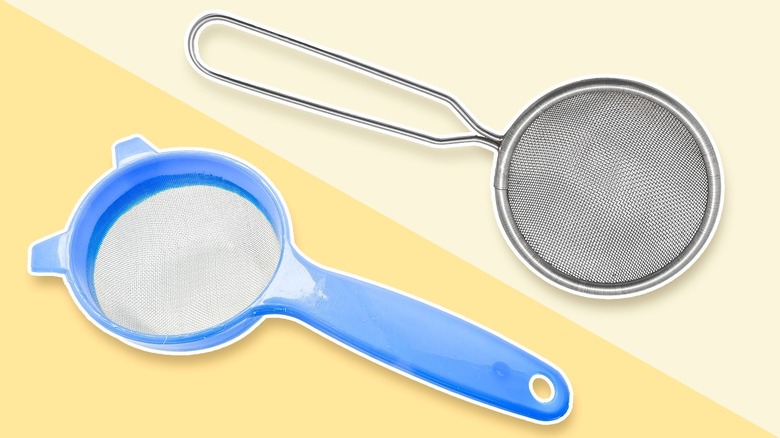
Sieves, strainers, colanders, a good old slotted spoon — they all have holes. But do each serve a different purpose? Though it might be surprising, the answer is yes, even when it comes to sieves and strainers. Sieves and strainers look very similar, and the words are often used interchangeably. They're both made of metal, they can both have handles, and the main part of the tool features a metal basket made of a very fine mesh material.
However, the holes of a strainer are typically smaller than those of a sieve, and they're mainly used for liquids. Strainers create perfectly smooth soups and sauces, and they remove impurities from stocks, juices, and purées too. The strainers in professional kitchens often have baskets that are shaped like a cone. These are called chinois strainers.
Sieves or sifters, on the other hand, are for dry ingredients. Their main function is to aerate and remove lumps from things like flour and powdered sugar. Sieves come in a lot of different shapes and sizes, but the most common ones have handles and balancing claws.
Use a strainer for sauces and sieves for baking cakes
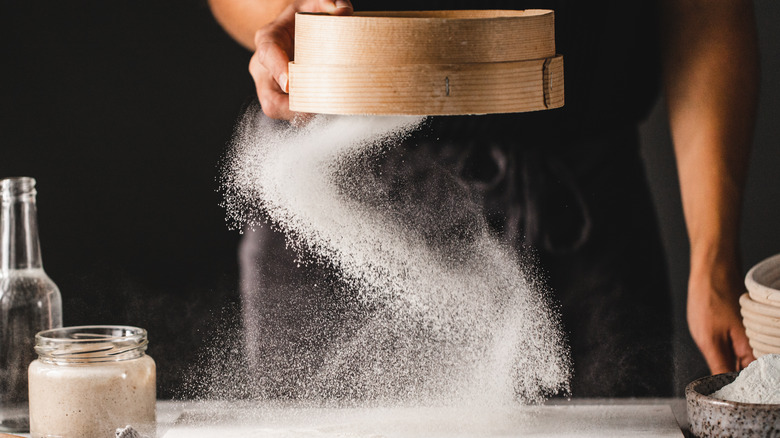
Drum-shaped sieves, also called tamis, look a lot like cake pans. They have a flat bottom instead of a basket and sometimes feature an interchangeable disc so you can control how fine the mesh is. They have a greater capacity than most sieves, so they are great for batch baking.
Handheld flour sifters are also a favorite tool of avid bakers. These are small, mug-like sieves with high walls that are operated by a crank or spring. When triggered, a blade rotates above the mesh insert, aerating the flour easily and removing the need for shaking. These are the best sieves to use for very tender cakes, like a fluffy angel food cake, or light pastries. But if a recipe calls for sifting, you can reach for pretty much any sieve, and you should do so any time you're working with clump-prone dry ingredients, like cake flour or cocoa powder.
However, if you need to skim the foam from a stock or purée a mango, then it's best to reach for a fine mesh strainer. It's not a big deal to only have one in your arsenal, but you definitely need something with smaller holes than a colander. Both sieves and strainers can be used to rinse small grains that would fall through those bigger spaces, like rice, and they can remove pulp and seeds from juices.