

Michael Symon's Pro Tip To Strip The Silver Skin From Pork With Ease

Trimming a cut of pork of any extra fat before roasting or grilling encourages even cooking. However, it's also essential to remove the sinewy membrane, known as the silver skin, running across the surface. The best way to do this? On one episode of "BBQ Brawl," chef Michael Symon reveals that he strips the silver skin from pork with ease by running the tip of a sharp knife under it while aiming it up and away from the meat.
What is silver skin and why should you remove it? Good question. This layer of connective tissue is made of elastin and has a thin, almost-translucent appearance. Unlike collagen, which softens when cooked, silver skin becomes unpalatably chewy and tough. It can also act as a physical barrier to wet marinades and rubs, preventing flavor absorption.
Symon removes the silver skin from pork by firstly inserting his knife under it — he aims for an area just a little bit away from the edge. Then, he cuts the membrane away, moving towards that nearest edge, making sure to angle his knife up. This action creates a tab that he can grasp with his fingers. Grabbing this flap, he repositions the sharp edge of the knife so that it's facing him and cuts under the remaining silver skin. As Symon is always angling his knife up, he's able to make a clean cut without removing any of the meat beneath it.
Use a paper towel to help pull the silver skin off pork ribs
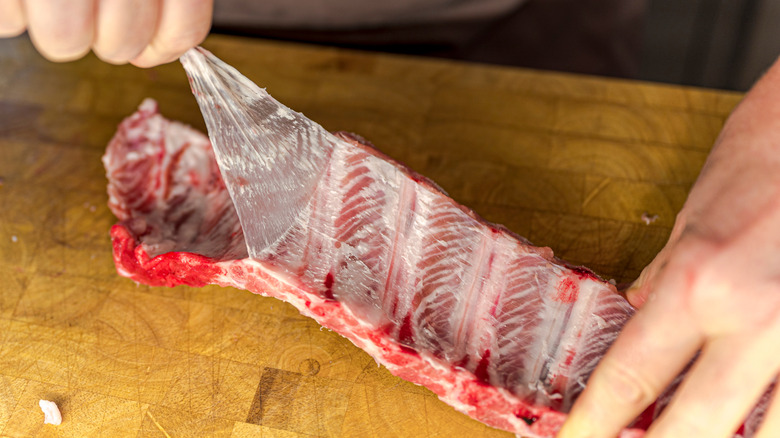
If removing the silver skin from trickier cuts of meat, like ribs, you can lift off the edge of the thin membrane with a sharp knife, grab hold of it with a paper towel, and simply pull it all the way back until the entire piece is removed. The fibrous texture of the paper towel allows you to grip onto the silver skin, which can otherwise be hard to hold onto due to its slippery texture.
When removing silver skin from pork or any other variety of meat, like beef or lamb, take care to keep the fat cap intact. This layer of fat, which usually covers a portion of a pork butt or shoulder, has a thicker texture and opaque appearance. You shouldn't cut the fat cap off cuts like pork belly, however, because, unlike silver skin, it renders down during cooking and self-bastes it, lending the meat a succulent texture and juicier bite.
The fat cap is also packed full of natural flavor, which will imbue your pork with a rich savoriness and unctuous quality. Once your pork is prepped, you can oven roast it, fry it, or cook it on a grill. Michael Symon's grilling basics include focusing on technique rather than a recipe and using charcoal instead of gas to get a smokier aroma and charred flavor, so keep that in mind when preparing your pork.