

The Humble Yet Crucial Cooking Tool Revolutionary War Soldiers Relied On
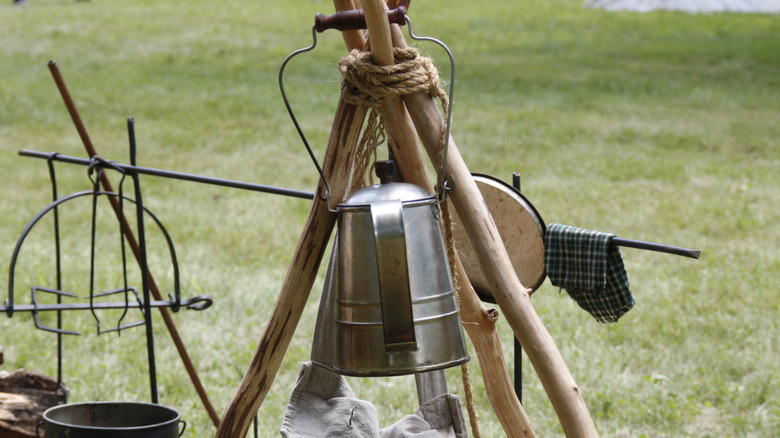
"An army marches on its stomach," goes the old saying. Soldiers of all ages need to eat to be at their best on the battlefield, and at each point in history, there's one tool, recipe, or technology that soldiers rely on for their chow. For troopers participating in the American Revolutionary War, that crucial tool was the humble cook pot.
Also known as a camp kettle or cook kettle, this tool — quite similar to the stock pot that we've got today — is the single cooking tool that both British and Continental Army troopers are issued as part of their mess kit. Made from lightweight tin (as opposed to heavy iron), this pot can be handily carried on a soldier's back for miles. Each cook kettle was sized to feed six men, so one pot is often issued to a six-man formation in the army.
Such was its importance that the pot even made an appearance in General Washington's personal mess kit. Unlike the common trooper, his kit also includes extra plates and canisters, but still includes "one nest of camp kettles" according to a supply receipt obtained by the Museum of the American Revolution. So, from privates to generals, every soldier in the field depended on these cook pots for their daily sustenance. It wouldn't be exaggerating to say they were key to sustaining the Continental Army through all those long years of war.
What do they cook in these cook pots?
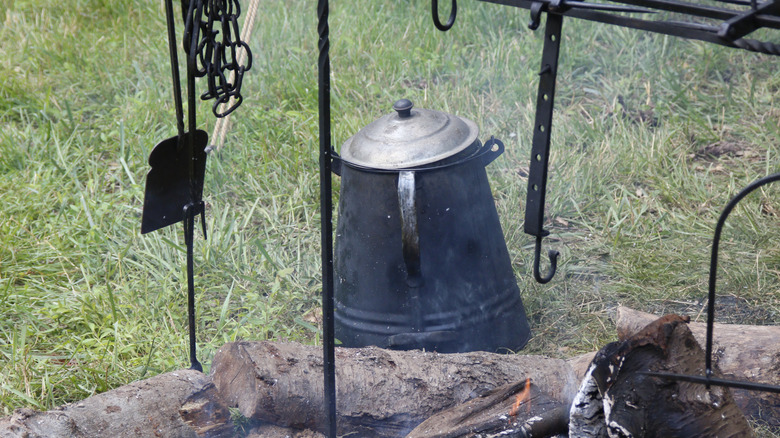
When it came time to chow, the cook pot would go on top of a campfire built from whatever fuel they could scavenge. Then, they'd take out their day's ration and see exactly what they had. According to the American Battlefield Trust, each soldier received daily one pound of beef or salt fish (or ¾ pound of pork if supply didn't allow), a pound of bread or raw flour, and a quart of spruce beer for beverage. That wasn't a lot of food, so soldiers would typically pitch together their rations to make something for everyone — and this is where the cook pot truly shone.
Since soldiers didn't have the luxury of choice, the only recipe they could make was a type of everything-stew — basically throwing everything they had into a cooking pot filled with boiling water. In fact, this is exactly the reason why military leaders gave their troops cook pots: stews were hearty and could feed several, as opposed to frying, which was seen as wasteful.
But sometimes, meat wasn't on the menu. During winter, when supplies were bogged down by the cold and snow, troops would use these same versatile pots to cook simpler, more pared-down meals like barley or very simple vegetable soups. They could also use them to mellow out hardtack, a survival food, or make Johnny Cakes from their flour ration — just flour, water, and salt cooked in a pot. It's not as elegant as the self-heating pouches in modern-day MREs, but through countless meals prepared in these simple tin vessels, the Continental Army stayed fed, stayed fighting, and ultimately won independence. The cook pot may have been humble, but its role in U.S. history? Absolutely crucial.