

The Reason Most US Ground Beef Is Banned In The EU
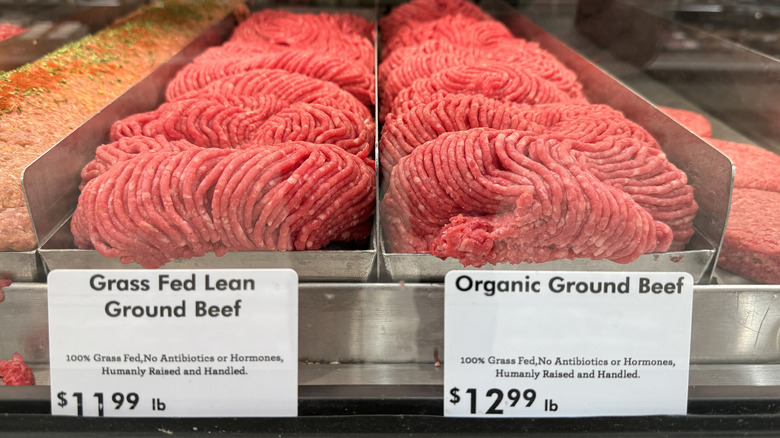
In early February 2017, Politico reported that President Donald Trump complained to a reporter about Europe, saying "They don't take our farm products, they take almost nothing and we take everything from them." This trade imbalance has remained a thorny issue that the current administration has put front and center in its negotiations with the EU to get it to buy more American products, particularly beef and poultry. It sounds like such a simple request on the surface, but there's a reason why Europe isn't using any of our ground beef for their meatballs: American beef is illegal to be sold in the EU.
The ban first started in 1989 when the EU and the U.K. jointly decided to stop importing American beef. The reason has to do with the hormones beef producers stateside were injecting into their cattle. These hormones, such as estradiol, could make the cattle bigger and yield more meat, but European scientific panels found these hormones to be potentially carcinogenic. As the EU takes biosecurity extremely seriously, it has led to a comprehensive ban on meat derived from hormone-treated cattle from everywhere. It just so happens that one of the biggest sources of this is from America — it's nothing personal!
EU has more than one reason to reject American beef
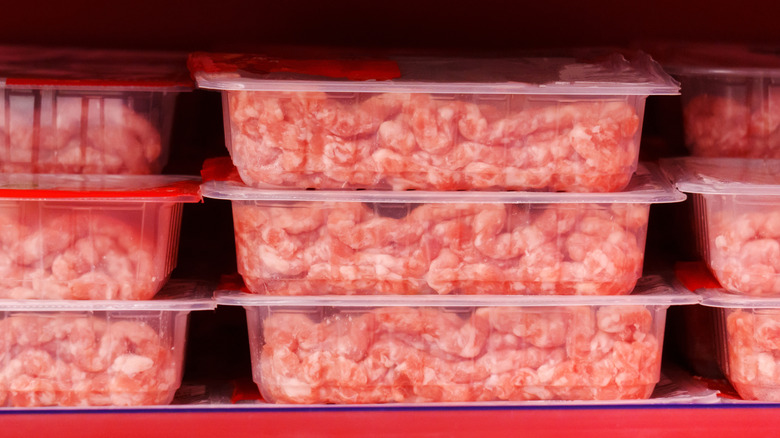
Hormones, as it turns out, weren't the only reason that American beef isn't welcomed in the European market. The widespread use of antibiotics among U.S. cattle farmers adds yet another barrier. Monensin, a common antibiotic that's mixed into the feed for cattle and other farm animals, was banned in the EU in response to the rise of antimicrobial-resistant microbes (or "superbugs") that developed resistance to these drugs. And, you guessed it — this drug is still being used in the U.S. today.
Since the EU market is lucrative, hormones and antibiotics are convenient for the producers and hugely improve yields, few American beef producers so far have bothered to adjust their rearing methods to align with EU standards, especially when regulators don't have a problem with growth hormones. Why do that when they could just export the beef to countries that don't have an issue with hormone-treated beef, like South Korea or Japan? That's why we've got the stalemate that's been ongoing for decades: despite the EU being a huge market, very little American beef is qualified to be sold in the EU, and beef producers see little reason to change their practices.
But these issues aside, the biggest hurdle has to be consumer preference. According to NPR, Europeans have consistently held a low opinion of American hormone-treated beef, considering it "low-quality" compared to EU-produced beef, which is subject to much more stringent regulations and quality standards. So even if there's a breakthrough tomorrow and American beef floods into the market, it would likely struggle with finding takers in a populace used to eating grass-fed beef.
Will US beef be coming to the EU in the future?
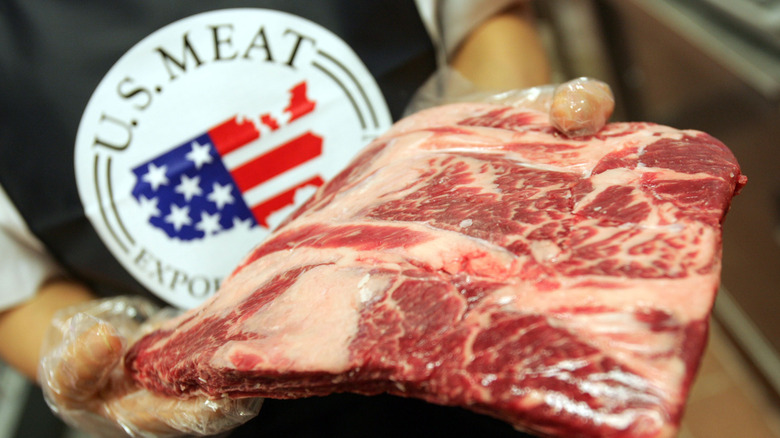
Recent trade negotiations between the U.S. and the EU have opened several agricultural sectors, including grains, nuts, and soybean oil. However, there's currently no sign that the U.S. will be able to get the EU to budge from its "no hormone-treated beef" stance anytime soon. In a press release by the European Commission, the EU clarified that the U.S. must still respect the "regulatory sovereignty" of the EU, including what they call the "sensitive areas of EU agriculture" — beef being chief among them.
The administration did manage to secure some wins for the U.S. meat industry: increased pork and bison exports, plus a promise that American beef won't face any additional "regulatory obstacles."
So where does this leave America's $108.4 billion beef industry? Still completely shut out of Europe, that's where. From the European perspective, the equation hasn't changed: Growth hormones and certain antibiotics equal closed European doors, period. That stance isn't going to change anytime soon.