

Elevate Pesto By Blending In This Salty, Oceanic Addition

The best pestos rarely stray from the basil, pine nuts, Parmagiano Reggiano, garlic, and olive oil formula, but playing around with the ingredients in the sauce can yield deliciously unexpected results. We spoke to one expert about what makes seaweed an underrated pesto ingredient.
With family roots in Terrasini, Sicily, Chef Billy Parisi is typically a stickler for staying true to classic Italian recipes, especially pesto. "The second you change any ingredient in pesto, it is no longer considered the traditional pesto alla genovese," he explains in an exclusive interview with Tasting Table. However, Parisi isn't totally opposed to putting a twist on tradition — the chef grew up watching his grandparents experiment in the kitchen. In fact, he believes that adding seaweed to pesto could enhance the flavor of the sauce. "It would add natural salts, obviously from the sea, and make it more umami," he says. "It would and could be delicious when serving it in pasta or with seafood."
According to the chef, seaweed pesto is an invitation to explore flavorful fusion dishes. "It could also be fun to do some cross-fusion with Italian and Japanese dishes," he suggests. The briny flavors in seaweed lend the pesto some savory depth. However, to achieve this, Parisi recommends making a few changes to the staple ingredients in pesto. "I'd also look to cut the olive oil with a neutral-flavored oil so the seaweed flavors are more pronounced and not as hidden by the olive oil," he states.
How to serve seaweed pesto like a chef
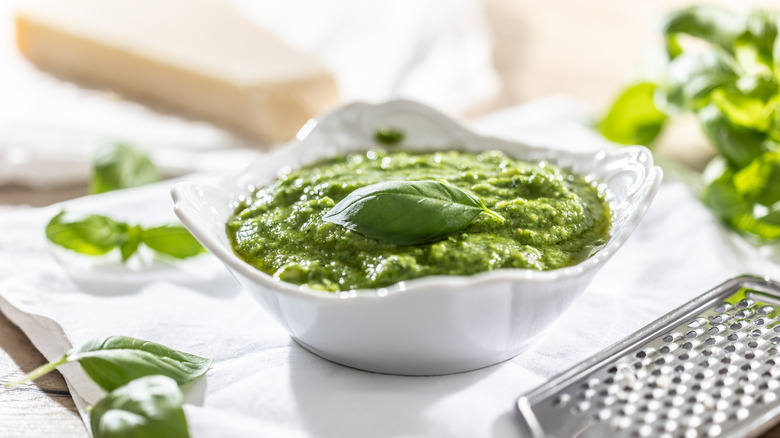
Though seaweed generally has an umami flavor, Parisi notes that each variety has nuances that will alter pesto's taste. Nori, which is commonly found in sushi, has a flavor that's befitting for seafood recipes. "This definitely has a bright brine flavor with hints of fishiness and umami," he explains. Wakame, a miso soup staple, may have more versatility in pesto: "much more of a sweet-savory flavor compared to nori," Parisi says.
He suggests using the non-traditional sauce in dishes that match its flavor profile in order to elevate these tastes. "Seaweed pesto would go excellently in pastas that have seafood, even in a typical linguine with clam sauce, or with a seafood (lobster) stuffed ravioli," he says. The umami pesto would also work well with garlic seafood pasta, or atop lemon and white wine-infused shrimp and scallop scampi.
Alternatively, Parisi says a drizzle of the pesto will make seafood flavors shine. "It would go great as just a sauce on things like halibut or seabass. You could sort of treat it like a chimichurri, but on seafood," he states. Seaweed is already a departure from traditional pesto recipes, so why not take it a step further by experimenting with other flavors? A dash of seaweed in almond mint pesto gives the zesty sauce a briny spin that's perfect for mild cod. Or, add the ingredient to spicy pesto Calabrese for a perfect complement to hearty salmon pasta.