

Don't Throw Out Peach Pits — They Can Be Used To Grow Trees

Few things say summer like biting into a juicy peach when the fruit's ripe and in peak growing season. But before throwing out your next peach pit, think twice — the pit represents an abundance of opportunity, specifically to grow trees. While planting a peach tree right in your own backyard is a resourceful and rewarding feat, there are some things to consider before starting.
First, the best variety of peach for the job is one grown locally, so it's better suited for growing in your particular climate. Second, make sure you're ready to get your hands dirty. Growing a peach tree is a long-term project that requires preparation. Further, the fruits of your labor (literally) won't appear for two to five years – though the time to harvest fruit varies. The almond-shaped peach seed located within the pit also needs to germinate (or sprout) after a period of dormancy in the winter.
In cold climates, it's possible to plant a peach pit right into the soil toward the end of autumn. If you live in a relatively warm climate, though, you can create a winter germination indoors by cleaning the peach seed and letting it dry. After a few days, crack it open to extract the seed before soaking and storing it in a container with moist soil in the fridge to encourage it to sprout roots. When spring arrives, you can plant the peach tree indoors in a pot or outdoors in the soil.
More tips for growing a peach tree from seed
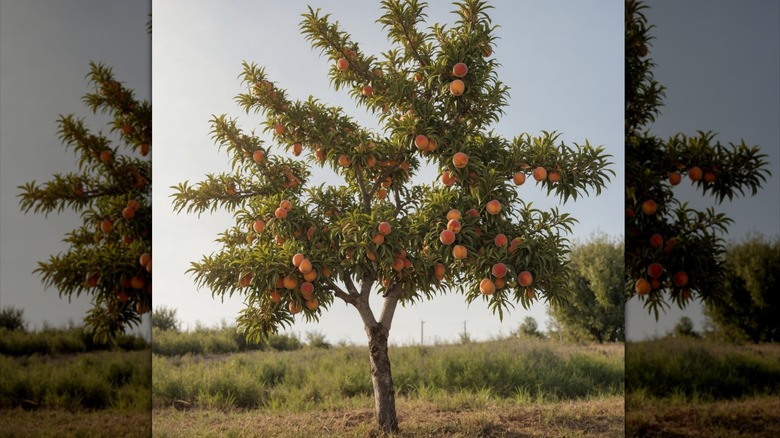
If you find yourself face to face with a leftover peach pit and are ready for the challenge of growing a tree, don't throw it out. But even after you've germinated the seed and planted it, a peach tree requires continual care and patience. Aside from planting the seed outside or in a well-drained pot and making sure to water it a couple times per week, peach trees need full sun — upwards of six hours each day. So, if you live in a particularly cloudy environment or have a shaded yard, your efforts risk low reward. If you live in a place with extreme cold, you also risk damage to the plant from winter freezes.
However, you can set the peach tree up for success with proper planting conditions in nutrient-rich soil and techniques, such as supporting the plant with stakes or applying winter freeze protection by covering the tree with a tarp or applying mulch around the roots. Over time, you can expect a foot and a half to two feet of growth per year. Then, watch for fruit blooms in the springtime a few years after planting. It's a lot of work, but totally worth the effort of fresh homegrown fruit. Think fresh classic peach cobbler, summery fruit salads, and all the best peach recipes. All thanks to saving that peach pit you almost threw in the bin.