

Ciabatta Bread's History Is A Bit More Complicated Than You Might Think
We may receive a commission on purchases made from links.
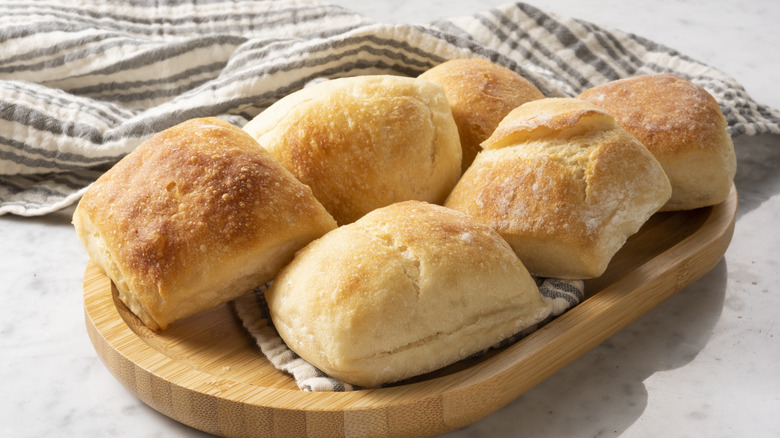
There's nothing like a stacked sandwich between two slices of ciabatta. This springy yet crunchy, all-Italian loaf owes its American debut to three women who championed it during a time when artisanal bakeries were not a thing. During the 1980s, bread-loving Americans were baking crusty baguettes by James Beard and Julia Child along with, possibly the best hippie bread in the world via Edward Espé Brown's, "Tassajara Bread Book". Ciabatta's jump to the U.S. was swift and decisive, thanks to Carol Field, the American cookbook writer living in Italy, who could not get enough of a newly invented, all Italian bread recipe.
In 1985, her book, "The Italian Baker," introduced detailed, approachable instructions for making homemade ciabatta in English. It was the inspiration Sarah Black craved — a New York City baker and business owner. She wanted to sell rustic breads commercially, and once she read Field's recipe, an American star, shaped like your favorite old shoe, was born. Black started a company called Campanio and baked in an NYC spot called Tom Cat Bakery. They sold her ciabatta to high-end food shops like Dean & DeLuca and Murray's Cheese Shop in Manhattan. In 1992, her ciabatta recipe leapt into the spotlight when food expert Florence Fabricant showcased it in The New York Times. Finally, the perfect Italian bread was just as popular as the baguette — both sold in bakeries across Europe and now America. This was a big moment for Italy. They believed all the ado about nothing (baguettes) pushed away their local breads. Well, that's why ciabatta, in all its glory, was invented to spite the French.
Rising to the occasion: Ciabatta's open crumb and big flavor never misses
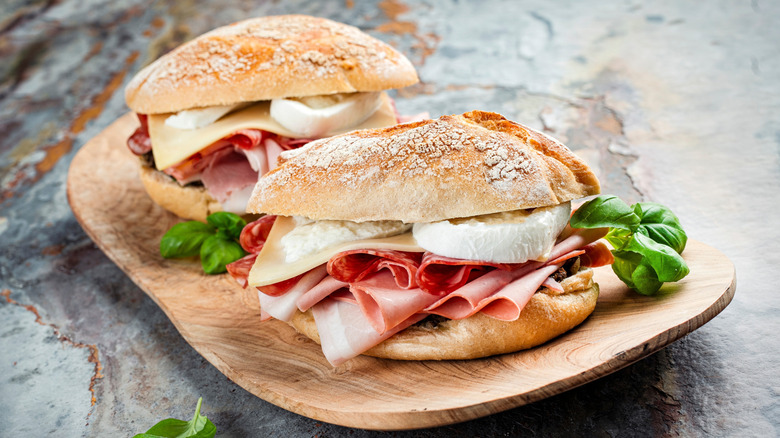
In 1983 Veneto, Arnaldo Cavallari, a former race-car driver turned miller and baker, experimented with a wet and sticky, high-hydration dough, producing a wide, flat loaf with a delightfully spongy, airy interior and a crust that was crisp — a feat no matter how you slice it. Easy to bite into and perfect for the best paninis, its elongated, slipper-like shape inspired its name: ciabatta. Italians embraced it, but some questioned its originality. While Cavallari certainly came up with the name, the specific recipe, and milled his own high-protein flour, he relied on old, passed down, regional bread recipes. This is how it goes. Heroes, both the culinary kind and the sandwich kind, always find ways to elevate and evolve tried-and-true recipes. Besides, everyone knows necessity is the Nonna of invention.
Ciabatta soon became beloved not only for its texture and flavor, but also because it was forgiving, did not require elaborate shaping, and could be produced in bakeries of all sizes. Ciabatta is enjoyed torn alongside soups, toasted and topped for the ultimate bruschetta, or pressed into the absolutely perfect Margherita pizza grilled cheese. The spongy insides of ciabatta also make a fantastic catch-all for the deliciously oily olive salad in a classic muffuletta. It sops up saucy pasta dishes like penne arrabbiata or spaghetti Bolognese like no other. Don't count it out for brunch or dessert, either. Ciabatta makes a fitting vessel for eggy-coated French toast or a tender bread pudding.