

If You Spot This In Your Steak At A Restaurant, Feel Free To Send It Back

From your rib-eye to the T-bone, the best cuts of beef for steaks aren't the ones stripped of every ounce of fat, but the ones with marbling. Those delicate streaks of fat threaded through the meat don't just make a steak look beautiful, they melt as it cooks, basting each bite in flavor. But alongside that welcome fat, there's another connective tissue that sometimes shows up: gristle. Unlike fat, it doesn't soften in the pan or on the grill, and no amount of chewing will turn it tender. If you've ever found yourself gnawing away at a stubborn, rubbery strip that simply won't give, it's not a sign of weak teeth. It's much more likely that you've hit a line of gristle, which ranks pretty high on the list of legitimate reasons to send food back to the kitchen.
What's gristle, you ask? Let's break it down. A steak is made up of muscle, fat, and two types of connective tissue: collagen and elastin. The muscle is what we eat, the fat adds flavor, while collagen melts down into that silky, slow-cooked tenderness we love. Gristle comes from elastin, a tougher connective fiber designed to stretch and support an animal's joints and ligaments. Unlike collagen, elastin never really breaks down, no matter how long the meat stays over the fire. That's why gristle isn't something you can power through: it's not meant to be eaten, and should have been sliced off long before your steak hit the griddle.
How to cut the risk of gristle
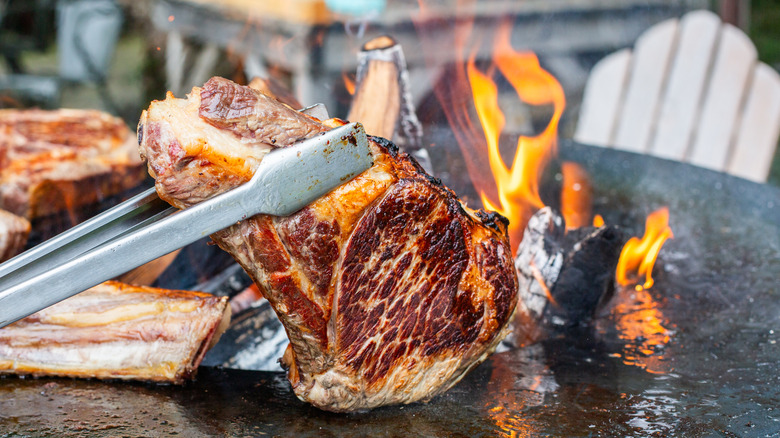
To reduce the risk of ordering a steak full of gristle, here's a quick primer on the most common cuts. The ribeye, one of the most popular choices, comes from the rib section. It's prized for its rich flavor and tender texture, thanks to the marbling of fat that melts beautifully on the grill or in a pan. Cuts from the loin, like a fillet or tenderloin, are leaner but still exceptionally tender — the trade-off is that they can dry out more easily while cooking.
Among the well-loved options, sirloin is the one that breaks the "more fat is always better" rule. Taken from the upper midsection of the cow, it's naturally tender with just enough marbling for flavor. But in this case, leaner sirloin often makes the better choice, since fattier portions are more likely to carry gristle. At the other end of the spectrum, the hard-working cuts from the legs and shoulders, such as chuck or round, are the most gristle-prone of all, and usually best avoided if you're ordering at a steakhouse.