

10 Design And Decor Mistakes That'll Derail Your Dinner Party

You may have bookmarked some iconic '90s recipes for your next dinner party, but mastering the food menu is just half the battle. Without a thoughtful, personalized approach to the design and decor, your party could lack a much-needed sense of intimacy.
Picture this: Your guests are bumping elbows as they draw up awkwardly sized chairs arranged around an impractical layout that blocks access to the entrance and exit. The colors of your carefully prepared feast are getting lost in translation under the harsh, uninviting glare of fluorescent lighting. Mismatched utensils and improperly placed cutlery are interrupting the flow of conversation.
If you are looking to avoid the dinner party of your nightmares, it helps to carefully consider every aspect of your design and decor, from the choice of centerpiece to the window treatments that will frame the entire room. Shabrin Momm, principal designer and founder of Skew Studio, clearly agrees. Ahead, she shares a cautionary list of all the design and decor missteps that can silently sabotage your next dinner party.
Providing inadequate lighting
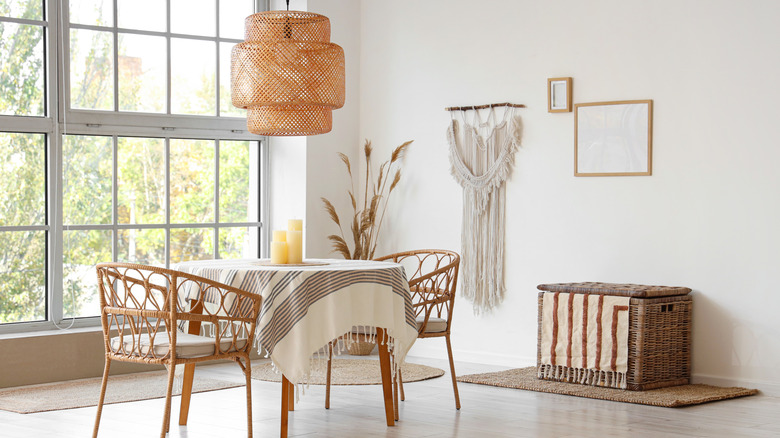
You don't want your guests fumbling in the dark for their forks and knives, but the role of good lighting extends beyond just illumination. A dinner table doused with the warm, welcoming glow of flickering candles and strategically positioned lamps can make your guests linger long after the dessert has been cleared. On the other hand, dim lighting can make the most meticulously prepared feasts look unappealing to the eye.
Shabrin Momm's best advice for nailing this assignment for a special gathering? Try visualizing your choice of lighting as the design equivalent of a friendly chat. "It needs ups and downs, little pauses, and warm moments," she says. In her experience, the most common stumbling block that most dinner parties face is having a solitary bright light that blasts the space with a jarring, unwelcoming glare. "It can make the space feel flat, harsh, or even a bit like a hospital," she rues. Cool white bulbs are another major no-no, as they steal those cozy vibes that you are trying to create at the dinner table.
Momm suggests adopting a layered approach to lighting instead. You will want to start with a "soft hanging light over the table, some warm LED strips, and a few candles or small lamps." Bonus points for using subtly scented candles to enhance the olfactory experience for your dinner guests.
Offering uncomfortable seating
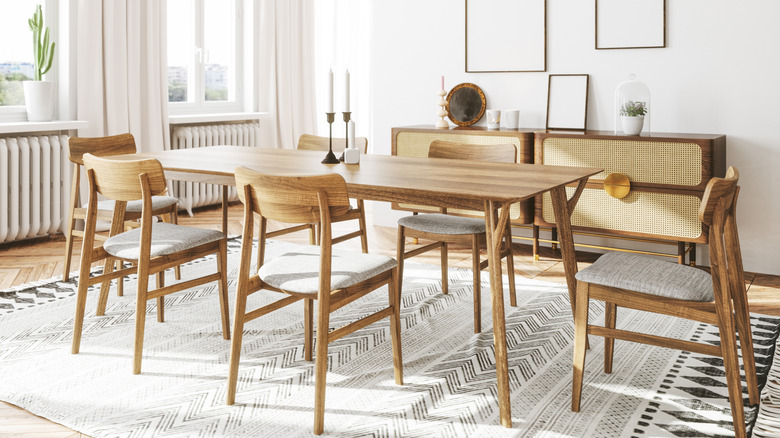
While you will be waltzing back and forth from the kitchen, your guests will be largely stationed in one place at the table, which makes your choice of seating crucial to the success of your dinner party. Rigid chairs that lack back support and sufficient padding might have your guests leaping up for a reprieve even before the hors d'oeuvres are served.
According to Shabrin Momm, a dining chair shouldn't just be easy on the eyes; the sitting experience has to feel good as well. "If it doesn't support your back, has a seat that's too hard, or armrests that keep bumping the table, even the tastiest meal can feel never-ending," she cautions. Her top trick for testing whether your chairs are up to the task of hosting a party? "Try sitting in the chair like you would for a two-hour dinner because chances are, you might be there that long."
When looking for comfortable chairs for your next dinner party, Momm recommends cushioned seats with breathable fabric. Adequate back support is non-negotiable as well. If you are expecting any elderly guests, armrests will be greatly appreciated. If you are working on a tight budget, you can take joy in the fact that vintage dining chairs are one of the smartest things to thrift.
Choosing the wrong layout
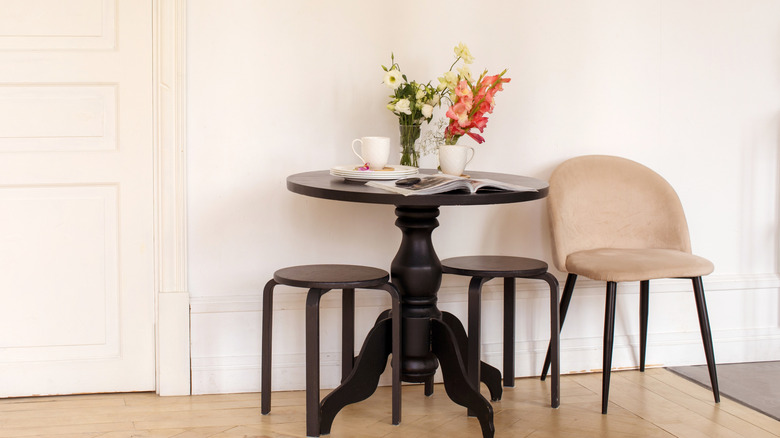
Your guests may not remember everything that they ate, but they will always be able to recall how they felt at your dinner party. Cramped layouts or isolated seating are silent thieves that can hamper a lively discourse.
For Shabrin Momm, the ideal dinner party is one where guests can easily engage with everyone at the table without having to lean forward or raise their voice to be heard. A crucial round of introspection before finalizing the layout can spare you regrets later. Are any of the chairs directly blocked by a column? Are the guests seated too far apart from each other, and will somebody feel left out of the flow of the conversation? Will people bump elbows each time they have to reach for the salt shaker? If you answered yes to any of these questions, it might be time to rethink your current configuration.
For devising the ideal layout, Momm recommends considering your choice of table. "Rectangular tables work beautifully for long, narrow rooms, while round or oval tables encourage intimacy in smaller or square spaces," she advises. The well-prepared host also plans for unexpected guests when hosting a dinner party — it helps to have a backup table setting in mind for any surprise plus-ones who may pop up at the last moment.
Poorly planning the traffic flow
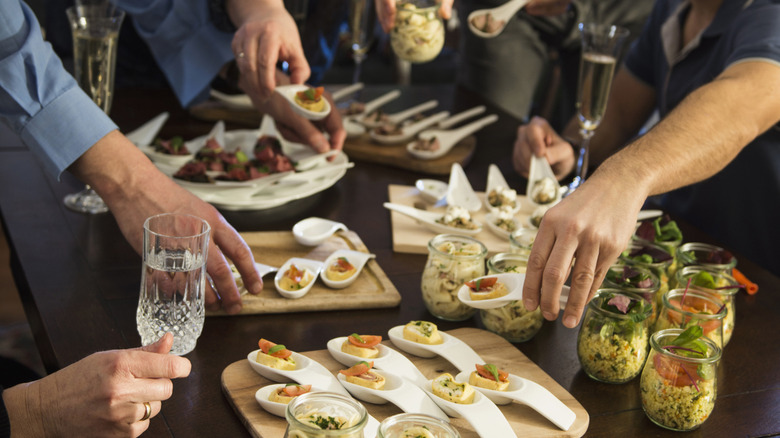
Once your chairs and layout have been locked in, you'll want to do a quick run-through to ensure that traffic flows smoothly across your space from one course to the other. Buffet-style setups that block access to the entrance and exit can quickly escalate into congestion and bottlenecks in highly frequented areas.
Shabrin Momm has also found that it is easy to neglect the route between the kitchen and the table. "If that path goes right through where guests are sitting, you can expect a lot of chair shuffling and maybe even a few spilled drinks," she says. She advises setting up an unobstructed pathway for serving and clearing dishes without having to invade someone's personal space. "If your space is small, a sideboard or cabinet nearby can be a great spot to place dishes so you can move smoothly instead of rushing back and forth," she says.
The ideal dinner party should also have space for everyone to rest their umbrellas and handbags, as well as any gifts they may have picked out for the host. A self-service beverage station can further ensure that there isn't a bottleneck being created around the main serving area. Remember to equip your beverage station with essential items, likeice tongs, an ice bucket, and paper napkins.
Using mismatched tableware
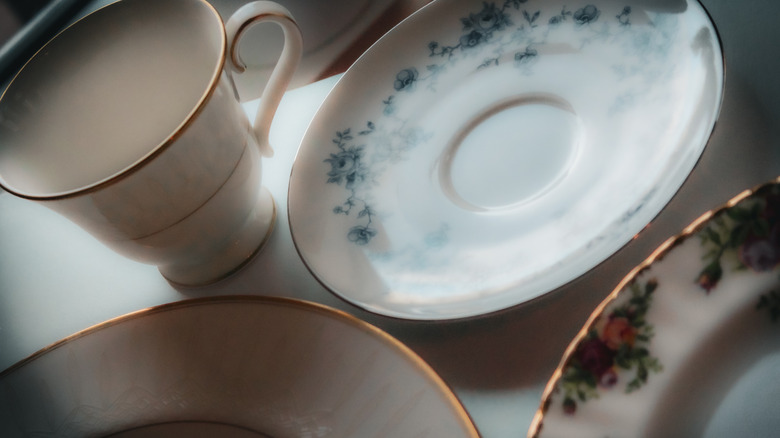
When putting together tableware for a dinner party, the only rule is that there are no rules. Extremely formal settings aren't favored anymore, and it is unlikely that anybody will frown upon salt and pepper shakers not matching the silverware. However, there is a difference between intentionally mismatched tableware and something that looks uncoordinated and disrupts the visual harmony of the table. When oddly sized plates, glasses, and spoons are squished into one table setting, it can suggest a lack of attention and care. The chance that some guests might not receive plates that are as nice as others also makes for an etiquette faux pas.
If you are keen on making mismatched styles work together, Shabrin Momm believes that the key lies in balance. "The trick is to tie everything together with either color, texture, or shape. For example, you can use different patterned plates as long as they share similar colors. Glasses in different shapes work well if they're all clear or in the same shade," she advises. If you are confused about where to begin, it helps to lay down a neutral foundation in the form of table runners in subtle, muted hues. Next, you'll want to add in the different plates and cutlery that you have amassed over the years. But it is essential to ensure that you don't use more than three colors in your scheme to avoid disrupting the cohesion of the table.
Neglecting the centerpiece
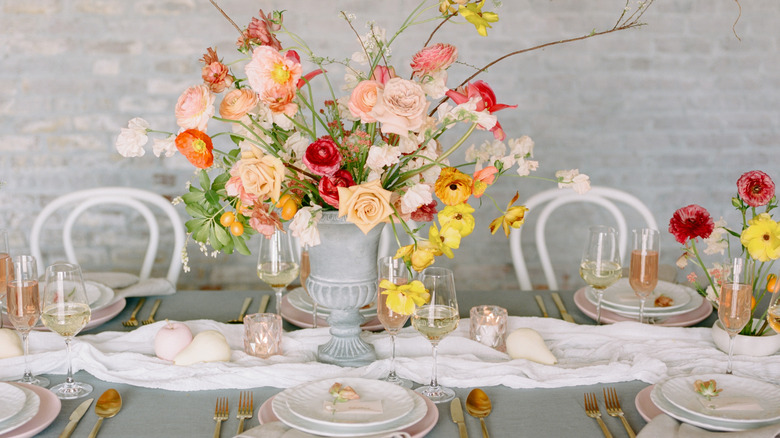
It can be easy to consider a table centerpiece just another decorative flourish, but doing so would also be a grave disservice to the power that it wields over the ambiance of a dinner table. When chosen with care, a centerpiece becomes the visual focal point of the space, an instant conversation starter, and the backdrop of everyone's food pics.
Leaving the centerpiece as an afterthought can suggest a rushed approach to planning the event. "Oversized arrangements that block views are the quickest way to kill conversation," Shabrin Momm warns. But on the other end of the spectrum, an undersized or generic piece can make for an easily forgettable table setting.
So, how can you create a memorable centerpiece that makes the smallest of occasions feel like a grand celebration? "I like to work in clusters of varied heights of candles, seasonal plants, or sculptural ceramics to create visual rhythm without overpowering the table," Momm says. While floral centerpieces assume the monopoly in most table settings, you can consider an edible arrangement to give your guests something to nibble on in between courses. Your options range from styled fruit and vegetable arrangements to artisanal charcuterie boards arranged on marble platters.
Relying on extremely formal styling
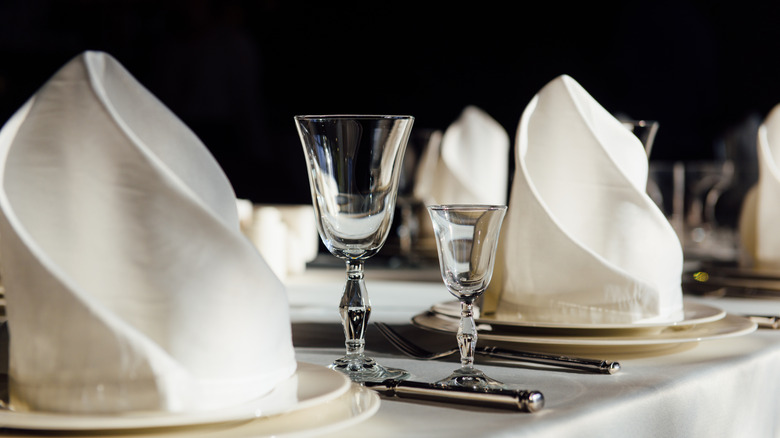
While overlooking the centerpiece can make your dinner table feel uninspired, the other end of the spectrum can create a rigid atmosphere. Coordinated linens, gleaming silverware, and individual place cards are all worthy finishing touches, but an overly theatrical approach to table styling can rob the event of warmth.
"Elegance stems from thoughtfulness rather than intimidation," Shabrin Momm notes. If your guests are hesitating to reach for the napkin for fear of disturbing its fold, you can take it as a cue that your setting has pushed past the boundaries of classic elegance and become overly formal. "Perfect symmetry, an excess of cutlery, or linens pressed to rigidity can create a museum-like atmosphere," she says.
If you'd like to avoid straying too far into formal territory, it helps to ensure that the table setting matches the event — a sit-down indoor dinner can accommodate napkin sculptures and polished silverware, but an outdoor barbecue will need a more laid-back approach. For Momm, there is merit in breaking the formality of a table setting by peppering in thoughtful details. Her wish list includes everything from hand-crafted bread plates to a sprig of fresh herbs atop each napkin. As the finishing touch, you may want to consider bathing your tablescape in the flickering glow of butter candles.
Placing utensils incorrectly
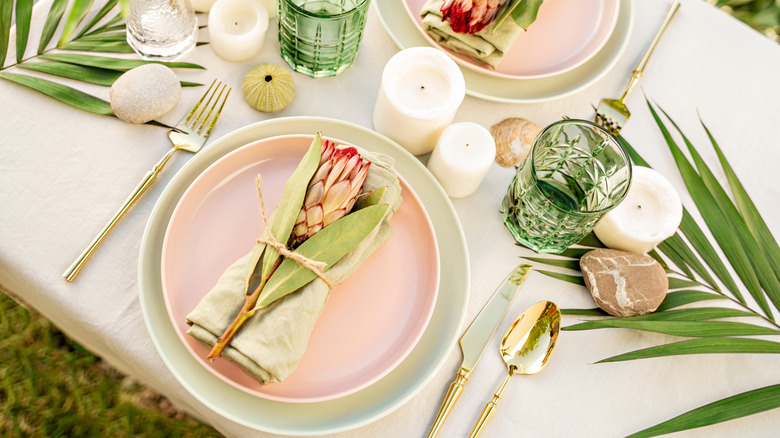
Putting together a dinner party on short notice can be a breeze — especially if you are armed with expert tips for a simple yet elegant table setting. But small missteps, such as placing the forks and knives incorrectly, can cause confusion among guests and interrupt the flow of conversation.
"Some common slip-ups include turning knives the wrong way, mixing up cutlery sizes, or forgetting dessert utensils altogether, which leaves guests awkwardly reusing their dinner fork," Shabrin Momm observes. The end result? A table setting that feels unpolished and inattentive rather than chosen with care and meticulous attention to detail.
If you can't memorize convoluted placements, Momm has found that the most basic rule to keep in mind is to begin with the cutlery on the outside and work your way in towards the plate. "Forks sit on the left, knives and spoons on the right, with the knife blades facing the plate. Dessert spoons or forks go across the top of the plate," she advises. If you are hoping to score additional points for visual cohesion, it helps to ensure an equal amount of space between all pieces of cutlery. During the final walkthrough, you'll also want to cast a glance to ensure that the bottom of all the cutlery is on the same level as the main dining plate.
Overlooking window treatments
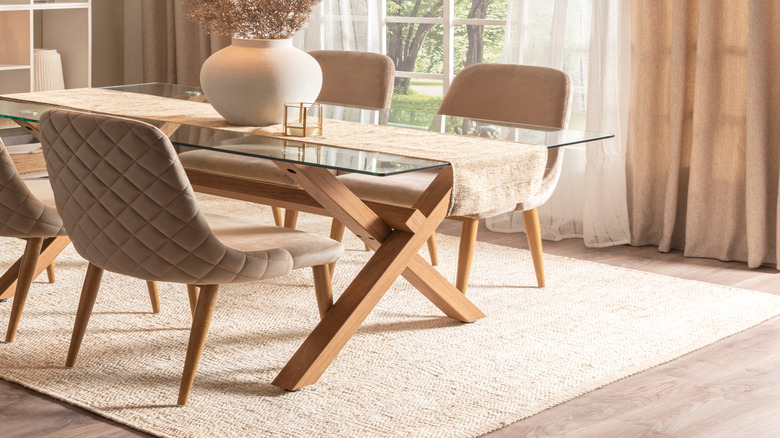
Think of the splendid feast and tablescape that you have put together as an artwork, and the window treatments as the frame. By infusing color and texture into the space, curtains and blinds can often tie the space together.
For Shabrin Momm, window treatments are the silent hosts of any dining room. "They shape the light, soften sound, and set the mood," she says. In the absence of any window treatments, the dining area can often look stark and bare. Your guests will also be exposed to the harsh glare of the sun during summer or drafty winds during winter.
From custom drapes and pull-down blinds to sheer curtains, there is a host of window treatments to choose from. For daytime gatherings, you will find that sheer linen is your strongest ally. Hitting the perfect intersection of texture and movement, sheer curtains allow daylight to stream through uninterrupted, dousing the space with a warm glow. Evening dinners, meanwhile, can benefit from the opulent touch of layered drapes in rich textures, such as velvet. "When it comes to color, earthy neutrals, muted jewel tones, and soft pastels all work beautifully to create a warm, welcoming atmosphere," Momm adds.
Skipping personal touches
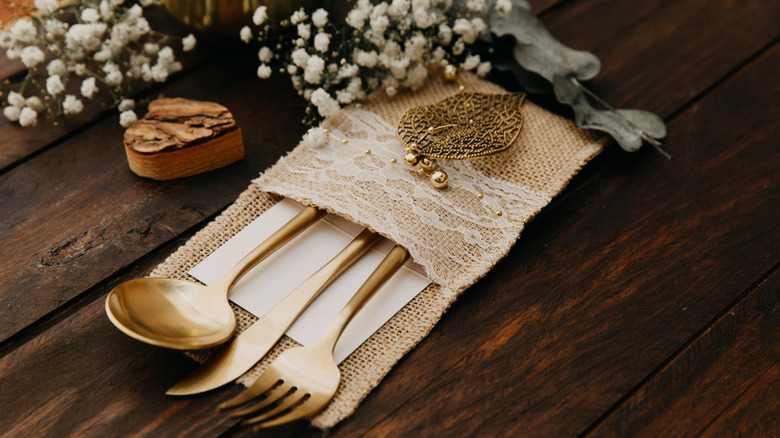
Even the most meticulously prepared meal can feel a little flat if the table lacks elements that mirror the host's personality. Without traces of your own signature scattered across the table, guests might feel like they are drawing up a chair at a stark restaurant rather than breaking bread with loved ones.
Incorporating personal touches across the dinner table is the easiest way to make your guests feel individually welcomed, even if hosting duties keep you from spending one-on-one time with everyone. Shabrin Momm agrees and adds, "Opt for charming handwritten place cards with unique paper or pressed flowers to welcome guests." Embracing eclectic vintage glassware can also be an easy way to infuse character into your tablescape and spark conversations. Silver punch bowls are the thrift store find that will elevate an outdoor dinner table — bonus points for using yours as a creative stand-in for an ice bucket.
As the finishing touch, Momm recommends adding textured menu cards knotted with twine, herbs, or a wax seal, for an air of elegance. "By consciously selecting items with character and history, you infuse your dinner party with personal touches that transcend decor, inviting conversation, intimacy, and ultimately, an unforgettable experience forged through connection and shared stories."