

Here's Exactly What's In School Cafeteria Mashed Potatoes
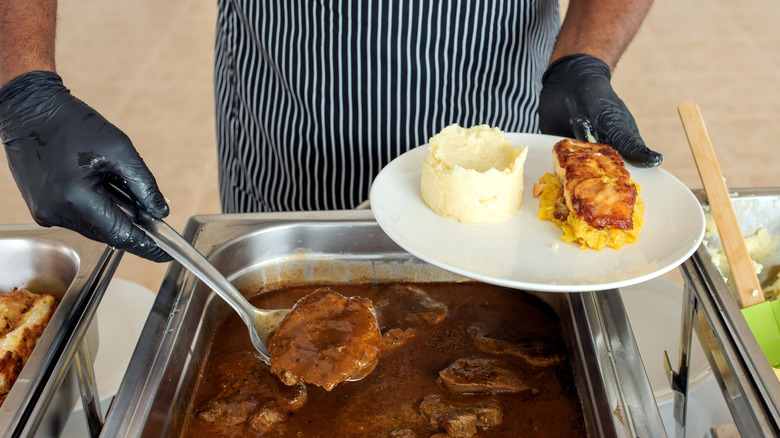
School lunches hold a complicated place in many people's minds. For some, the memories are of questionable food served at odd hours of the day — Salisbury steak and chocolate milk at 10 in the morning, anyone? For others, the meals served on those plastic trays evoke a sense of nostalgia — for some of the foods, at least. If you fall into the latter category — the sort that has wondered if you can buy those cafeteria chicken patties as an adult, perhaps — then we have the perfect side dish for you: a school lunch mashed potato recipe straight from the USDA.
This recipe is a little large for day-to-day cooking, as you're making 12 pounds of waxy potatoes — either Yukon golds or red potatoes — for an estimated 50 servings. In addition to the boiled potatoes, the recipe is pretty simple: just a quart of low-fat milk, a cup and a half of trans-fat-free margarine, one tablespoon plus one teaspoon of salt, and one teaspoon of pepper. If you really want that authentic cafeteria flavor, it wouldn't be tough to scale it down. But there are many methods for making mashed potatoes, and these cafeteria potatoes are far from the most delicious. Unless you're running on pure nostalgia with the meal, we'd suggest adding a bit of flair to your starchy side dish with something more like this creamy garlic mashed red potatoes recipe.
Now, if you've been reading this and thinking that these don't sound anything like the potatoes you had in school, there's a good reason for that. While this is a USDA recipe, it is not the only one, and it is definitely not the cheapest option out there for schools struggling with their meal budgets.
The struggle of school lunches in the U.S.
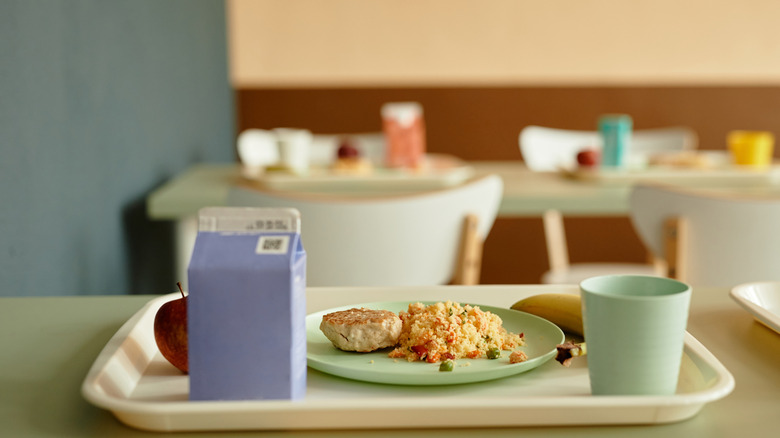
If you were one of the folks who hated the meals at your school growing up, especially the potatoes, you probably won't be surprised to learn that there is also a USDA recipe out there for mashed potatoes made from dehydrated potatoes. On the whole, the recipe is fairly similar, but the fresh potatoes are replaced with either flakes or granules, and the milk with dehydrated milk powder. Additionally, pepper is omitted from this cheaper option.
While these dehydrated mashed potatoes sound a lot less delicious, you really can't blame cafeterias for trying to keep things cost-effective, at least not once you see how much money they are allotted per meal. The federal reimbursement rate to schools per meal served is just $4.60. If they meet mandated nutritional requirements, they are eligible for an additional $0.09 per meal served. After taking out labor costs and things like equipment, maintenance, and utilities, on average only about 44% of that money is left for food. Take that out of $4.69, and you come up with just $2.06 per meal. Modern-day school cafeterias came to be as a method of ensuring that all kids had access to healthy food during their school day, but just over $2 isn't a lot to work with — especially when trying to put a healthy meal on the plate with plenty of fresh fruits and vegetables.
Whether you grew up eating fresh cafeteria mashed potatoes or the rehydrated flakes, the ingredients and nutrition are about the same, even if there might've been a difference in taste. But everyone deserves the good mash, right?