

Low-Fat Milk Is More Than Just Watered-Down Dairy
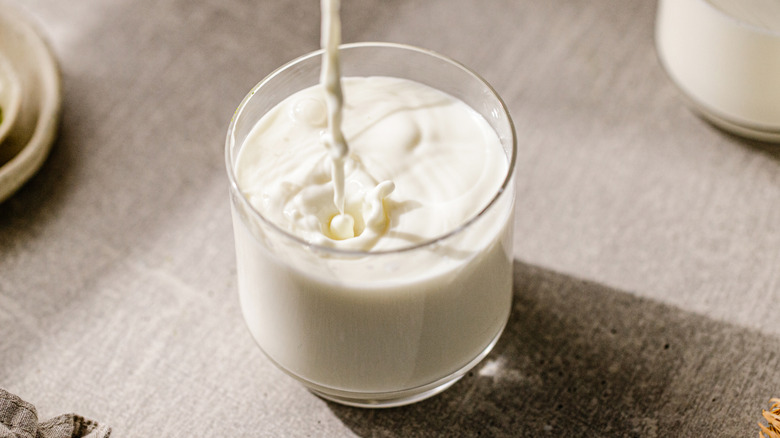
You wouldn't be the first to wonder why a product as simple as milk can have several different types. Whole milk, 2%, skimmed — it seems like a lot to choose from, but the bottom line is pretty straightforward: The labelings simply refer to the level of fat within the milk. Lower-fat options are great for anyone watching their weight or reducing fat in their diet. However, some people have taken to calling them "watered-down dairies". Not only is that unfair — it's totally wrong.
At dairies, workers spin raw milk at high speeds in centrifuges to separate the milk fat (also called butterfat) from the liquid. Then, they just add back the fat to the liquid in different proportions. To make reduced-fat milk, 2% of the fat is added back (that's why it's called "2% milk"). For low-fat milk it's 1%, and so on. As you can see, not a drop of water is added throughout the entire process.
What if the dairy actually adds water? The FDA is going to shut that down very quickly. It has specific rules on what can be labeled and sold as milk, known as "standards of identity." Dairies can add a certain amount of vitamins, flavorings, and even juice to some milk products — but this is where it stops. Adding water falls outside of these standards, so the watered-down milk literally can't be called milk. So, to package and sell such a product as "milk" would be very illegal.
Reasons you should start stocking low-fat milk
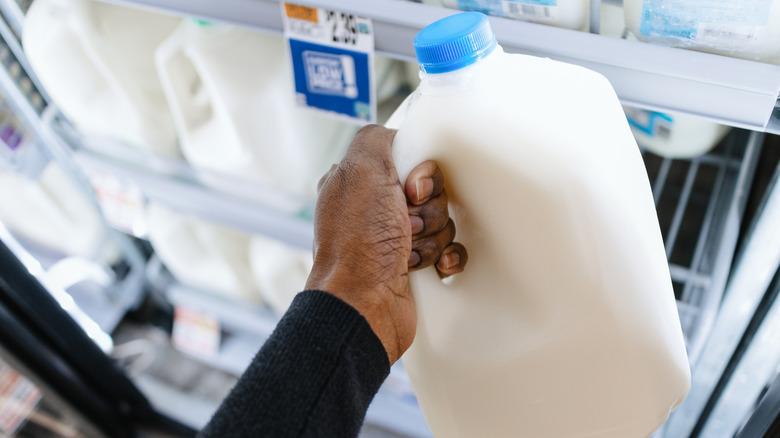
Despite having less fat, you probably won't taste much of a difference between all the lower-fat versions and whole milk — and that's not just our personal opinion. A study published in the Family and Community Health journal found that most people cannot distinguish between whole milk and low-fat milk in blind taste tests. Our taste buds, as it turns out, simply aren't sensitive enough to pick up on those fat differences.
This holds true even in baking. You can absolutely make an easy tres leches cake using just skimmed milk with its meager 0.1% fat content. Adriano Zumbo, an Australian pâtissier, told Tasting Table in an interview that the fat added by milk has minimal effect on the final product. In the worst-case scenario, you can simply add back the fat from another source. Take tres leches, for example. Since we're already whisking in sweetened condensed milk for the cake's milk layer (which is incredibly rich with a fat content from 8% to 9% — double that of regular milk), using skimmed milk for the cake batter is actually a smart way to control the richness of your cake with zero impact on the cake's flavor or quality.
The one place where the milk fat really matters, though, is when you're frothing up milk to top your morning coffee. The proteins in milk fat help maintain the pretty foam that forms when you whisk up the milk. Fortunately, lower-fat milk will still froth up nicely, just that it won't be as creamy or rich. Not necessarily a bad thing if you prefer your homemade cappuccino to be more coffee-forward!