

Why Microwaved Fish Smells So Much Worse Than Fresh
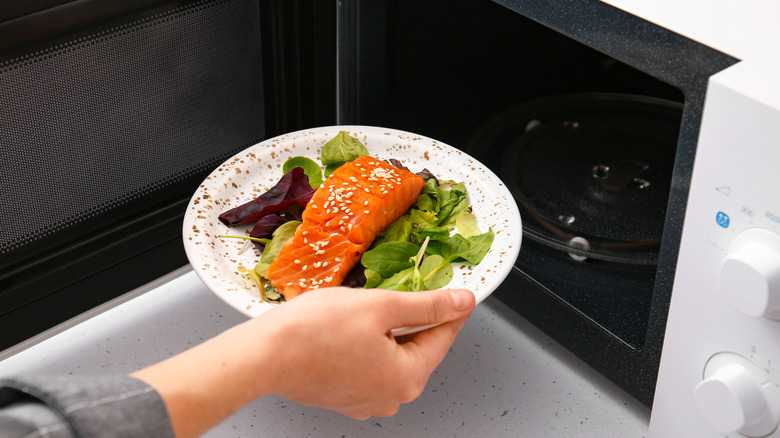
Ever enjoying your lunch break at work and all of a sudden, a nauseatingly fishy smell comes out of nowhere and hits your nose like a six-wheeled fish hauler? Someone in the office might've tried to nuke their pan-seared rockfish in the microwave. Honestly, it's quite impressive how an amazing-smelling and tasting fish can turn into a chemical weapon after it's been zapped for a few minutes in a microwave. But why exactly does microwaved fish smell so terrible? The main culprit behind this is, as always, chemistry. A microwave's dry, intense heat can cause fats and amino acids inside the fish to rapidly break down and oxidize (scientifically, we call it "lipid oxidation").
The more the fish is broken down, the smellier it becomes as a cocktail of foul-smelling compounds is released. A study in the Food Research International journal has identified aldehydes, several sulfurous compounds, and a long list of other volatile substances to be the chemicals behind the fishy smell, all of which are seemingly custom-made to offend your nose. Not only do they smell awful, but these molecules can be frustratingly persistent, too, which is why the aroma of microwaved fish seems to linger for hours afterward. The silver lining is that the fish should still be alright to eat — assuming the scent hasn't totally destroyed the appetites of everyone within a 50-foot radius, of course.
Here's how to properly reheat fish in a microwave
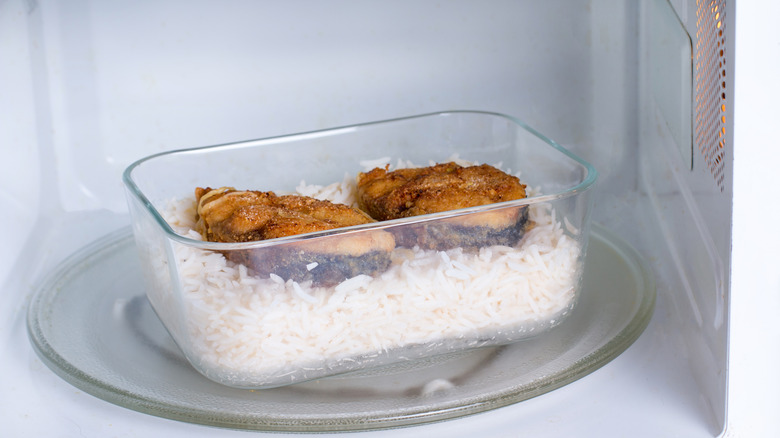
If you're the one with a cold lunch-o'-fish that needs reheating, even though the oven's far better at reheating your salmon than the microwave, sometimes, it's the only thing you've got access to. In that case, we've got a couple of tricks to keep you from being the office's villain.
The biggest mistake that people often make is throwing the fish right in, then zapping it at the highest setting. This shocks the fish into releasing the oils, which are then promptly broken down by the heat. The rule for microwaving fish is this: the gentler, the better. So, reheat the fish on the lowest setting you can select on the microwave in 30-second intervals. Continuously check on the fish until it's just warm — the last thing you'd want is for it to overheat. An extra step you can take is reheating the fish in a microwave-safe container. Seal the fish, and the container will lock in the fish's moisture (effectively keeping it from drying out too much), as well as containing the smell.
Does the communal microwave still smell like fish after you're done? You can clean up by deodorizing the microwave by boiling a bowl of diluted vinegar inside. The fragrant vapor will take out the smell, and your colleagues will be none the wiser!