

If You Want To Braise Meat Perfectly Every Time, You Need To Follow This Simple Rule
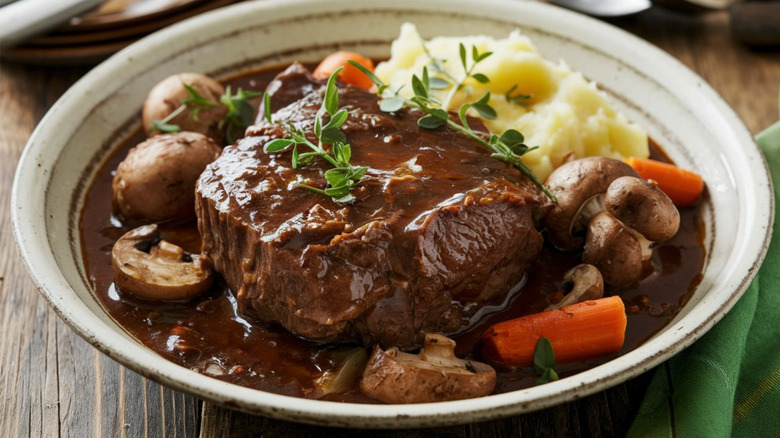
Braising is a pretty magical way of cooking meat, and it all depends on the liquid. The amazing thing that sets it apart is how braising completely transforms different cuts of meat. In goes tough, chewy brisket or pork shoulder, and out comes something lusciously tender and juicy.
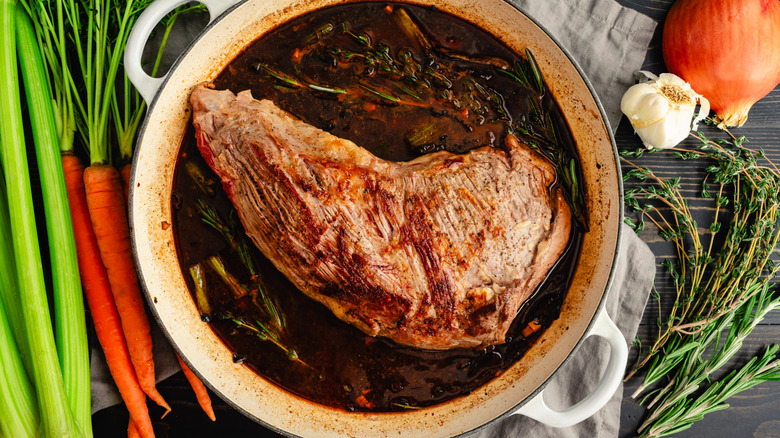
That transformation is a result of using liquid as a cooking medium, which allows meat to slowly rise in temperature without overcooking, while also creating a moist environment that helps retain juices that might otherwise be lost through higher-heat cooking styles. However, you can't just use any amount of liquid in your braise. If you want to get the ideal results from braising, stick to the simple rule of only covering ½ to ¾ of your meat.
Braising works using the same principles as making a stew. So, the second you completely cover your meat with too much liquid — a common braising mistake — that's essentially what you're making instead. That said, what makes braising special is that part of the meat is still exposed to higher, more direct heat — even while it's surrounded by liquid. The rich, unique flavor you get from a braise comes from this best-of-both-worlds combination of cooking styles. You get the more gentle heat and moisture of a stew with the added browning from the Maillard reaction on the dry side of the meat. Sure, you can get some of that flavor by searing your meat before the braise, but you can't match the browning power of a long roast in the oven.
The amount of liquid you use matters
The second reason for avoiding using too much liquid is another aspect that makes braising great: the sauce. Braising isn't just about tender meat; it's also about reducing the cooking liquid into a rich, silky sauce that gets served alongside it. Like the meat, a braise's sauce benefits from the long cooking time.
Not only will it absorb more flavors from vegetables and aromatics, but the collagen in the meat will dissolve into gelatin, dripping down into your braising liquid. All this depth of flavor and richness from the gelatin ultimately makes sauces from braising fantastically delicious. That said, starting with too much braising liquid will dilute it. You want your braising liquid to reduce as it cooks to the point where it will end up at a nice, thick, saucy consistency. If you start with too much liquid, your sauce will be both too watery and bland.
If you do only use enough liquid to cover some of your meat and it still turns out too watery once everything is done, you can simply remove the meat, let it rest, and then turn up the heat to cook the sauce down, finishing the reduction. You can also add some butter or a bit of cornstarch slurry if you need to.