

The Types Of Seaweed That Actually Belong In Seaweed Salad
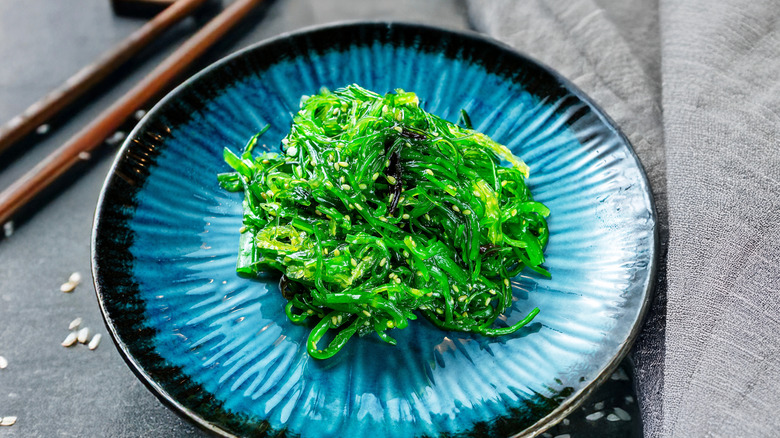
Eating seaweed has entered the culinary mainstream, but it's still mysterious on many levels. When creating an entire salad around this salty, savory ocean algae, you definitely want to get it right. That means knowing which types of seaweed are edible and how the flavor profiles and textures differ from one another. For some insight on the topic, we turned to an expert, Chef Mike O'Mara, Food Scientist, Development, and Culinary Innovation.
He shared some tips on which types of seaweed to use for traditional seaweed salad, but also for incorporating it into other salad creations. Many seaweed types can be used, says O'Mara, with wakame perhaps being the most common. It's a great candidate for the primary seaweed salad base, bringing a "subtly sweet but strong flavor and a satiny texture." As for the style of salad best suited for seaweed, he discusses flavor profiles and what seaweed contributes.
"In the quest for flavor balancing, seaweed is a great ingredient for bringing a umami hit if it is lacking from a salad, or complementing what's already there," notes O'Mara, but "the flavor profile best fits with Asian themed salads such as soba noodle salad or anything with a sesame dressing." Wakame isn't the only option, with other common types including nori and kombu. "Nori is typically dried and can be used as a wonderful garnish, providing crisp texture and umami flavor," explains OMara. "Kombu should be sliced very thinly but adds a very rich umami note to any salad."
Not all seaweed is edible
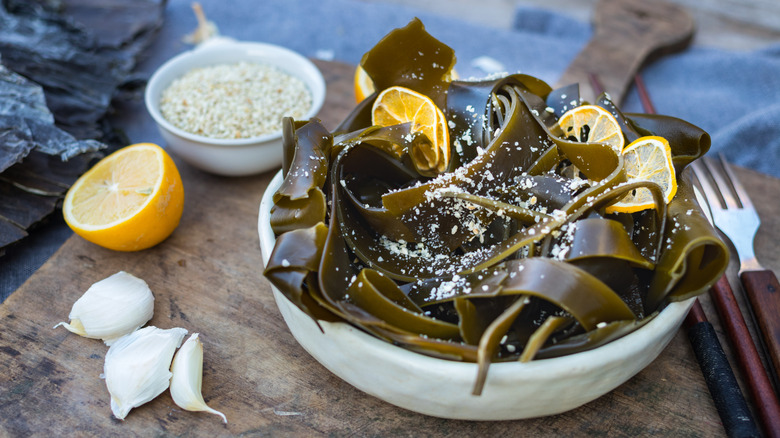
With all this talk of tasty seaweed in salads, it's important to note that not all seaweed is edible. It's not as simple as dragging strings of it from the ocean or scooping up stragglers from the beach. In fact, that's almost never a good idea. While many species are safe and even nutritious, others can be contaminated, unsafe for eating, or should be consumed in moderation or cooked in specific ways. Some species, though safe, could simply be too tough or fibrous for eating.
For those reasons, it's best to leave seaweed collecting to professionals trained in gathering food-grade varieties from trusted locations. According to a 2017 paper in the European Journal of Phycology, an estimated 800,000 tonnes of seaweed are harvested every year from wild beds. So availability isn't typically an issue. That's not even counting cultivated seaweed farming through aquaculture, now accounting for at least 96% of global supply.
While salads in general can be highly nutritious, the presence of seaweed ups the ante in a big way. It contains plenty of health-enhancing components such as vitamins, minerals, fiber, antioxidants, and more. Most seaweeds need to be rehydrated before eating in salads, which generally involves soaking them in water and draining the excess liquid. For a wakame salad, cut into thin strips and serve with herbs and veggies such as scallions, cucumbers, and shredded carrots, drizzled with a soy sauce dressing. Complement your salad with a bowl of dashi broth made from kombu seaweed, and finish it off with a fruit-based seaweed smoothie.