

The Official State Beverage Of Massachusetts Is A Tart And Refreshing Drink
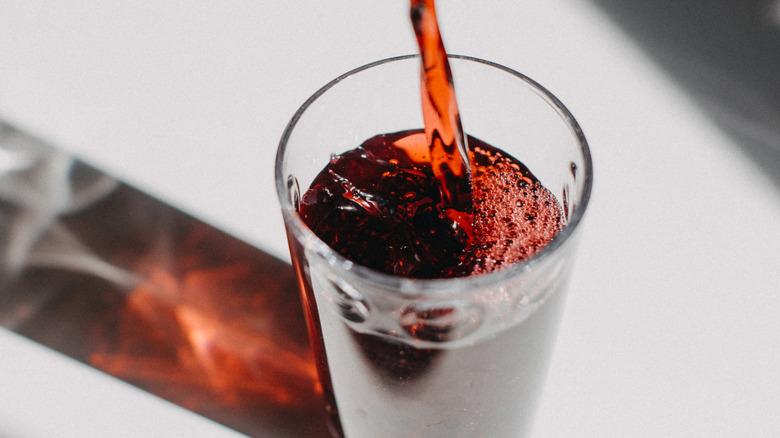
You might be familiar with your state's official bird or flower, but did you know that many states have an official beverage, as well? It typically coincides with an important agricultural resource for the place that adopted the drink. Florida has its orange juice and Tennessee has its milk. When it comes to the Bay State of Massachusetts, cranberry juice is the official beverage.
Cranberry juice became Massachusetts' official beverage on May 4, 1970, about 40 years after commercial production of the tart beverage began in the state. By then, people in the area had been consuming it for centuries. As you might imagine, meeting demand requires a lot of fruit. According to the USDA, Massachusetts was on track to collect 2.25 million barrels of cranberries from 14,000 acres of bogs in 2024.
This popular fruit is also the official berry of the Bay State, which makes sense when you consider its legacy. Massachusetts' love of the crop is one the reasons that the U.S. produces more cranberries than any other country in the world. The Bay State harvests the second-highest amount in the nation (Wisconsin takes the top spot).
Massachusetts produces a whole lot of cranberries for cranberry juice
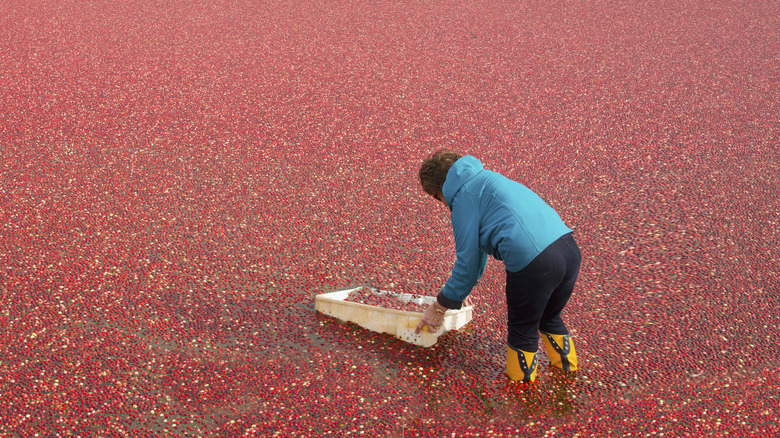
Cranberry juice made early appearances in 17th-century American cookbooks, but it wasn't a truly popular beverage until big-name farmers banded together to bottle it. They formed brands that made cranberry juice readily available on grocery store shelves, even in states where cranberry bogs didn't exist. Among these major names was Ocean Spray, which began in the 1930s and still owns and operates several cranberry farms in Massachusetts (we also ranked Ocean Spray in third place on our list of 15 cranberry juice brands). These deep ties to well-known cranberry juice manufacturers helped make this tart juice the state's official beverage.
The natural bogs and marshes where cranberries grow in Massachusetts were created when glaciers moved through the area and melted, leaving behind wetlands where the berry thrived naturally. (Despite how long they've been around, there's a misconception about what these bogs are like). Early Native Americans cultivated the fruit as medicine, using it in tinctures for its acidity and disinfectant properties, while also turning the juice into dye for fabrics. The berries were supposedly originally named "crane berries" thanks to a resemblance to the color on the head of a Sandhill Crane, but eventually the name "cranberry" fell into place. The fruit has been such a staple of Massachusetts culture that some of the vines where we get our cranberry juice are the same ones that produced berries over 150 years ago.