

Are Your Spices Going Stale Too Soon? Your Seasoning Technique Might Be To Blame
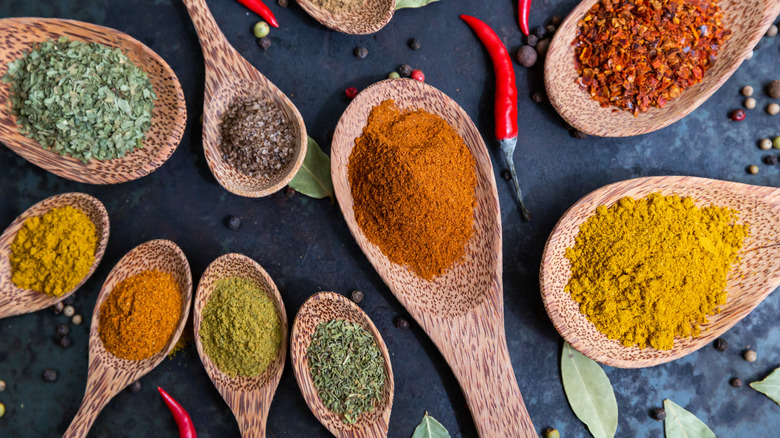
If you've ever pulled out a jar of cinnamon from the cabinet, only for it to smell like, well, nothing, you're not alone. Stale spices are all too common in the kitchen, and according to Kelly Smith, director of product marketing at Savory Spice, the issue might not just be an old spice stock — it could be your cooking habits.
"The biggest culprit in the kitchen is moisture, and it can sneak in faster than you think," Smith says. "Never measure spices directly over a steaming pot or pan. Steam will enter the container, create condensation, and cause clumping, mold risk, or flavor loss. Instead, spoon the amount you need onto a plate or into your hand, then add it to your dish. Also, make sure your measuring spoons are completely dry before dipping into any jar."
As for why moisture can spoil your favorite seasonings, it all boils down to their physical compositions. "Spices are naturally dry, and their flavor comes from volatile oils," Smith says. "When steam enters the container, it raises the humidity inside, which accelerates the breakdown of those oils. The moisture also creates the perfect environment for clumping and, in extreme cases, bacterial growth. Once that happens, the texture, aroma, and taste all suffer. Think of it this way: every time steam hits your spice jar, you are essentially jumpstarting its decline." In other words, even the smallest of sprinkles over a simmering saucepan could be enough to shorten a spice's lifespan prematurely.
Locking in flavor: tips for keeping your spices fresh
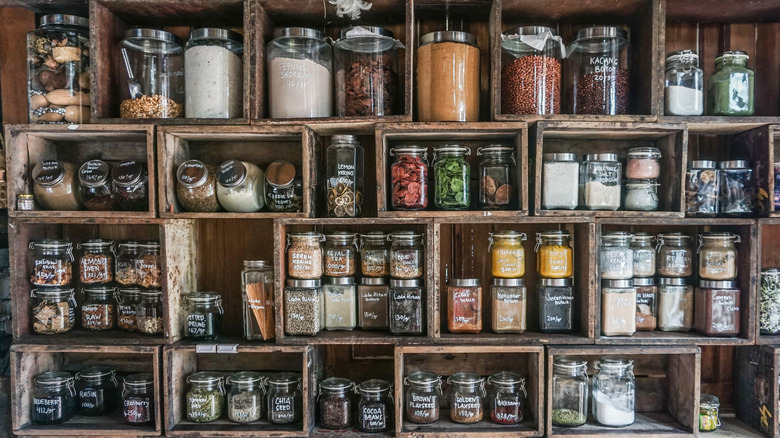
Believe it or not, even before your jar of herbes de Provence makes its arrival in your pantry, it could be past its prime. You see, the ever-plentiful oasis that is the spice aisle in the grocery store may be a delight for the senses, with vibrant colors and enchanting scents, but chances are, those seasonings on the shelf have been around for a while. According to Smith, "The most important step in keeping spices fresh actually happens before you ever store them: start with fresh, high-quality spices from small-batch suppliers. Most supermarket spices are mass-produced, shipped through multiple distribution channels, and may sit in a warehouse for 1 to 2 years before even hitting the shelf. By the time you bring them home, much of their natural aroma and flavor is already gone."
After purchasing the freshest seasonings available on the market, the way you store them makes a huge difference. According to Smith, you should store your spices in airtight glass jars. In addition, she says to keep them in a cool, dry spot that won't see any sunlight or excess heat, and to ensure that no steam or moisture-emitting appliances are placed nearby. As such, to avoid exposing them to light, heat, and moisture, your spices should go in the pantry, not on the kitchen counter. When stored correctly, your dried spices can safely live in your pantry for around 1 to 2 years on average.